The ground’s speed depends on its distance from the axis
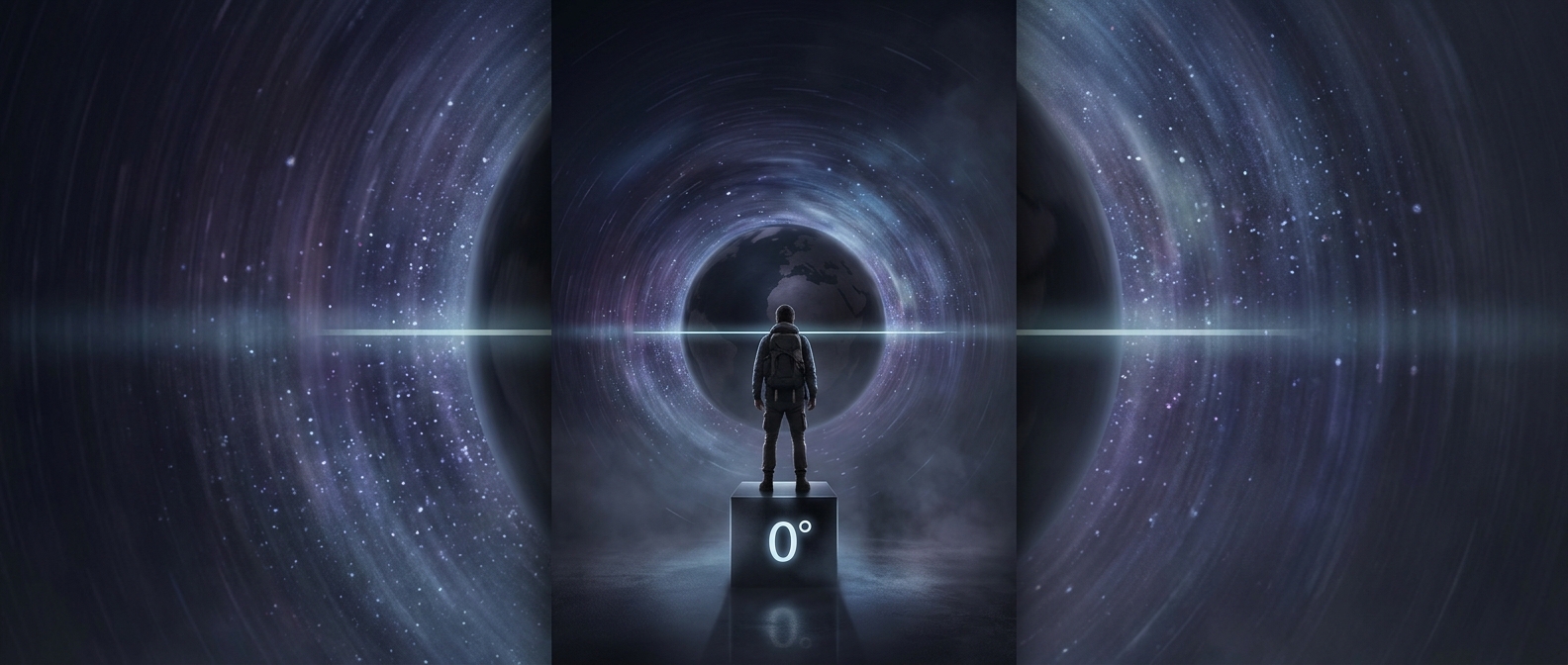
Earth completes one rotation in roughly a day, but not every point on its surface traces the same-size circle. At the equator, the circle is widest: about 25,000 miles around. Near the poles, the circles shrink, until the point at the pole turns in place rather than sweeping around a broad ring.
Because all those circles are completed in nearly the same time, a point on the equator must cover more ground each hour. At other latitudes, the distance to the rotation axis is smaller, so the eastward speed falls. The difference comes from geometry, not from one part of Earth spinning faster than another.
Why travelers don’t feel the rush
A person standing at the equator is moving east with the ground, but so are the surrounding air, buildings, and vehicles. That shared motion is why Earth’s rotation does not feel like a constant wind or a shove. We notice motion most readily when our speed changes relative to what surrounds us.
The same shared motion matters for flights. An airplane takes off already traveling with Earth’s rotation, and the atmosphere generally shares much of that rotation too. So a plane cannot simply point east and let the planet’s rapid spin carry it to its destination; its travel time depends mainly on its speed through the air and on winds, among other factors.
A useful way to picture latitude
Imagine drawing circles around Earth parallel to the equator. The farther north or south you go, the smaller each circle becomes. Every circle turns once in about the same interval, but a smaller circle requires less distance per turn. The equator’s striking speed is the surface expression of that simple difference in circumference.