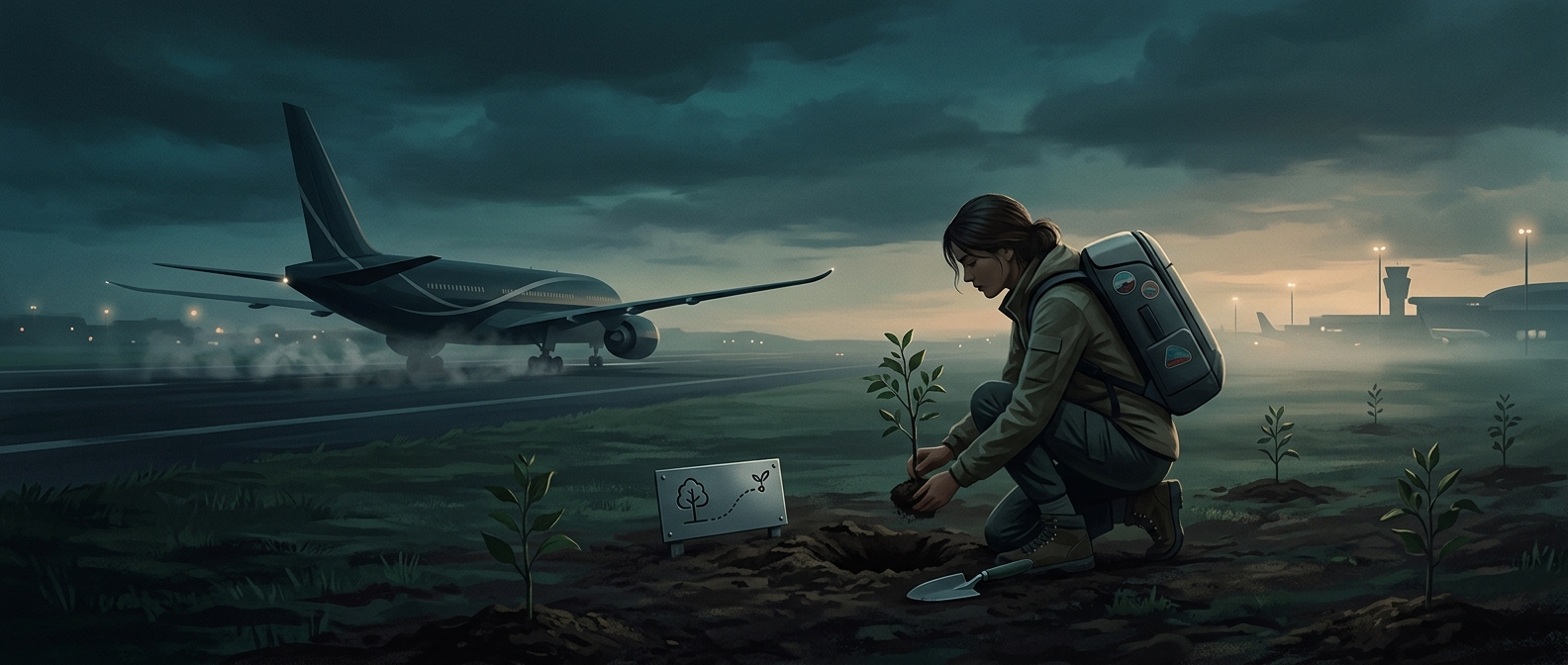
What a tree can—and cannot—balance
A flight releases greenhouse gases, especially carbon dioxide from burning jet fuel. Those gases mix through the atmosphere, so the warming effect is not confined to the route a plane flies. Planting a tree is an attempt to counter part of that impact by drawing carbon dioxide back out of the air as the tree grows.
The timing matters. A newly planted sapling absorbs little carbon at first; meaningful storage builds over years as it gains wood and roots. The benefit depends on the tree surviving, continuing to grow, and keeping that carbon stored. If it dies or is later cut and burned or left to decay, much of the carbon can return to the atmosphere.
Why the gesture is difficult to measure
A tree’s future carbon uptake is not a precise, immediate match for an individual flight. It varies with the species, climate, soil, and care, while a flight’s emissions depend on the aircraft, distance, and other operating conditions. A planting project may also need to account for what would have happened without the planting—for example, whether the land would have grown trees anyway.
That is why planting a tree after flying is best understood as a contribution to longer-term carbon removal, not as proof that the trip has been erased. The traveler’s gesture connects a short journey to a much slower process: the plane burns fuel in hours, while a tree may take decades to store a substantial amount of carbon. A sapling in the ground is a beginning, not an instant receipt for a flight’s emissions.