Why the Quietest Route Often Starts at the Back
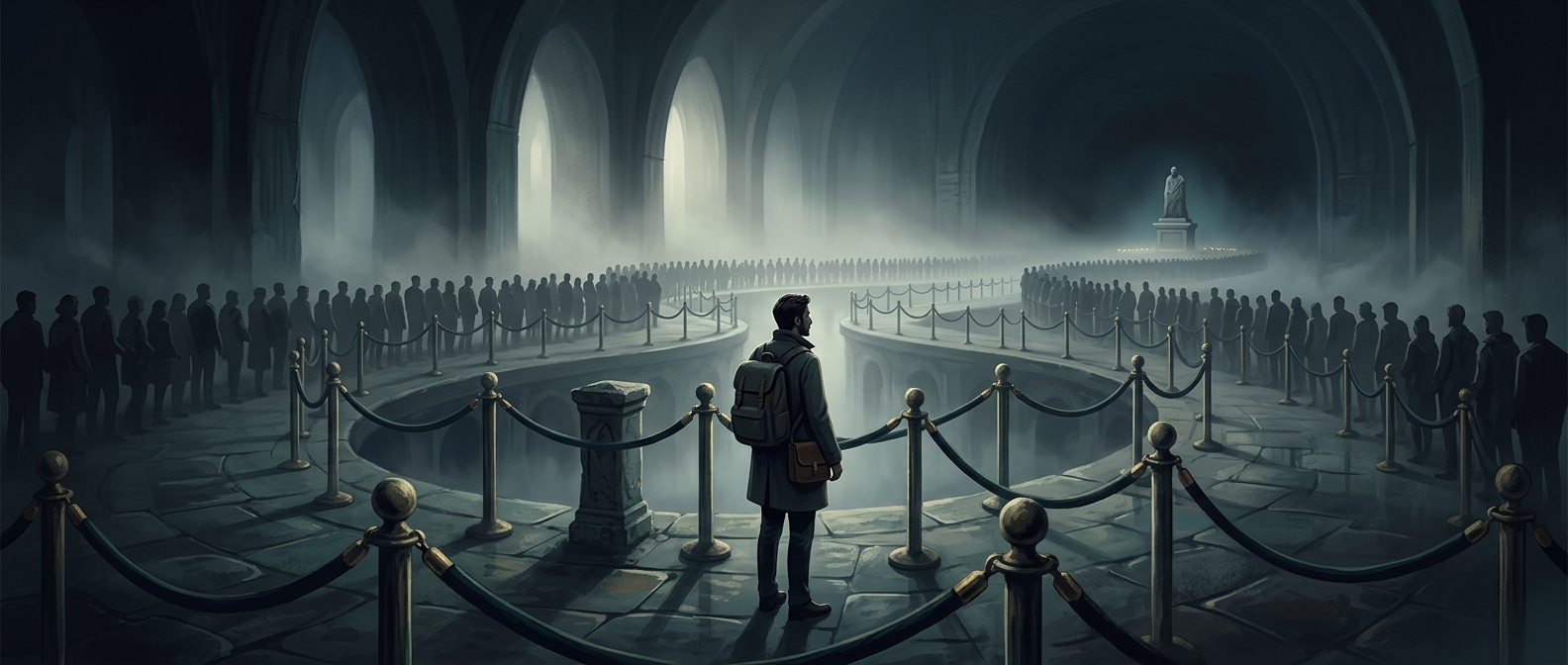
At a large monument or museum, visitor traffic tends to build around the first obvious stop: a grand entrance hall, a famous object, or the first viewpoint on the standard route. People pause there to orient themselves, take photos, and wait for companions. That creates a temporary bottleneck even when the rest of the site is relatively open.
If the layout allows it, moving past that first cluster can put you in front of the crowd rather than behind it. The advantage is not that everyone follows the same pattern, but that many visitors make their first decision at the same visible landmark. Reaching a farther gallery, chamber, or overlook early can give you room to explore before the flow catches up.
Make the Timing Work for the Site
The earliest entry slot helps because fewer visitors have had time to accumulate inside. But “earliest” is only useful if you arrive before your admission time and know where the route leads. Check a map in advance, identify a distant highlight, and note whether the site has a prescribed path or areas that open later.
Some historic interiors use one-way circulation, timed access, or guided groups. In those places, doubling back may be prohibited or may send you against the flow. Follow staff directions, and treat the plan as a way to choose your first stop—not as a reason to ignore the site’s rules.
Trade the Famous First View for Space
A less crowded visit can also mean seeing a major feature from an unexpected angle: entering a quieter room before its doorway fills, or reaching an open courtyard before groups gather for photographs. The benefit is practical as much as atmospheric: you have more time to look closely, read signs, and take in the scale without constantly stepping aside.
The route is worth planning around the site’s actual layout. A few minutes spent locating the farthest accessible point can turn the entrance rush into a head start.