Why a tiny landmark can draw a long line
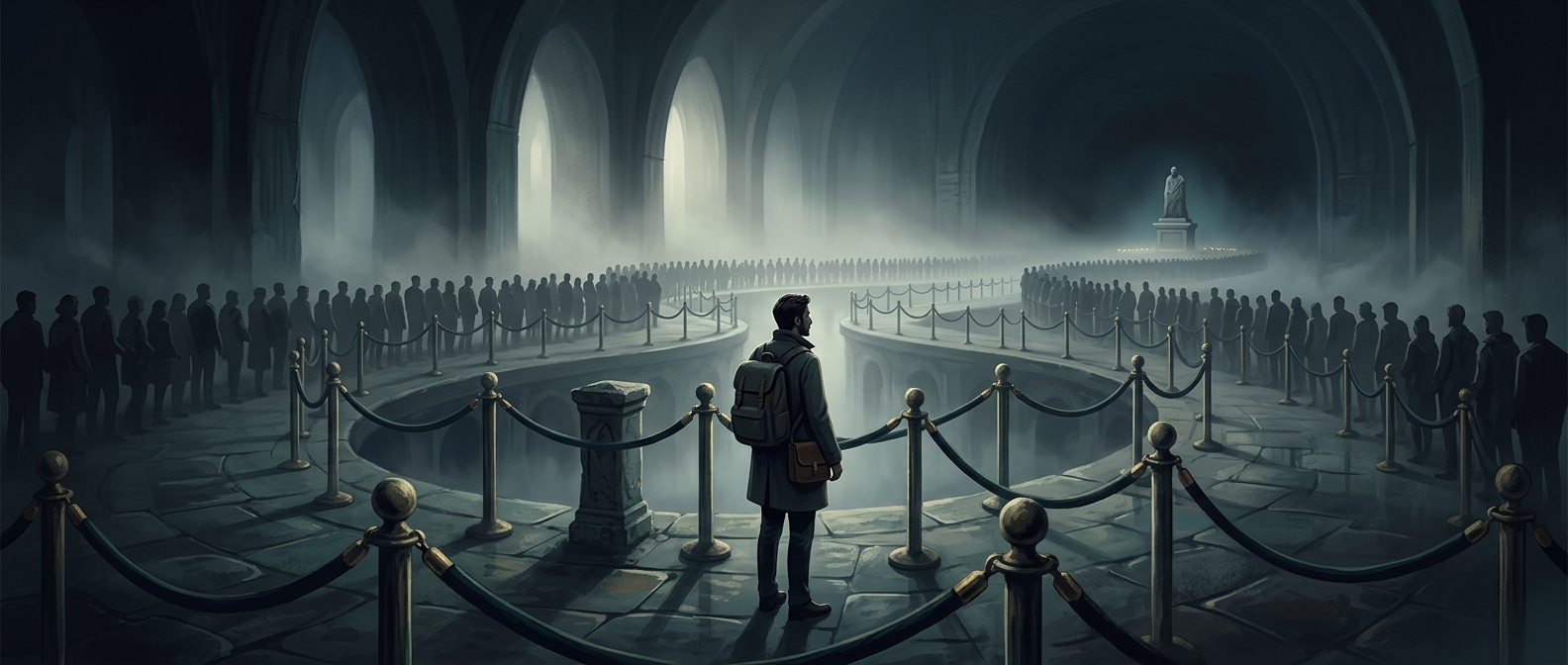
A small attraction has a built-in bottleneck: there is only so much room to see it. At a vast monument, visitors can spread out and look from different angles. A miniature object behind glass may offer just one close viewing spot, so each person’s brief stop holds up everyone behind them.
That makes the queue less about how long the attraction takes to see than how many people can see it at once. Even a few seconds per visitor add up when arrivals come faster than the viewing point clears. The glass protects the object, but it also fixes the distance and angle; visitors cannot step closer, move around it, or linger without blocking the next person.
The line becomes part of the experience
The payoff is often more than the view itself. Visitors may want to say they saw a famous local curiosity, photograph it, or complete a stop that has become part of a city visit. A crowd can reinforce the attraction’s importance: seeing people wait signals that this is a place others consider worth finding, even when the object is smaller than expected.
That creates a familiar travel tradeoff. The object takes little time to inspect, but reaching the viewing position—and getting a clear picture—can take much longer. Taller visitors may obscure the camera’s view, while the limited space makes it difficult to wait for a better opening without delaying the line.
The result is a landmark whose scale and popularity pull in opposite directions: the smaller the viewing area, the more conspicuous every visitor becomes. The queue is not proof that the monument is physically grand; it shows how fame, a single vantage point, and the desire to bring home a photograph can make a brief encounter feel like a required stop.