Why a Basic Slime Can Beat Late-Game Armor
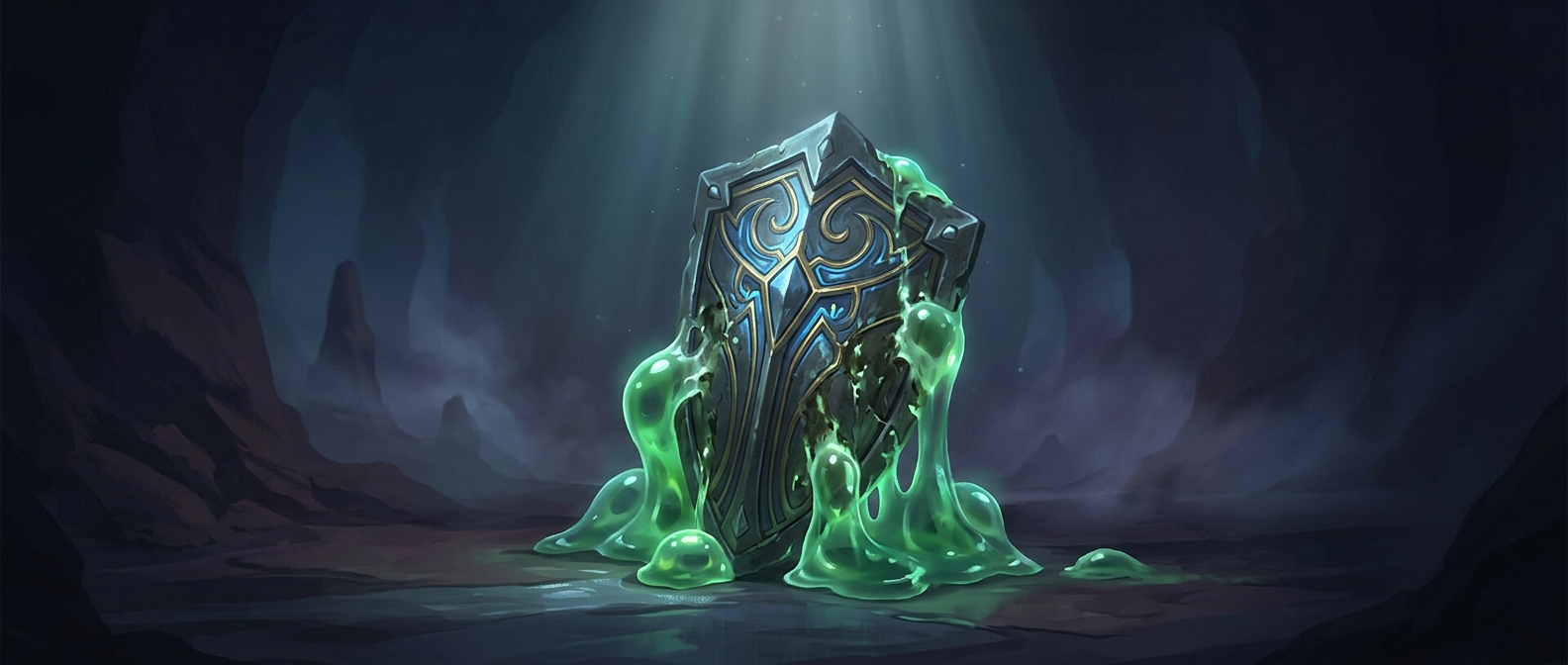
The joke works because fantasy games often measure defense along more than one axis. A shield might be exceptionally good at blocking heat, energy, or physical blows, yet offer no special protection against corrosion. The slime is not necessarily stronger than the threats the shield was built to stop; it attacks a weakness the armor rating does not cover.
That mismatch turns a familiar hierarchy upside down. Players expect rare gear to make ordinary enemies irrelevant, so a low-level creature that threatens prized equipment feels both absurd and memorable. The danger comes from the kind of attack, not the creature’s size or status.
Equipment Damage Changes the Stakes
When an enemy can damage gear rather than merely drain a character’s health, a fight carries a second cost. The player may win but still lose a valuable shield, spend resources repairing it, or need to replace it. That makes a seemingly harmless encounter matter even after the immediate danger has passed.
It also gives designers a way to keep older enemies relevant without simply giving them more health or stronger attacks. A slime can remain physically unimpressive while posing a distinct threat to equipment. Players then have a reason to pay attention to enemy behavior and prepare for specific hazards instead of relying on one powerful item for every situation.
The Merchant Is Part of the Punchline
The replacement shop completes the gag: the player’s legendary defense proves vulnerable, and the ordinary business of adventuring resumes at the counter. In game terms, that can support an equipment-and-repair economy; in comic terms, it makes the grand shield feel oddly fragile.
The memorable twist is not that the slime is secretly the strongest monster. It is that a powerful item can still have a very specific, very undignified weakness.