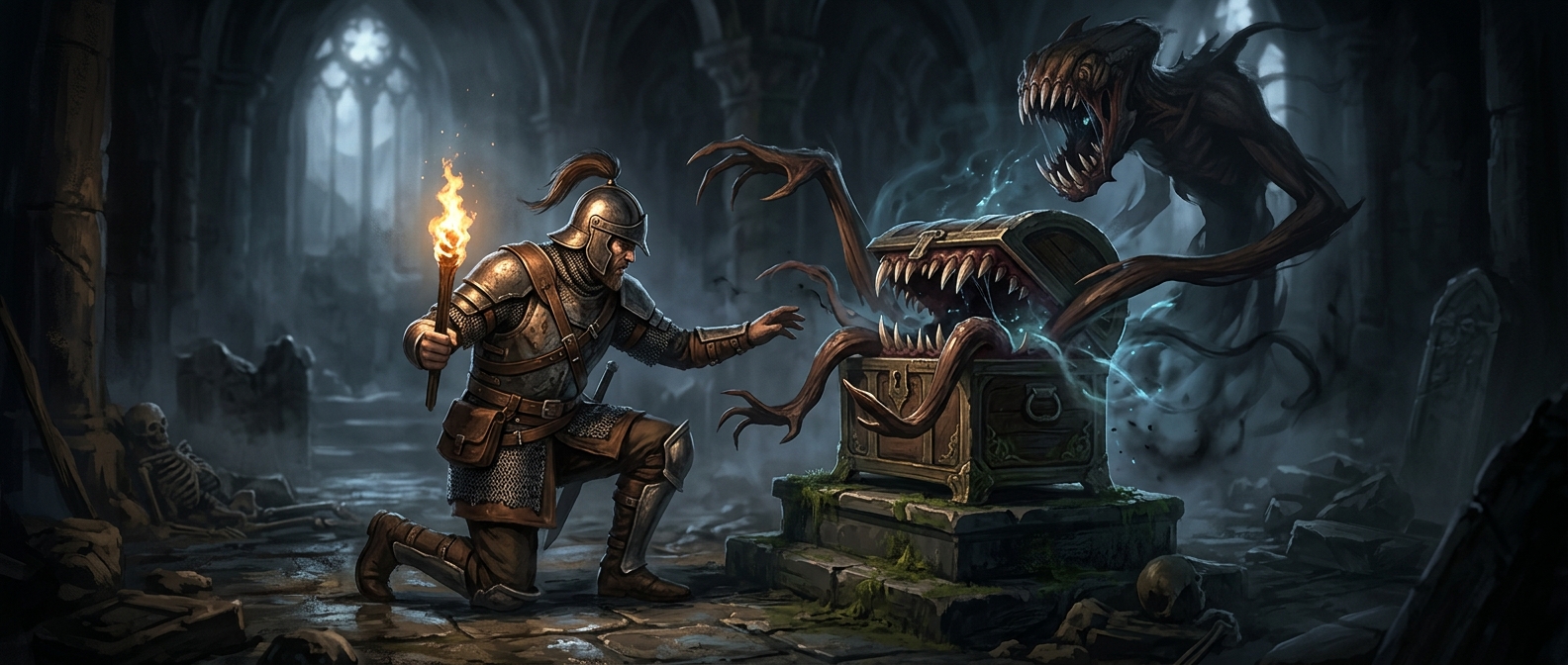
The chest is signaling that it is alive
A mimic works because it borrows the visual language of a reward: a chest usually means loot, not danger. The faint rise and fall interrupts that expectation. It is an animation cue—a small change over time—rather than a dramatic warning, so the player has to pause long enough to notice it.
That makes the tell more useful than simply making the chest look strange. A suspicious shape might be dismissed as decoration; a repeated motion suggests that something inside is acting on its own. The chest can still look ordinary at a glance, preserving the surprise for players who rush toward the apparent prize.
Spotting it changes the encounter
The motion gives observant players a chance to make a choice before triggering the danger. They can keep their distance, inspect the object, or prepare to fight instead of opening it automatically. The clue does not remove the threat; it shifts the advantage toward players who pay attention to their surroundings.
That is a compact piece of game design: the same object serves as both temptation and warning. Once players learn to watch for movement, every chest becomes a small test of whether they are looking closely—or already reaching for the loot.