A shape built to feel inescapable
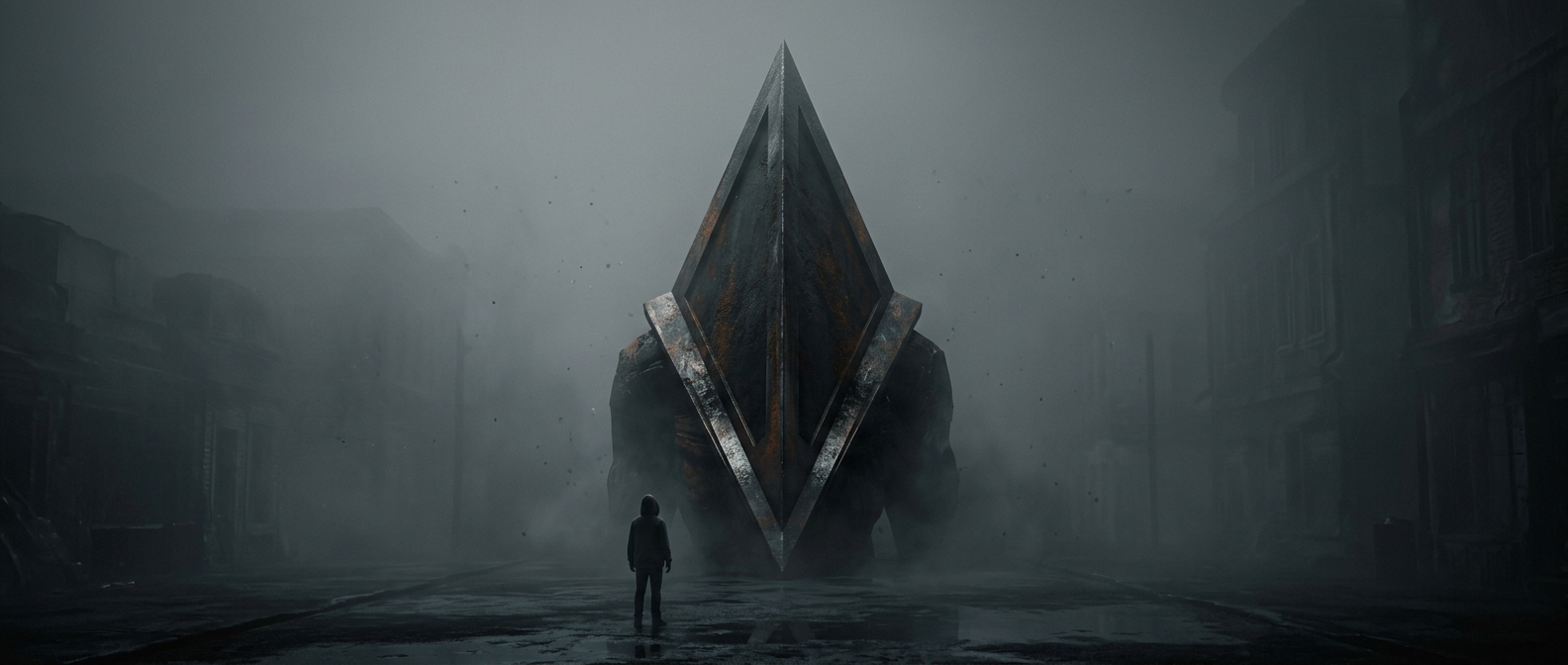
Pyramid Head, formally called the Red Pyramid Thing, is unsettling partly because his design combines familiar parts in an unfamiliar way: a human body, an enormous angular helmet, and a weapon too large to handle gracefully. The helmet hides his face and makes his posture hard to read. Instead of reacting to an expression, the player has to judge a heavy figure by how it moves—and whether it is getting closer.
That silhouette also shapes the monster’s role in Silent Hill 2. He looks less like an animal that might attack at random than an executioner: deliberate, impersonal, and difficult to reason with. The Great Knife, which scrapes along the ground as he moves, reinforces the sense that violence is being brought through the environment rather than unleashed in a quick burst.
The design serves the story
Pyramid Head is not simply a recurring obstacle. His appearances are tied to James Sunderland, the game’s protagonist, and to the guilt and punishment at the heart of James’s story. The creature’s imposing, ritual-like appearance gives that inner conflict a physical presence. The game does not need to explain every part of the symbolism in dialogue; it lets the player encounter the figure and gradually connect him to what James is struggling to face.
That connection is why the monster’s menace is more than a matter of size. A conventional enemy can be defeated and left behind. Pyramid Head feels like a consequence that keeps returning. His design makes the player feel that weight before the story has fully explained it: a faceless judge, a dragging blade, and a presence that is hard to mistake for anything harmless.