A waiting hazard becomes a decision
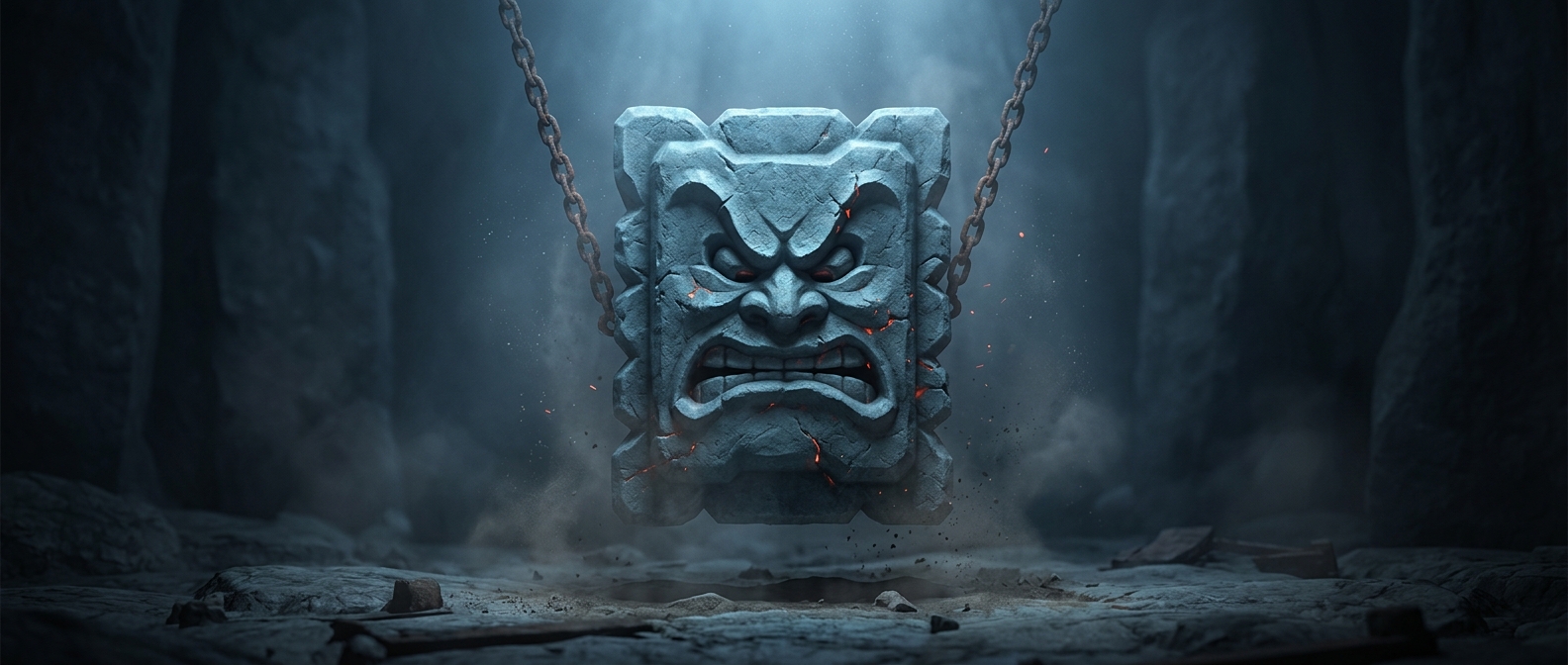
A Thwomp is more than a falling block. Its stillness gives the player time to notice it, but its position turns that pause into a question: is this a safe opening, or a trap waiting for the right moment? When the player moves into range, the stone face drops into the path, converting a visible obstacle into a timed one.
That change makes the player do two jobs at once: judge the gap and anticipate the trigger. Rushing underneath may be quicker, but waiting for the slam—and then crossing while the Thwomp is down or recovering—can be safer. The exact timing and behavior vary across Mario games, but the core tension comes from the same simple sequence: wait, react, recover.
Why the routine works
The Thwomp’s expression and heavy movement make its threat readable. Players can recognize what it is likely to do, then learn the timing through observation or a failed attempt. That is different from an unseen trap: the danger is presented plainly, while the challenge lies in acting at the right moment.
Its idle pose also creates suspense without requiring constant motion. A level can place one above a narrow passage and let the player’s own approach set the action in motion. The block appears to have spent the whole time waiting—but for the player, that frozen second is a chance to plan. Then the stone crashes down, and the safe route becomes a matter of timing.