Why DOOM Fits on Unexpected Hardware
DOOM was built for the modest personal computers of 1993, not for today’s powerful gaming machines. Its original engine draws a three-dimensional-looking world using a technique called 2.5D: rooms and corridors are laid out on a flat map, while walls and enemies are rendered to create the impression of depth. That approach demands far less computing power than modern 3D graphics.
The game’s design also makes it adaptable. Its engine can be modified to suit different processors, screens, and input devices. And when id Software released the source code—the human-readable instructions that make the program work—developers gained a practical starting point for ports. The code was released in 1997; the later GPL release made it possible to share modified versions under an open-source license.
What Counts as “Running” the Game?
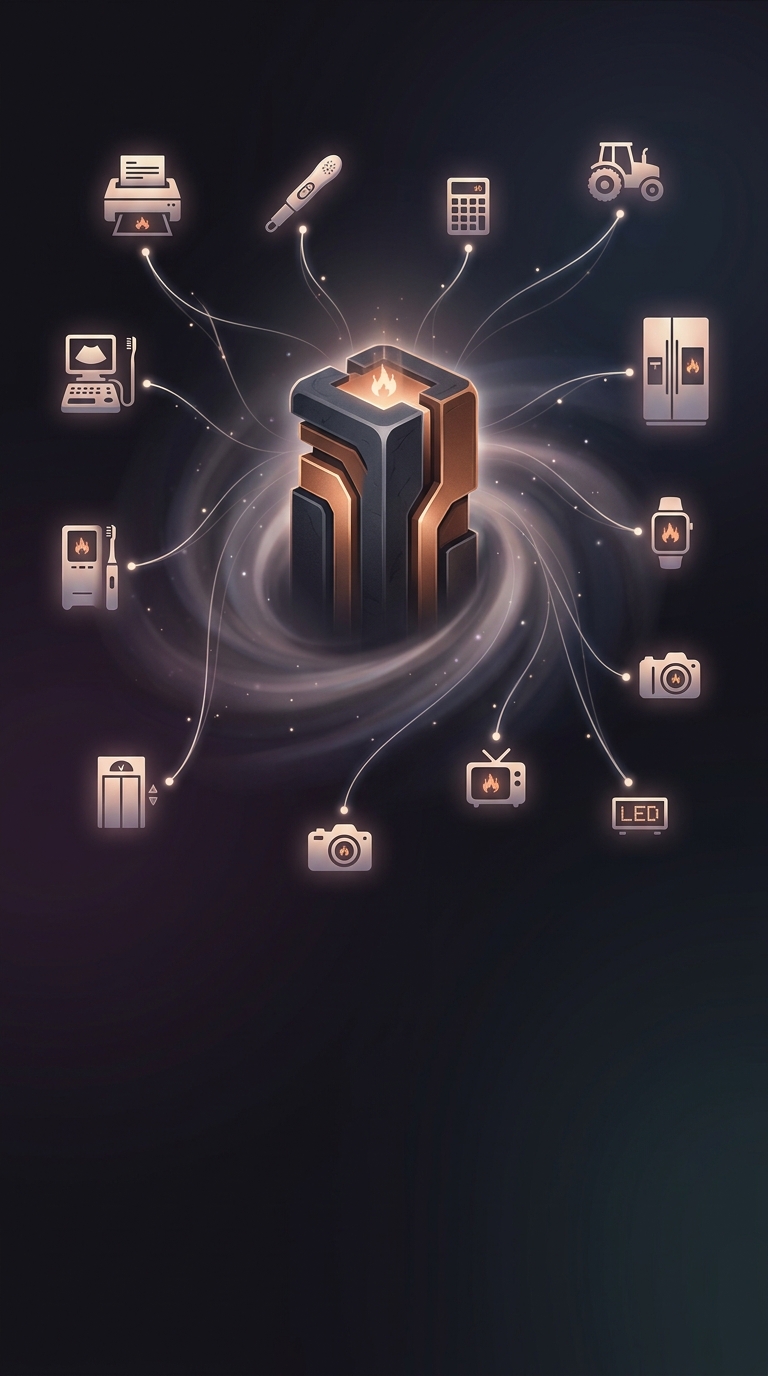
A device has genuinely played DOOM when it executes the game’s logic: it processes the map, moves enemies, responds to controls, and draws each frame. That can require substantial adaptation. A tiny screen may need a different display method, while an unusual device may need a new way to translate button presses into movement and firing.
There is an important distinction between that and showing a recording or streaming a game rendered somewhere else. A screen displaying DOOM footage has not necessarily run DOOM; the game may be executing on a separate computer. Emulation is another case: software imitates a different machine, allowing the game to run inside that imitation rather than directly on the device’s native system.
That is why each unusual port is a small engineering demonstration, not merely a novelty. It tests how much of the original game can be reshaped around a device—and reveals the minimum a machine needs to make a player’s actions change the game world in real time.