How a Game Developer Became the Art Reference
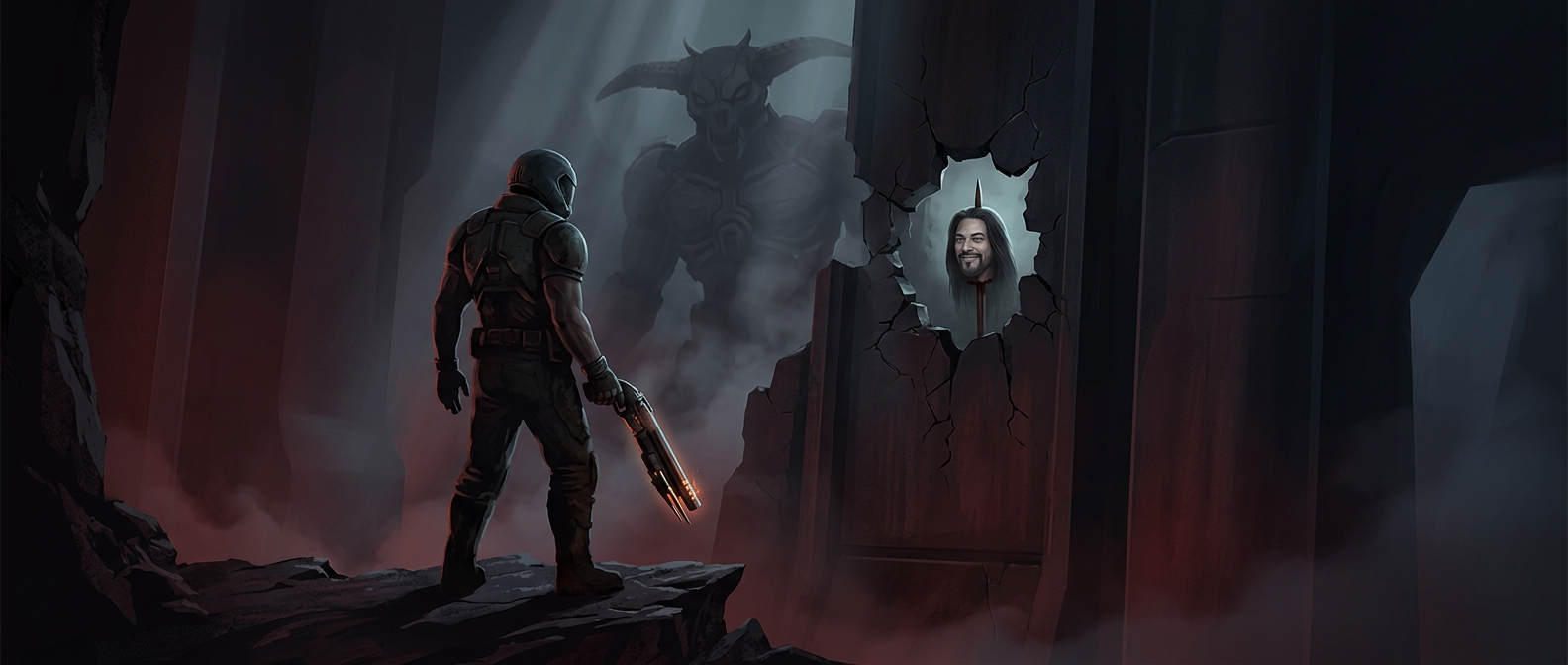
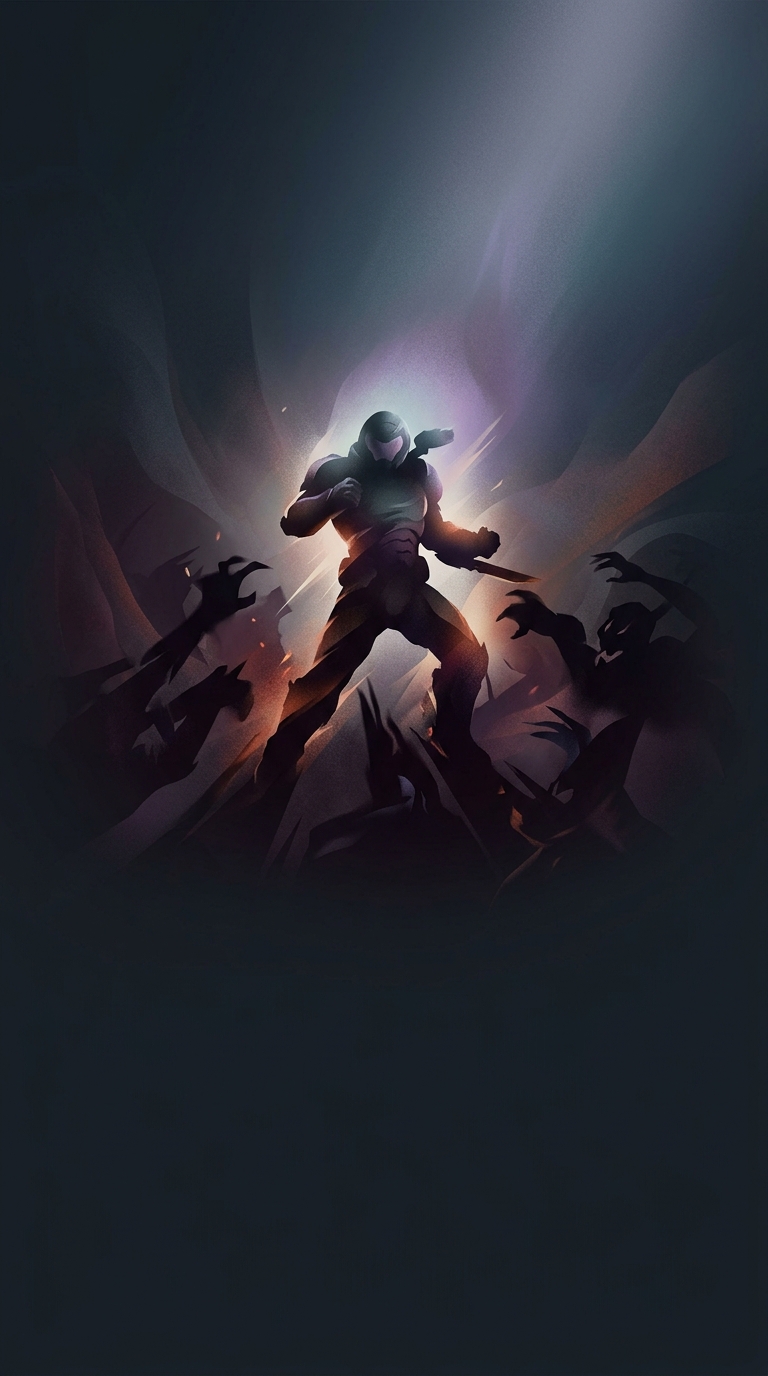
The original Doom box art had to sell a scene the game itself could not show on a store shelf: a lone space marine surrounded by attacking monsters. The cover was a painted illustration, not an image captured from the game, so the artist needed a clear physical reference for the marine’s body and pose.
A hired bodybuilder seemed like an obvious model, but strength and the right silhouette were not the same thing. The pose needed to read as a frantic fight—an armed figure twisting toward danger—not simply as a person showing off his muscles. When the model could not produce the pose the team wanted, id Software co-founder John Romero demonstrated it himself.
From Living Pose to Painted Action
Romero’s impromptu modeling turned an abstract request into something an illustrator could study. Reference photos preserve details that are hard to communicate in words: where the shoulders turn, how the arms reach, and how the torso bends. An artist can then reshape those observations into a more dramatic, readable image.
That translation matters especially on a small box. A viewer should recognize the central figure and the threat around him at a glance, even without seeing the game in motion. The pose therefore had to communicate action through the outline of the body alone.
Romero wasn’t replacing the illustrator; he was supplying a useful piece of visual evidence. The memorable cover began, in part, with a developer physically acting out the kind of danger the game asked players to imagine.