A subway ride was also a new kind of spectacle
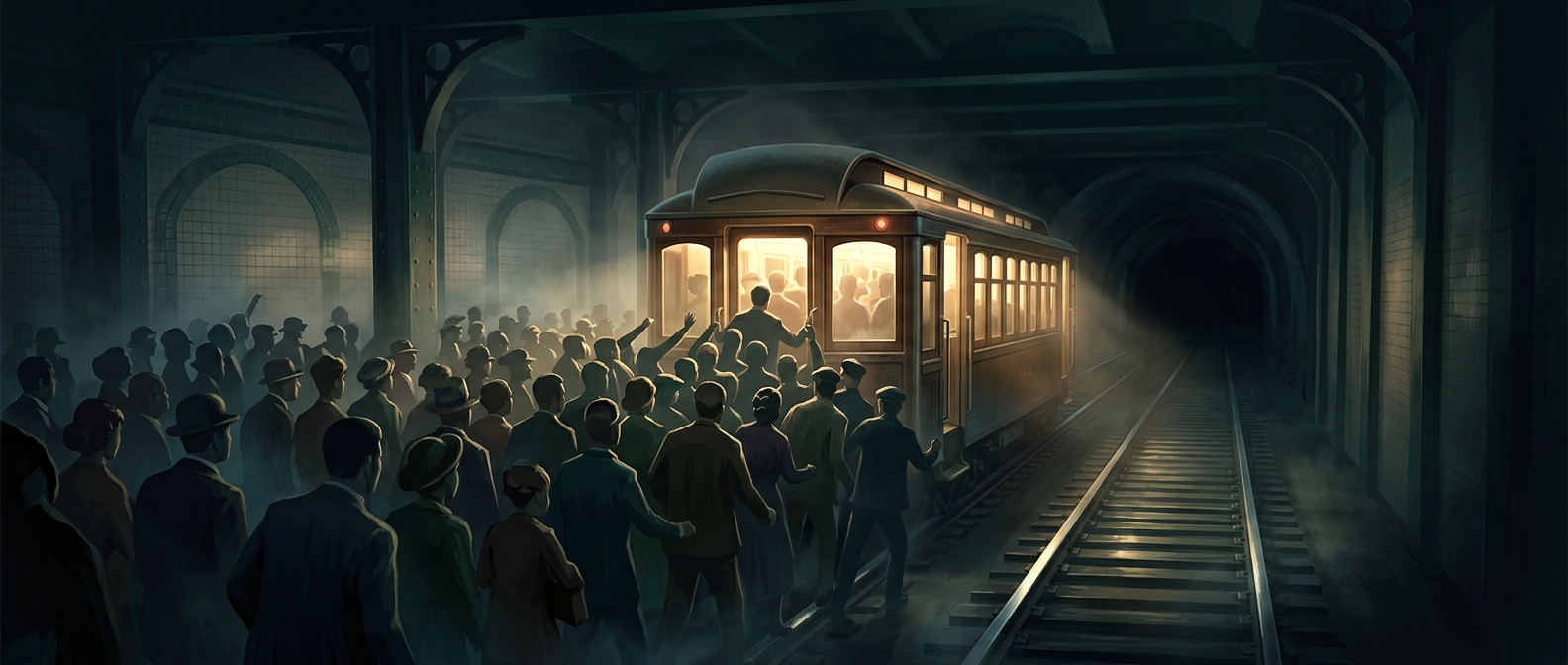
When New York’s first subway opened, more than 100,000 people rode it on the first day. Not everyone was simply trying to get somewhere. For many, the trip itself was the attraction: an opportunity to descend below familiar streets and experience a form of travel most city residents had never encountered.
That curiosity changed the meaning of opening day. A subway was built to move people through the city, but its first passengers also treated it as a public demonstration of what the new system could do. Traveling underground turned an unseen piece of urban infrastructure into something people could experience firsthand.
Curiosity met practical transportation
The same ride could serve two purposes. Passengers might be commuting, exploring, or doing a little of both; the novelty drew people who would not otherwise have needed to travel that day. The result was a crowd shaped not only by the subway’s usefulness, but by the desire to see and feel this new way of moving beneath New York.
That first rush is a reminder that major transport systems can arrive as cultural events as well as practical tools. On opening day, New Yorkers were not just entering a new transit network—they were taking a sightseeing trip through a city hidden beneath their own.