Why Your Body Keeps the Old Time
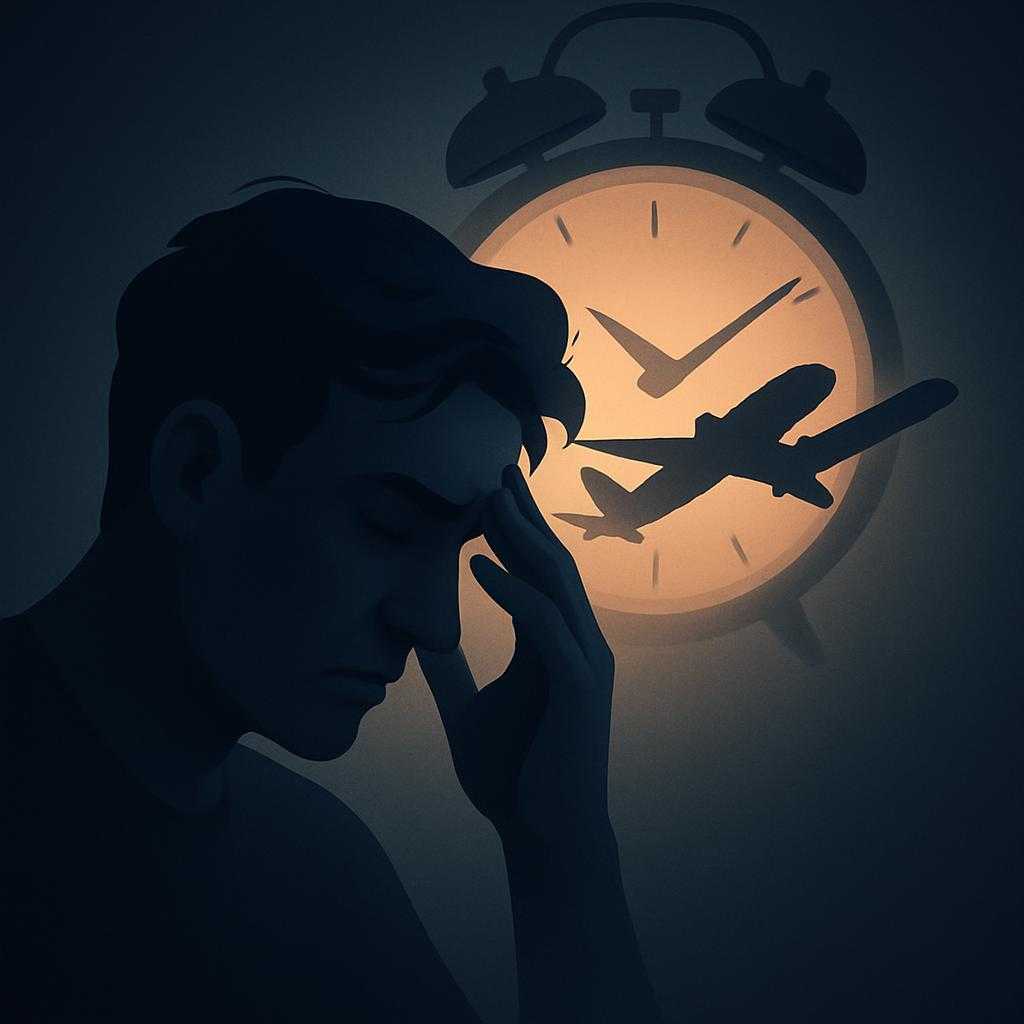
Jet lag is mainly a mismatch between the time on the clock at your destination and the time your body’s internal clock expects. That clock, centered in the brain, helps coordinate sleep, alertness, digestion, and other daily rhythms. It does not reset as quickly as an airplane can carry you across time zones.
So when local time says it is morning, your body may still be preparing for sleep. At night, it may be sending signals that promote wakefulness. The result is not simply tiredness: different body functions can be out of step with the new schedule, making concentration, appetite, and sleep feel unpredictable.
Light Is the Main Reset Signal
The strongest cue for shifting the body clock is light. Light entering the eyes helps the brain judge where day and night fall, gradually moving its timing toward the local schedule. Because that adjustment takes time, the direction of travel matters: after crossing time zones, the body generally has to shift its rhythms earlier or later, depending on the trip.
Meals and activity can also serve as timing cues, but they usually do not override the clock’s adjustment to light. And a long flight can add ordinary sleep loss, which worsens fatigue without being the same thing as jet lag.
Until the internal clock catches up, local time and body time are competing schedules. That is why a person can be exhausted yet unable to sleep—or feel hungry when everyone around them is eating at a different hour.