Why a Tall Tile Is Easier to Tip
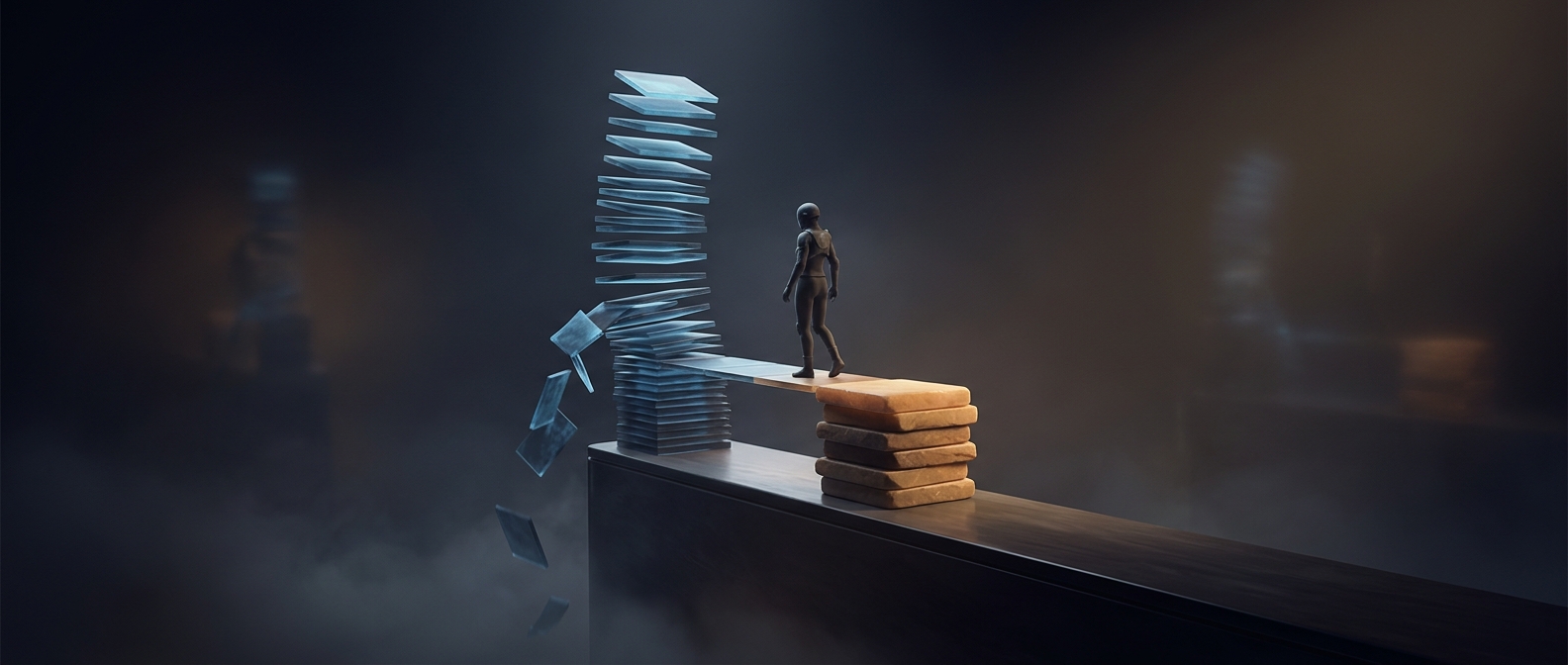
An upright tile stays standing while the vertical line through its center of mass—the point where its weight effectively acts—falls inside its footprint on the floor. If the tile tilts far enough that this line passes beyond a bottom edge, gravity pulls it farther over instead of restoring it upright.
For a roughly uniform rectangular tile, the tipping threshold depends on its height compared with the width of its base in the direction it might fall. A taller tile has its center of mass higher, so a small tilt moves the weight’s line of action farther sideways. A deeper base gives that line more room before it crosses an edge. That is why a tile that is tall relative to its depth is easier to topple.
What the Ratio Means in Play
The ratio does not make stability a matter of appearance alone: it sets how much tilt the tile can tolerate before gravity takes over. A broad, low tile can withstand a larger lean; a narrow, tall one can be upset by a smaller bump. Surface unevenness and how the tile is placed also matter, but the height-to-depth ratio explains the basic tradeoff.
For game pieces arranged upright, that tradeoff shapes the feel of setup and handling. A tall profile may be easier to see, yet it demands steadier placement. Once a tile’s weight shifts past its supporting edge, simply nudging it back is no longer enough—the tile has begun to fall.