Why a bike lane can vanish at an intersection
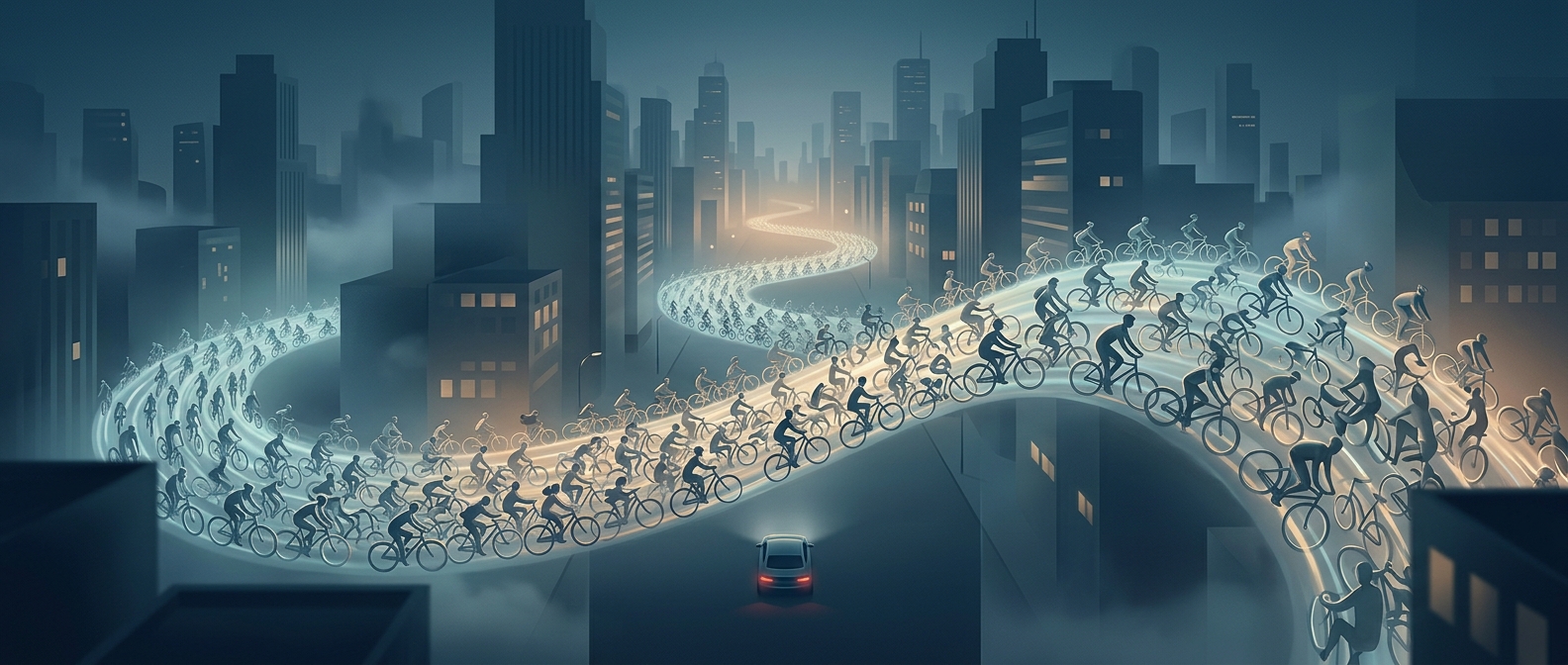
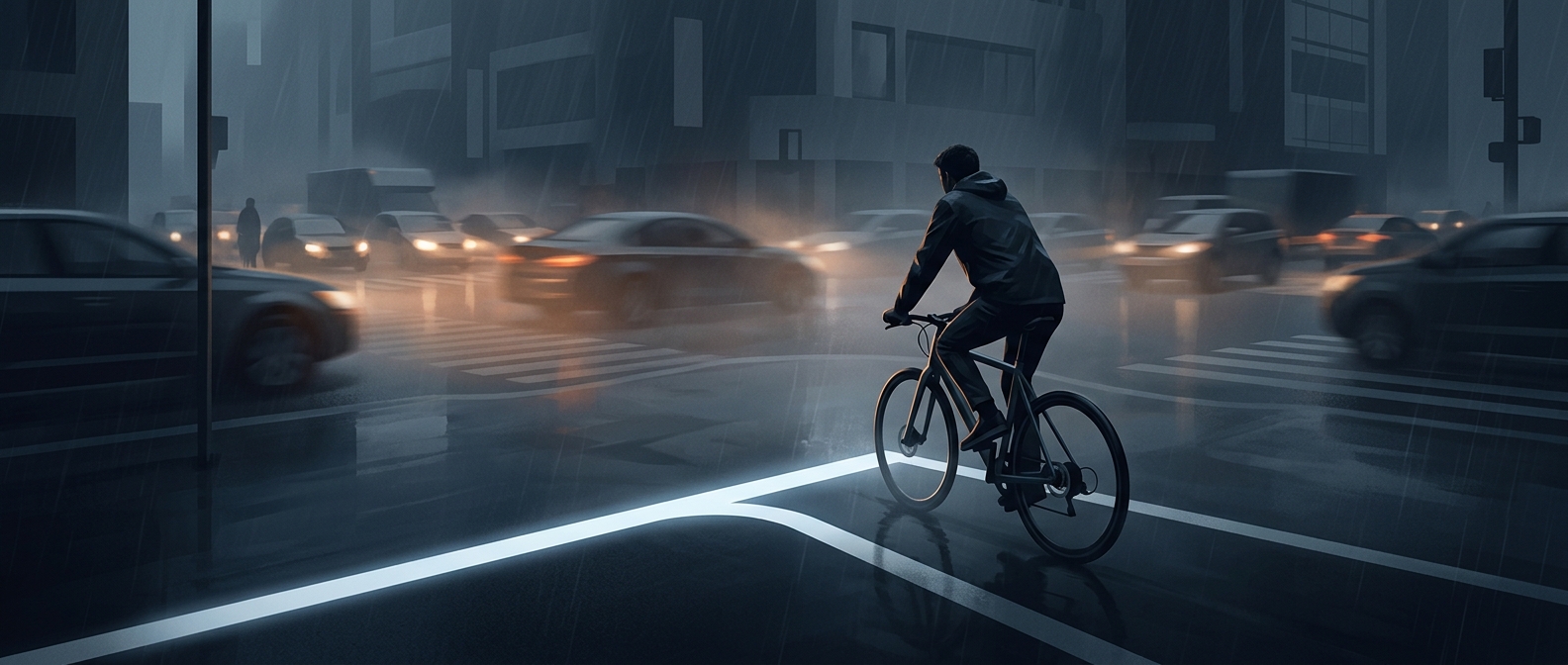
A street gives designers a relatively simple job: keep bicycles moving along the curb while cars travel beside them. An intersection turns that arrangement into a puzzle. Drivers may cross a bicycle’s path to turn, cyclists may need to continue straight or turn themselves, and pedestrians need space to cross. A painted lane cannot by itself resolve those competing movements.
Where a curbside bike lane meets a right-turn lane, for example, the street must decide which movement goes first and where each road user should wait. Some designs merge cyclists and turning drivers into a shared approach; others keep the paths separate and control the crossing with signals. If the markings stop without making that next step clear, riders are left to interpret the conflict while moving through traffic.
Protection has to continue through the turn
A protected lane typically uses a curb, posts, or parked cars to separate cyclists from moving traffic along a block. At the junction, that barrier has to open or change shape so people can cross. One option is a protected intersection: cyclists travel around a corner refuge, a small raised or otherwise protected waiting area, and cross vehicle paths at a more visible, controlled point. Separate signal timing can give cyclists a turn to move without turning cars crossing their route at the same time.
These designs take space and require careful coordination of signals, crossings, and turning movements. Where streets are narrow or traffic patterns are complicated, the treatment may instead rely on clear markings, signs, or a designated place for cyclists and turning vehicles to merge. The important detail is that the lane’s end should explain what happens next—not merely stop at the spot where the paths become most complicated.
An abrupt gap is therefore more than a missing stripe: it is a break in the instructions at the exact point where road users need them most.