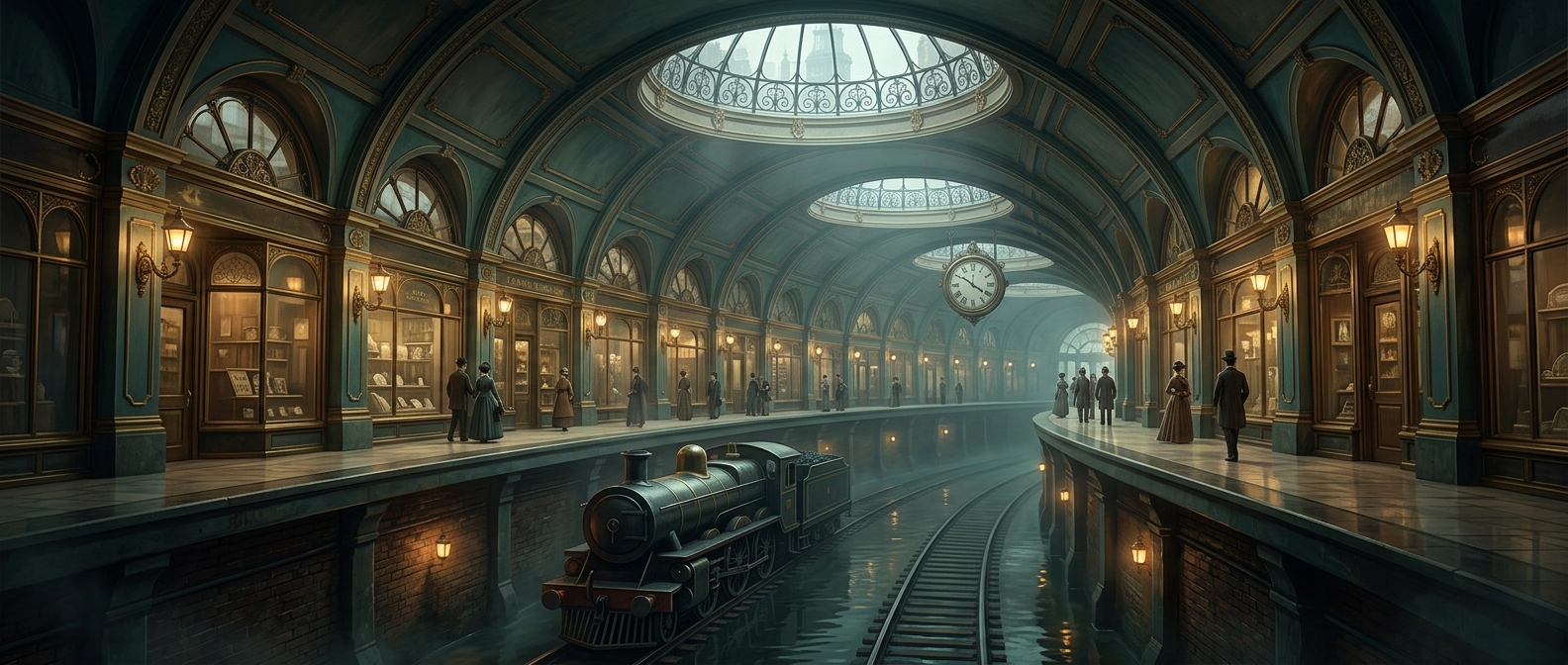
A road beneath the river that never arrived
The Thames Tunnel was built to solve a practical problem: moving people and goods between the banks without relying on boats or ferry crossings. Its brick-lined passage ran beneath the river between Rotherhithe and Wapping, but the plan depended on more than digging a tunnel. Vehicles needed gradual approaches—long ramps connecting the underground route to street level.
Those approaches were never completed. Without them, carts could not use the tunnel as intended, so the expensive crossing opened instead to pedestrians in 1843.
An engineering project became an attraction
A tunnel meant for traffic offered something unusual to Londoners: a chance to walk below the Thames. Visitors paid to enter, and stalls and entertainment made the passage a destination rather than merely a way through. The change in use was a practical response to an unfinished transport scheme, but it also gave the tunnel a new kind of value: people came to experience the engineering itself.
That transformation shows how infrastructure can acquire a second purpose when its original connections fail. The Thames Tunnel was built to carry movement beneath the river; for its first visitors, the journey underground was the main event.