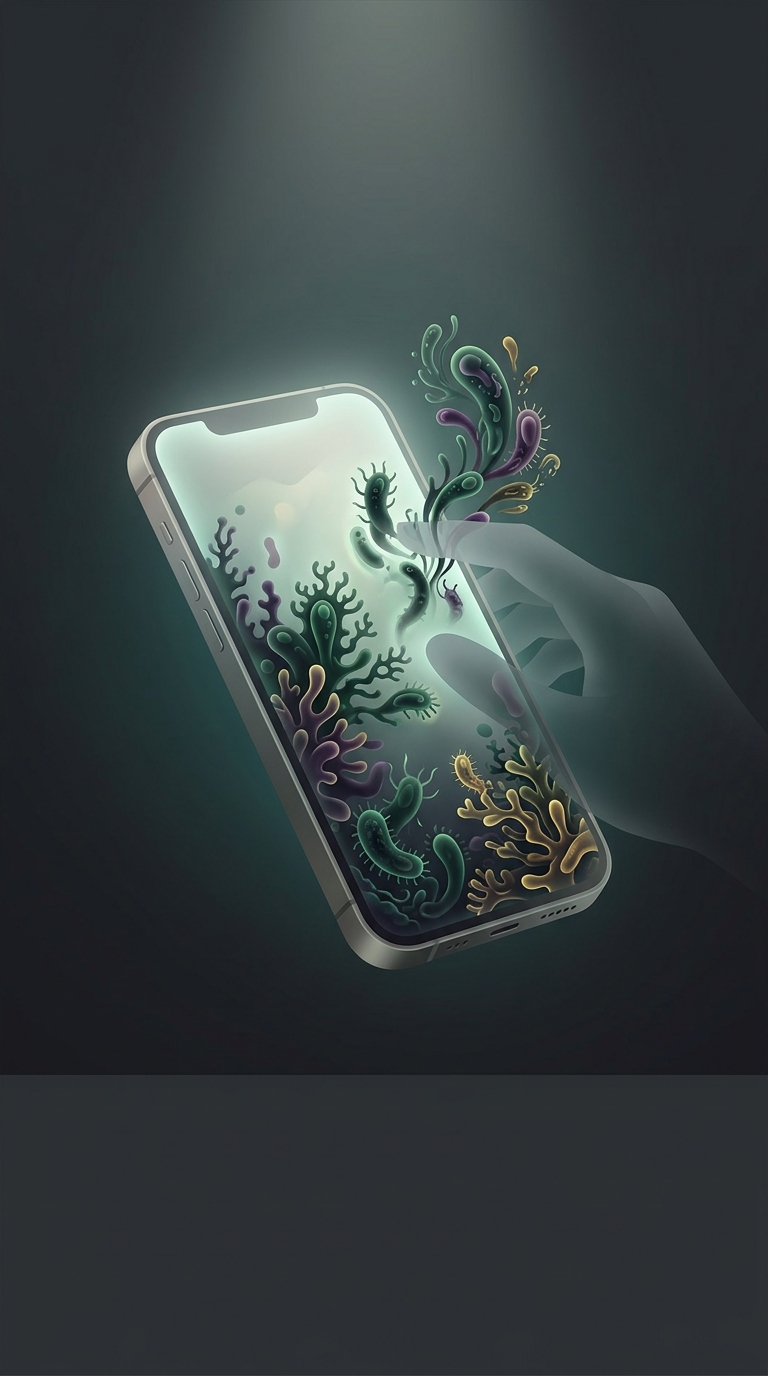
How a phone picks up a microbial trail
A phone’s surface collects more than fingerprints. Each touch can leave behind skin oils, sweat, and tiny particles, along with microbes from the hands that touched it. Later touches can move some of that material back onto fingers—or onto the cheek and ear during a call. The phone’s route through the day matters: a device used on transit, at a desk, and in a bathroom gets exposed to many different surfaces and hands.
The “petri dish” image needs one qualification. A petri dish is designed to help microbes grow; a phone’s glass is usually dry and does not feed them. A phone can still carry microbes from one place to another, but finding bacteria on it does not by itself mean they are dangerous or multiplying there.
Why self-cleaning is harder than it sounds
A phone that disinfects itself would have to treat the whole device, not just the visible screen. Germ-killing ultraviolet light, for example, works only where it reaches directly; shadows around edges, buttons, and camera bumps could leave untreated spots. A built-in system would also need to avoid exposing the user and damaging the screen’s coatings or other components.
For now, cleaning is a practical tradeoff: use a method suitable for the particular device, rather than assuming a harsh household cleaner is safe for its finishes. And handwashing still matters. It removes what hands pick up from the phone and everything else; the phone can then begin collecting new traces with the next touch.