How a 1:25 city changes your sense of scale
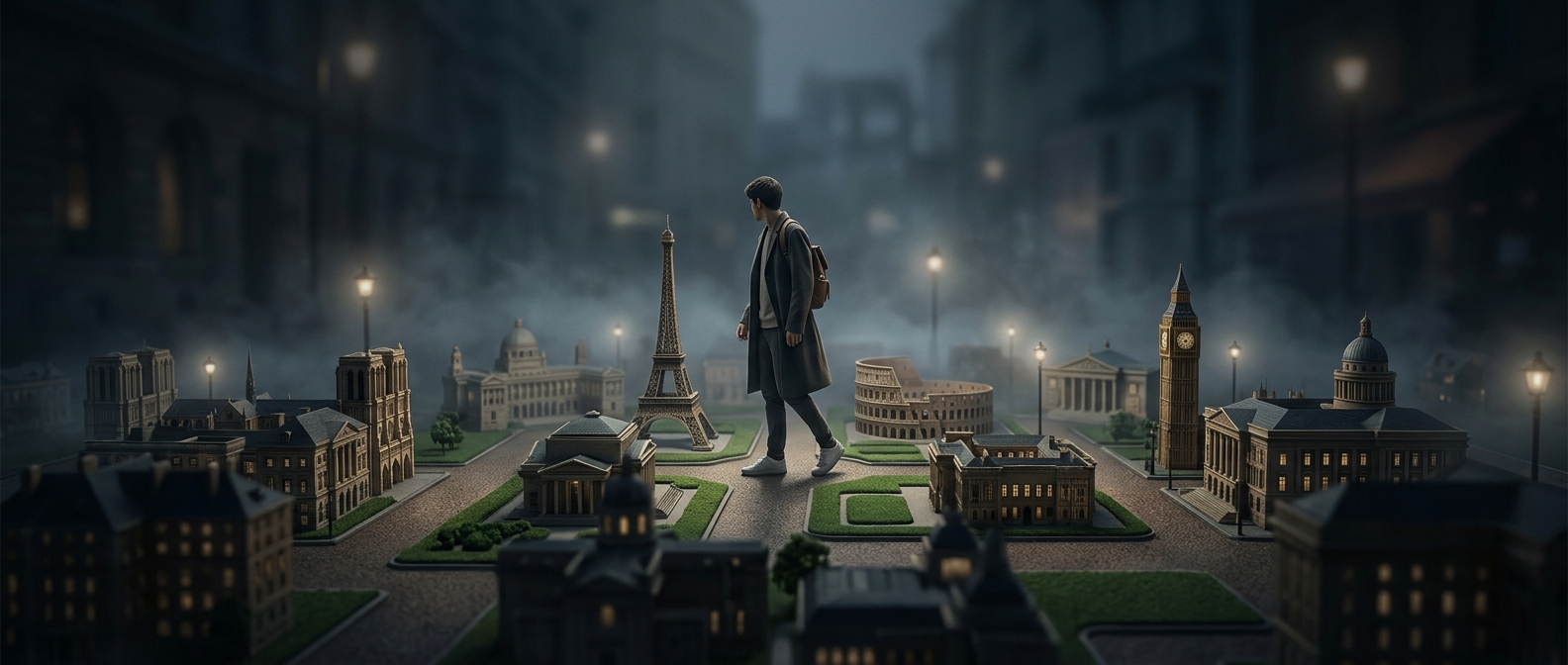
At a scale of 1:25, every model measurement is one twenty-fifth of its real-world counterpart: a 25-meter landmark, for example, would stand about a meter tall. The buildings are reduced, but visitors are not. That mismatch makes an ordinary person seem enormous beside streets and structures that would tower over them in a real city.
The effect depends on comparison. A landmark seen alone may simply look like a detailed model; put it beside a path a visitor can walk along, and the difference in scale becomes immediate. Your eye can compare the miniature façades with your own body, turning abstract proportions into a playful scene of looming over a city.
The park makes looking part of the experience
A miniature city is designed to be viewed from close range, not from the distant vantage point of an aerial photograph. Visitors can move around the models and inspect rooftops, streets, and landmarks from changing angles. Those shifts reveal details that are easy to miss when seeing a real city from street level, while the surrounding paths keep the visitor’s own size in view.
That combination creates a simple role reversal: instead of being dwarfed by architecture, visitors become the largest figures in the scene. A familiar landmark is no longer only something to look up at—it becomes part of a small world that fits within reach.