Why a Haunted House Can Smell Like Something Died
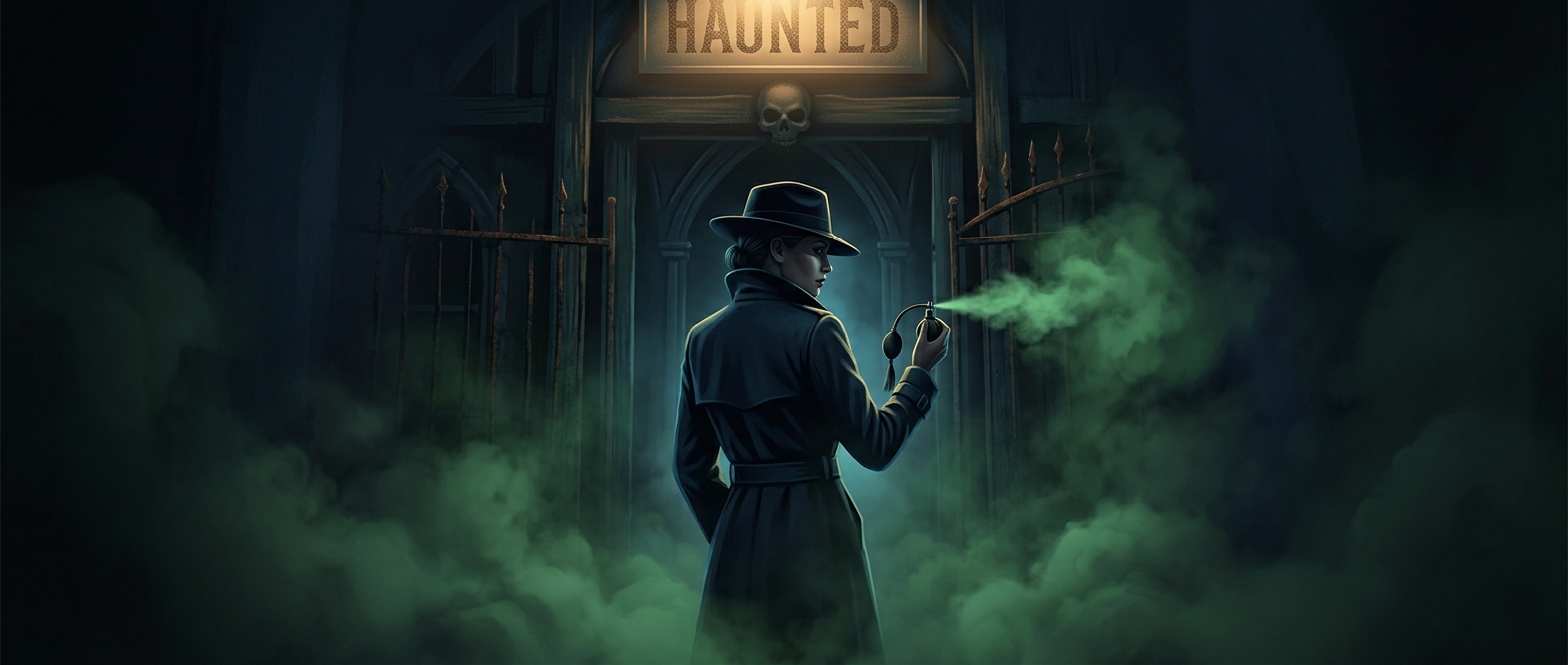
A visual scare gives you something to look at; a foul odor makes the whole space seem threatening. Some haunted attractions release smells resembling sewage or decay through their ventilation systems, so the scent reaches visitors before—or without—a clear visual source. That uncertainty is part of the effect: people may register the room as unpleasant before they can explain why.
Smell also works differently from a sudden image or sound. Odor can linger after a visitor has moved on, and it is difficult to pinpoint exactly where it is coming from. That makes it a useful tool for extending a scene’s unease rather than delivering one quick jolt.
The Scare Happens Before the Jump
A rotten smell suggests contamination or spoiled material, associations that can provoke an immediate reaction such as disgust or a desire to get away. The attraction does not need visitors to mistake a theatrical odor for a real hazard. It only needs the smell to make the setting feel wrong, priming them to interpret the next shadow, noise, or movement as more disturbing.
Ventilation helps distribute the effect through a passage or room, instead of confining it to a single visible prop. Used alongside lighting, sound, and set design, the odor becomes an invisible part of the scene. A jump scare may end as soon as the surprise passes; a smell can stay in the air—and in a visitor’s memory—long enough to color what happens next.