A theme park with no way out
In RollerCoaster Tycoon, guests are simulated visitors: they walk along paths, make choices about where to go, and carry limited money. Players could exploit that simple model by building a maze of paths, steering guests into it, and then deleting the connection back to the rest of the park. The maze became a trap not because the game had a special “captive guest” feature, but because its visitors could only move through the paths the player provided.
That turned park design into a strange kind of control. A guest might keep wandering, unable to reach the park’s exit, while still responding to ordinary needs—like finding a bathroom.
Turning a basic need into a toll
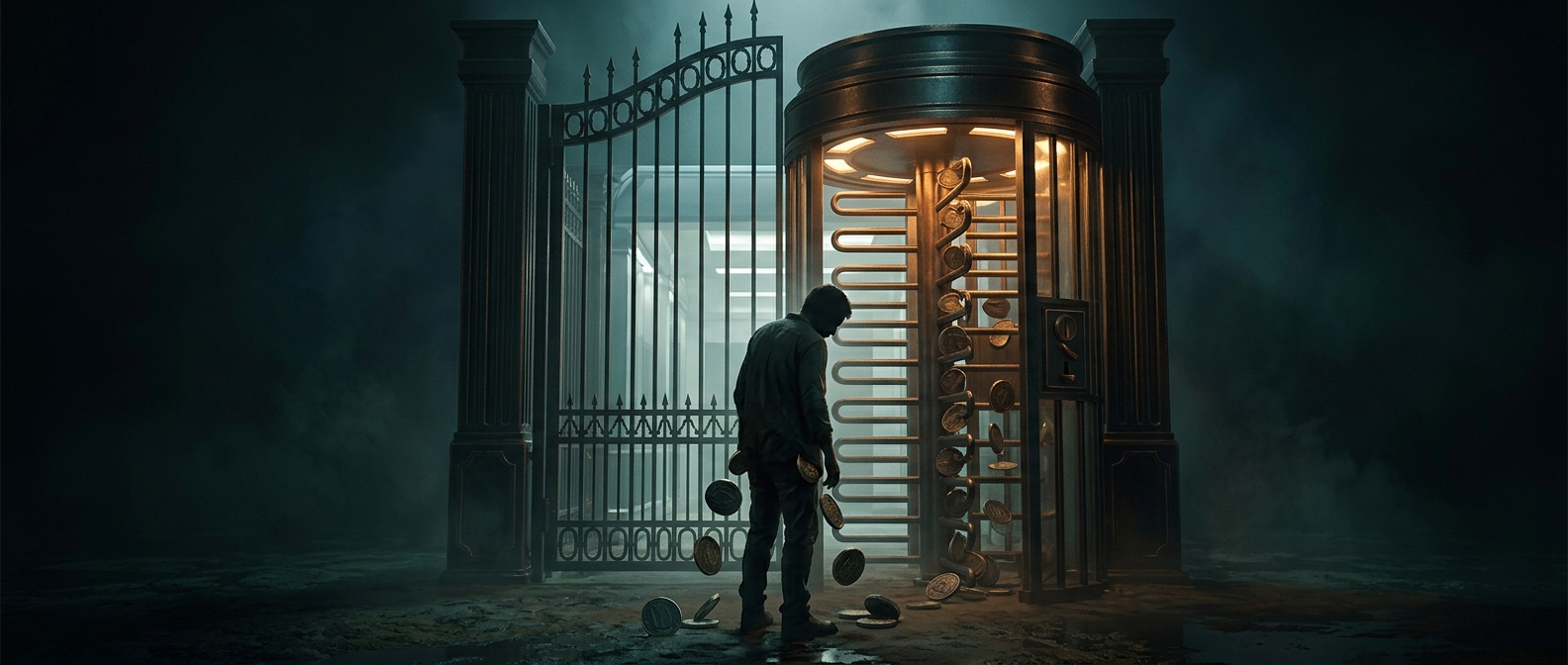
Bathrooms were park attractions with a price players could set. If a trapped guest needed one and could reach it through the maze, the player could charge an exorbitant fee—$10 in the notorious version of the prank. The joke depended on the mismatch between the guest’s urgent need and the player’s control over both the route and the price.
It also exposed the game’s underlying rules. Guests weren’t reasoning about fairness or recognizing that the park had become a scam; they were following the simulation’s available options. The player, meanwhile, could rearrange paths and prices in ways that made an ordinary management system behave like a cruel little experiment.
The sandbox behind the gag
The trick was memorable because RollerCoaster Tycoon gave players tools meant for building and managing a park, but left room to use them against the guests. A path could be infrastructure—or a barrier. A bathroom could be a convenience—or a captive market. The same systems that made the park feel alive also made its visitors vulnerable to the person designing it.