Why the Office Is Built to Be Broken
In Job Simulator, destruction is not a separate mode tucked away from the work. It grows out of the same interaction that makes the assigned tasks playable: objects are there to be picked up, moved, and used. Once a player can handle a mug or stapler as a physical object, using it in an unintended way feels like a natural extension of the controls—not a command the game has to explain.
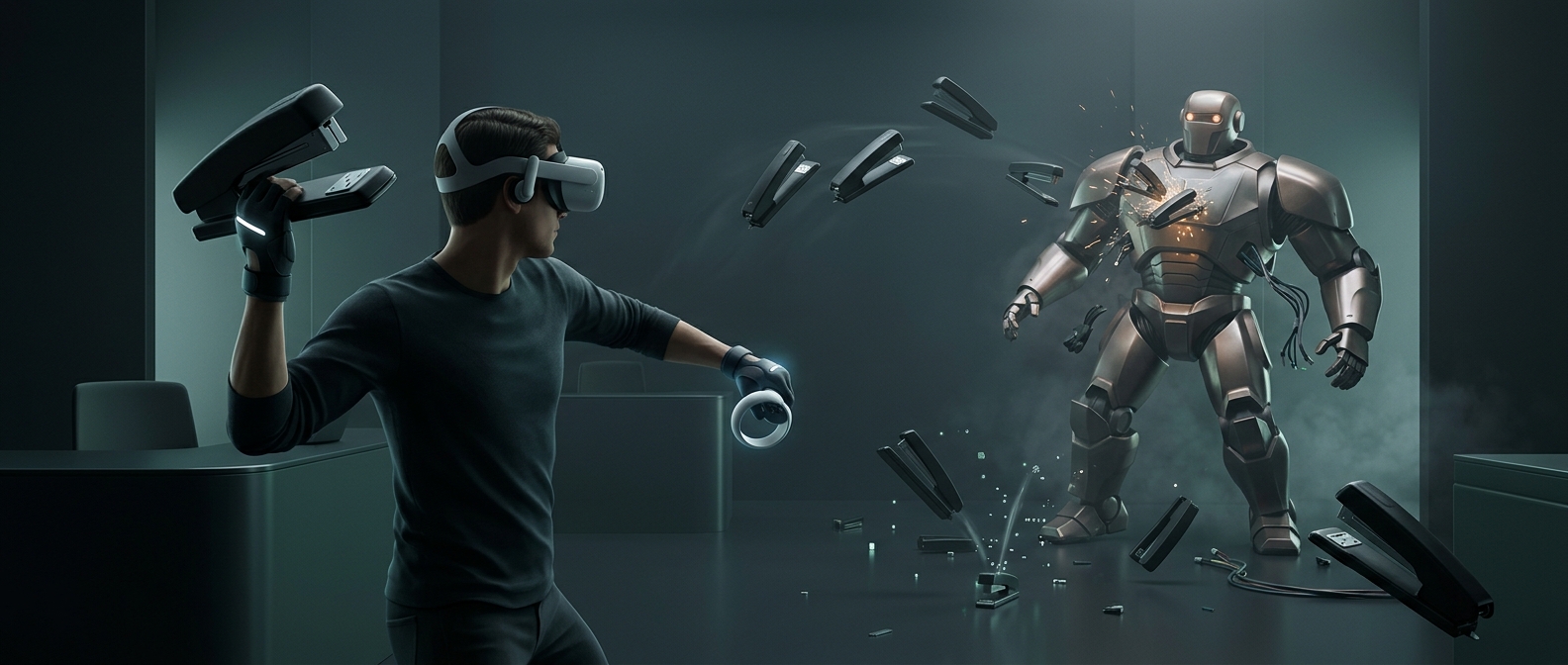
That makes the office a comedy machine. A task gives the player a reason to notice the room’s objects; free handling turns those objects into opportunities for mischief. The joke comes from the gap between the orderly workplace routine and what a player can actually do with the props.
A Small Choice That Changes the Role
A conventional job game might treat distractions as failure: ignore the task, and progress stops. Here, the contrast between the assigned work and the player’s behavior is part of the fun. The player is not merely completing a checklist but improvising inside a space that invites experimentation.
Virtual reality makes that choice especially immediate. Instead of selecting “throw” from a menu, players perform the gesture with their tracked hands. The result is less like watching a workplace gag and more like causing one yourself. The office’s absurdity depends on that sense of physical agency: a desk prop can become a tool, a distraction, or a projectile simply because the player decides to treat it differently.