Making the Vault Feel Heavy
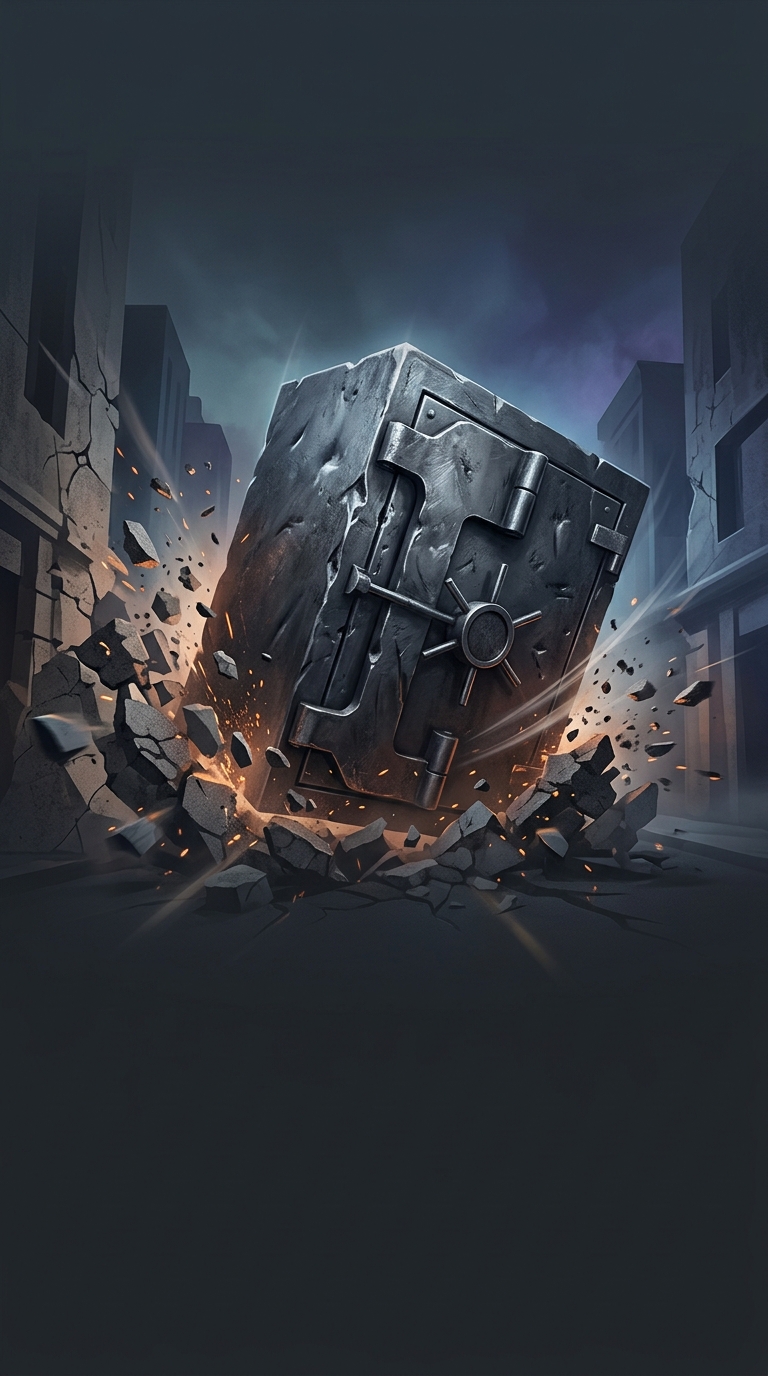
A bank vault only works as an action-movie threat if it seems to have real mass. In Fast Five, the filmmakers gave the runaway vault a physical body: a steel shell mounted on a truck chassis, with a stunt driver steering from inside. That setup let the object roll, yaw, and slam into its surroundings under its own momentum rather than merely appear to do so on screen.
The distinction matters because weight changes how a collision looks. A digital object can be animated to move in any direction, but a practical vehicle has to carry speed into a turn and react when it hits something. The camera can capture those consequences—the jolts, the dust, and the damage—happening together.
A Moving Prop, Not a Real Bank Vault
The rig was a drivable shell, not a working vault. Its truck chassis supplied the mobility; the steel exterior supplied the imposing shape audiences needed to read. A stunt driver inside could steer it into prepared storefronts and concrete structures, making the destruction part of the action rather than a separate visual effect added later.
That choice also imposed limits. A heavy vehicle cannot move like a weightless animation, and each collision has to be staged around where the rig can safely travel and what it can hit. The practical approach trades unrestricted digital control for physical contact: the vault’s path has to be planned, but its impacts have genuine force.
Why the Real Collision Reads
The result is not simply a large prop on camera. The moving shell, the stunt driving, and the breakaway scenery all respond within the same shot, giving viewers a clear sense of cause and effect: the vault swings, strikes, and keeps going. The sequence’s scale comes from making the destruction obey the movement of a real vehicle.