The Board Became an Interface
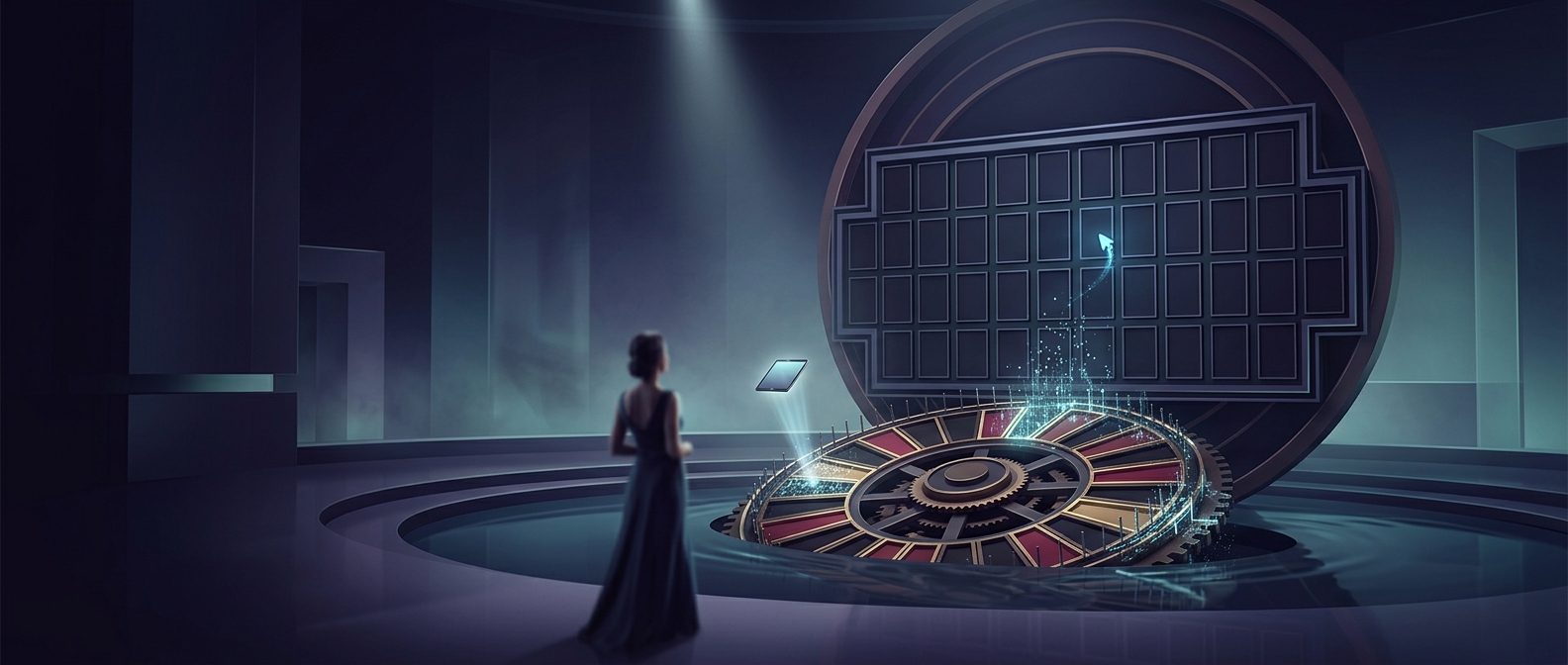
The letter board is more than a backdrop: it is the game’s shared visual record. As contestants guess, each letter must appear in the right place, clearly enough for players in the studio and viewers at home to follow the puzzle. In the older setup, a letter was revealed by physically turning a panel. A touchscreen makes that reveal an electronic change to the display instead.
That shift changes the work behind the gesture. A tap can tell the board’s system which position to update, while the screen handles the visible reveal. The human action remains easy to read, but the mechanism no longer depends on moving a separate piece of material for every letter.
Same Puzzle, Different Performance
The game’s central rhythm stays intact: a contestant chooses a letter, the board reveals whether—and where—it appears, and everyone adjusts their guess. The technology changes how the result is produced, not what counts as a correct answer.
It also changes the sound and feel of the moment. A mechanical turn made the board’s operation audible and tangible; a digital reveal can be quieter and more uniform. White’s tap preserves a visible cue that something is happening, even as the board shifts from a collection of moving parts to a screen. The familiar ritual survives, but its machinery has moved out of sight.