The joke was the point
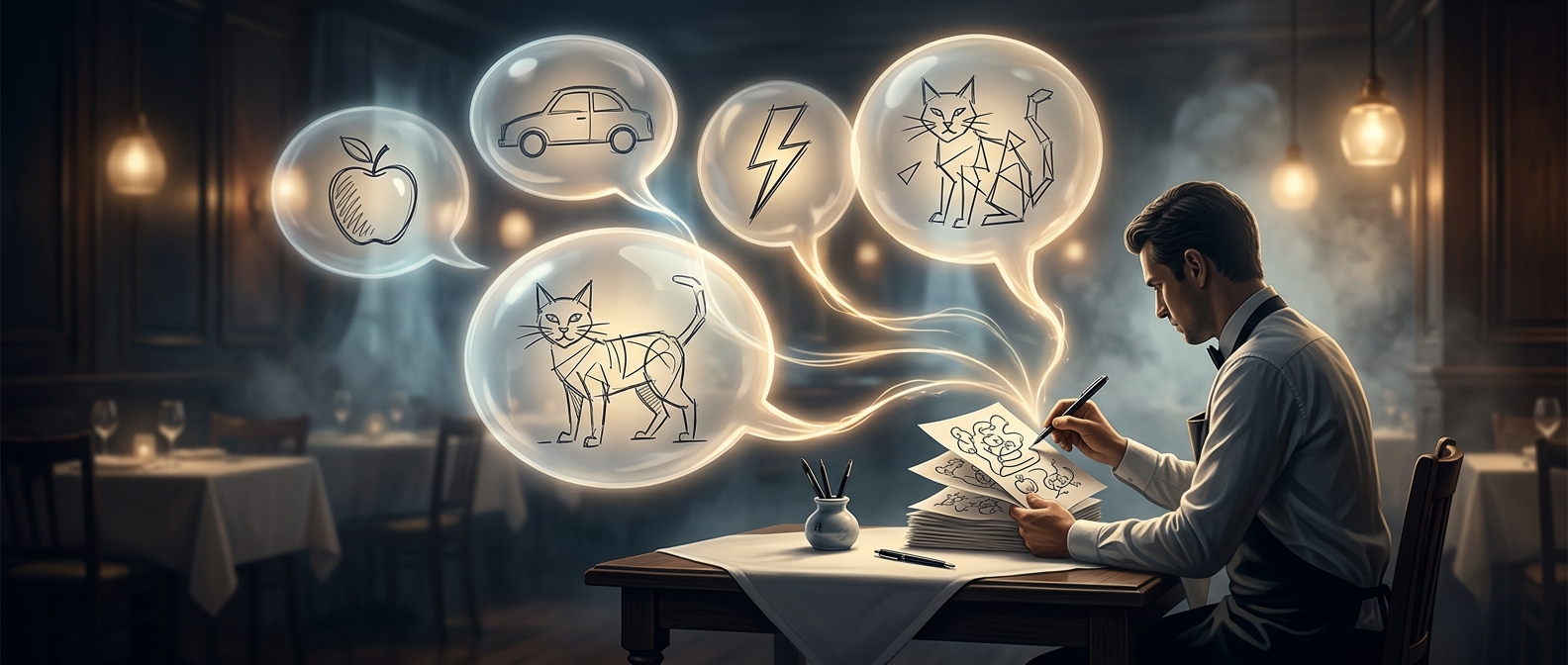
When a young waiter showed friends his crude drawings, their laughter revealed an unexpected kind of fun: the sketch did not have to be good to get people talking. A badly drawn picture could be funny, confusing, or just clear enough to spark a guess. That reaction suggested a game in which the struggle to communicate would be part of the entertainment.
Drawing turns clues into a group puzzle
In Pictionary, one player draws a word or phrase while teammates try to identify it. The artist cannot simply say the answer, so the team must read the marks, test possible meanings, and revise its guesses. A few lines meant to suggest an object can be interpreted as something entirely different—and that mismatch often produces the biggest laugh.
The format also gives everyone a way into the game. Players do not need polished art skills; they need to make a clue recognizable enough, and their teammates need to make sense of it. The rough drawing is not a flaw the game asks players to overcome. It is what creates the puzzle.
A small failure becomes shared entertainment
That is why the friends’ laughter mattered. The sketches had already turned a private attempt at drawing into a social moment: people were looking, guessing, and reacting together. Pictionary gave that moment a repeatable structure, making the artist’s imperfect picture a clue for the whole group rather than merely a bad drawing to admire.