How yeast turns sugar into cannabinoids
Yeast does not naturally make THC or CBD. The trick is to rewire its metabolism—the network of chemical reactions that keeps the cell alive—so sugar becomes starting material for the same kinds of building blocks cannabis uses.
In engineered yeast, cellular reactions supply two ingredients: a fatty-acid-derived compound and a small carbon molecule used to assemble it into a longer chain. Enzymes then join that chain to another building block made by the yeast, producing a shared cannabinoid precursor. Further enzymes convert the precursor into THC or CBD. Enzymes are proteins that speed up specific chemical reactions; choosing and coordinating them is what gives the yeast a new chemical “recipe.”
Why make the compounds this way?
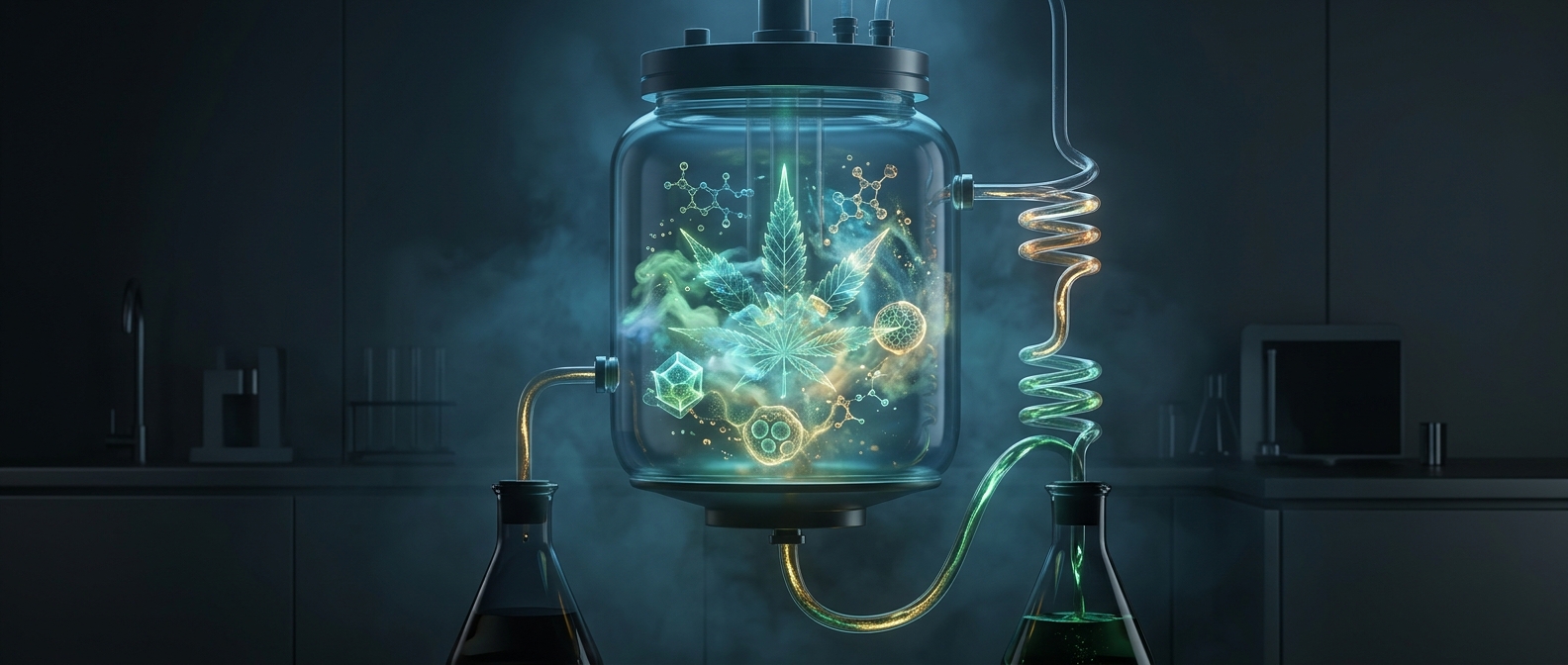
A cannabis plant builds cannabinoids through a pathway spread across its cells. The yeast approach compresses that chemistry into a microorganism that can grow in a controlled vessel, where sugar feeds the cells and the desired molecules can be collected from the fermentation mixture. It offers a potential alternative to cultivating plants, especially for producing particular compounds without harvesting an entire crop.
But a working biological recipe is not the same as an easy factory process. The pathway must run efficiently: yeast needs to keep growing while directing enough of its resources toward the target molecule, and the resulting mixture must be separated and purified. Producing a compound in yeast also does not, by itself, settle questions about cost or availability.
The key change is that cannabinoids need not be made only by a cannabis plant: with the right genetic instructions, yeast can use ordinary sugar as the feedstock for the same target molecules.