The meter is defined by fixing light’s speed
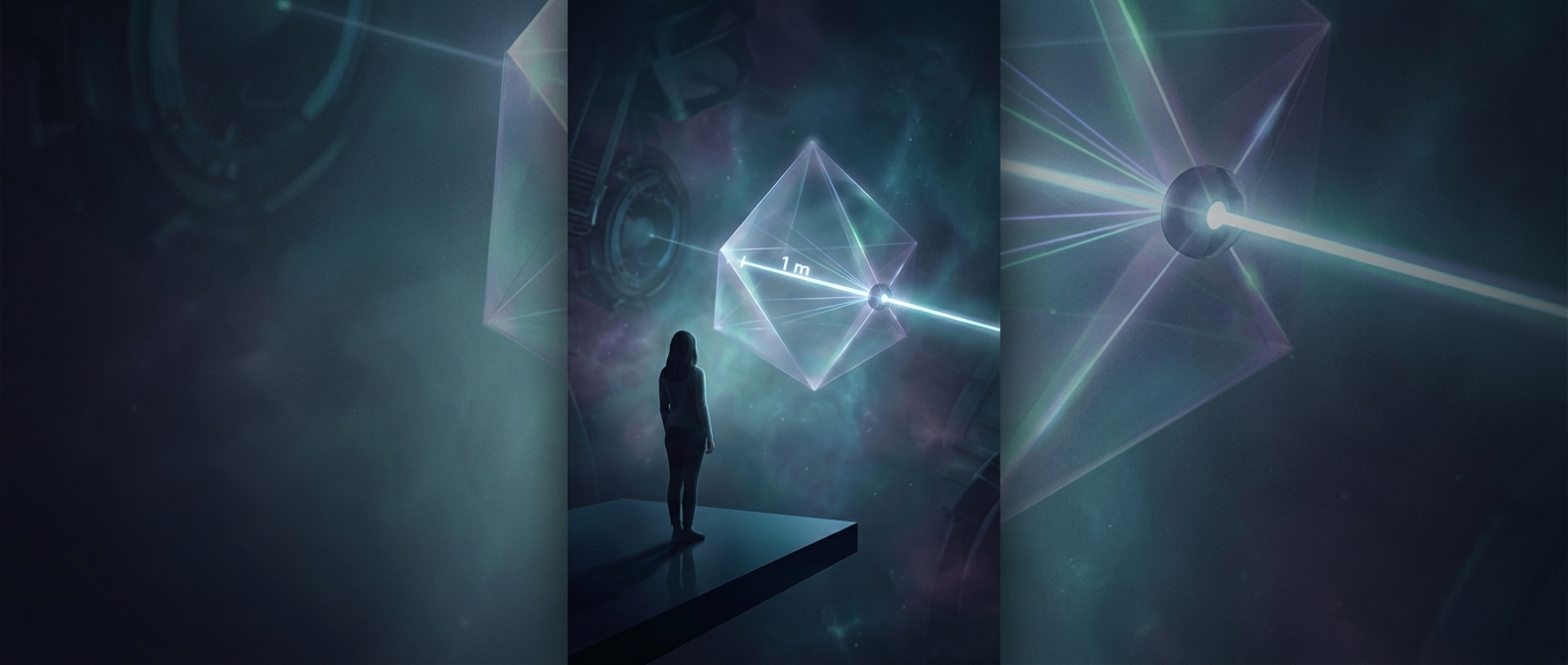
The meter’s modern definition assigns light in a vacuum an exact speed: 299,792,458 meters per second. That makes the meter the distance light travels in precisely 1/299,792,458 of a second. The number is exact by definition; the challenge is making a physical measurement that reproduces the length as closely as possible.
This shifts the standard from an object to a relationship between distance and time. The second itself is tied to a precisely specified frequency of radiation from cesium atoms. An experimenter can use that timing standard, along with carefully controlled light and instruments, to establish a meter without possessing a master ruler.
A definition is not the same as a measurement
In practice, laboratories often compare light waves rather than try to watch light cross a meter directly. They can measure a laser’s frequency—the number of wave cycles passing a point each second—and use the fixed speed of light to determine its wavelength, or the distance between successive wave crests. Comparing those wavelengths with an object’s dimensions lets researchers calibrate instruments and check lengths.
Every real measurement still has uncertainty. Clocks, temperature changes, vibration, and imperfections in optical equipment can affect how accurately a lab realizes the definition. Scientists may debate which methods are most reliable, or how to report tiny discrepancies, without disagreeing about the definition itself.
From a bar to a reproducible procedure
For much of modern history, the meter was represented by a physical bar. But an object can expand, wear, or be difficult to compare with extreme precision. The standard gradually moved toward reproducible physical phenomena, and in 1983 the meter was redefined using light’s speed. The point was not that a metal ruler became useless; it was that no single artifact had to remain the ultimate authority.
The practical consequence is striking: a laboratory can reconstruct the standard from clocks and optical measurements, then use it to make and compare rulers. The meter is no longer a treasured object to visit, but a procedure that can be carried out wherever the necessary measurements are possible.