Why physicists measure a “hit” in area
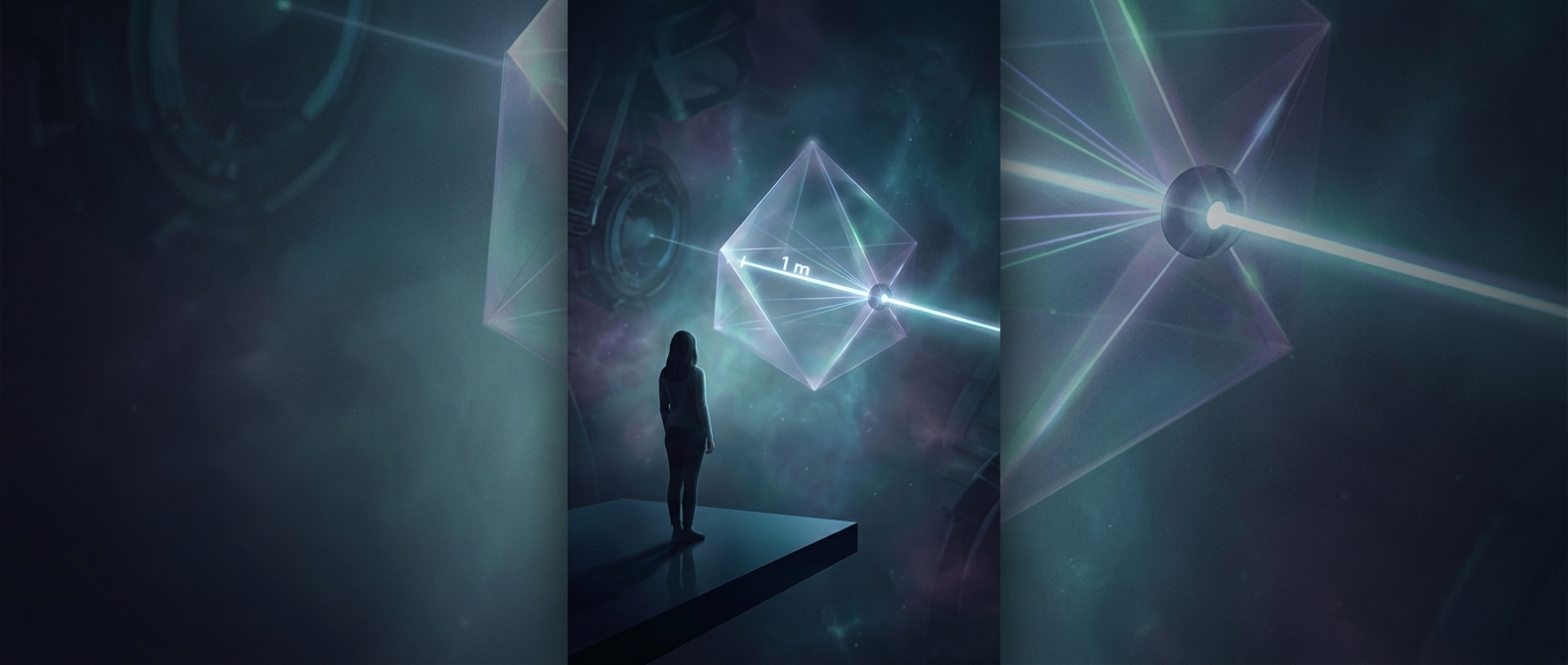
A particle does not have to strike a nucleus like a tiny billiard ball for an interaction to occur. In particle physics, the cross section is an effective area that describes how likely a particular interaction is. A larger cross section means that, under the same conditions, the interaction is more likely—not that the target has a larger, sharply outlined surface.
Imagine firing particles through a thin sheet of material. The chance of an interaction depends both on the cross section and on how many target nuclei the particles encounter along the way. Physicists combine those quantities to estimate how often a detector should register events. The barn gives them a convenient area unit for expressing the cross section, even when the relevant effective area is far smaller than an everyday object.
The number is not the whole story
A cross section belongs to a specific interaction and set of conditions. The same particles can have different cross sections for different processes, and the value can change with their energy. So a barn measurement is not a universal size assigned to a particle or nucleus; it is part of a prediction about what happens when particles meet.
That distinction matters when researchers compare theory with detector data. If a process has a very small cross section, they may need many collisions to see it. A unit with a memorable name makes the calculation easier to discuss, but the actual event rate still depends on the beam, the target, and the interaction being measured.