How a diamond defect turns magnetism into light
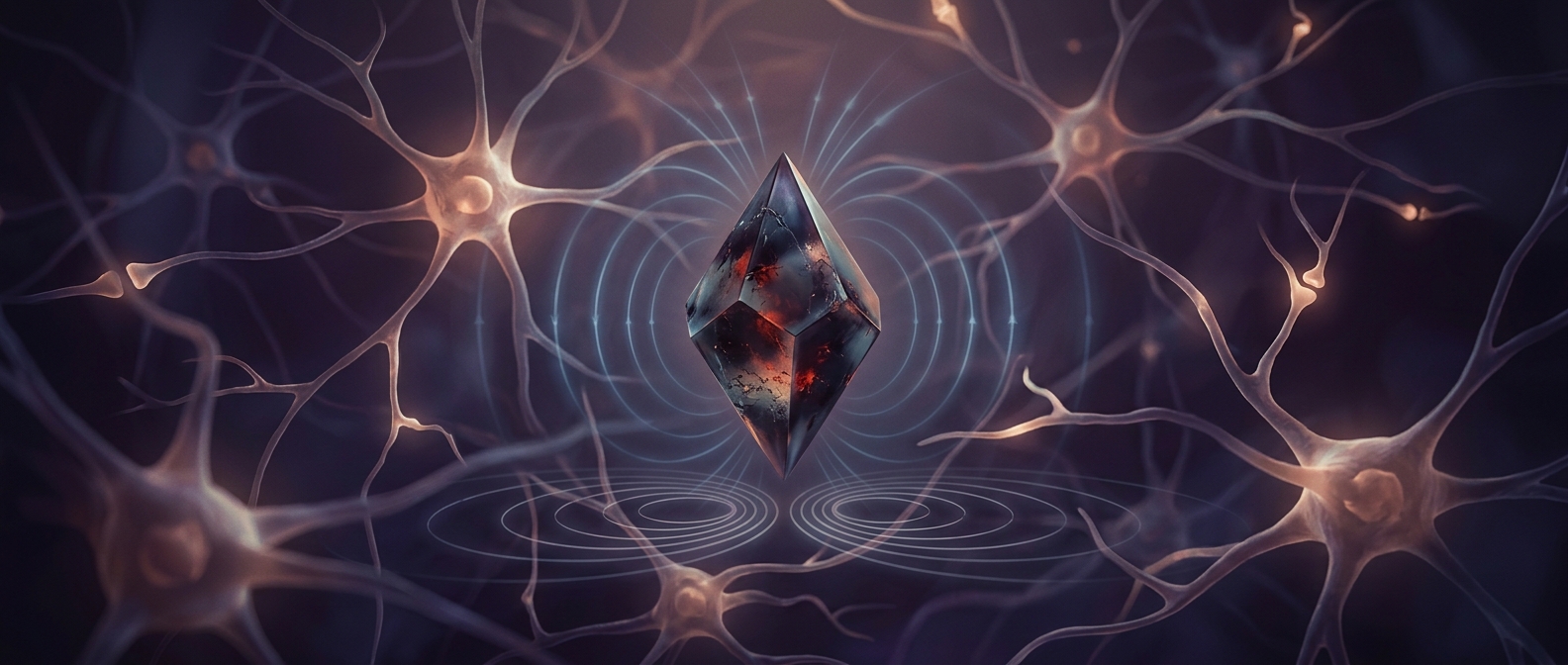
A nitrogen-vacancy center is a tiny flaw in a diamond: a nitrogen atom sits next to an empty spot in the crystal. The defect traps electrons whose magnetic properties can be controlled and read with light. In a carefully prepared diamond, shining green light on the center makes it fluoresce red; the brightness depends partly on the electrons’ magnetic state.
Researchers can also apply microwaves to shift the defect between those states. By tracking which microwave frequencies change the fluorescence, they can detect how a nearby magnetic field has shifted the defect’s response. This technique is called optically detected magnetic resonance: the magnetic signal is read out as a change in light, rather than by measuring the defect directly with electrical wires.
Why distance matters for neurons
When a neuron fires, charged particles moving across its membrane create a magnetic field. That field is extremely faint, so a detector must be close to the cells and sensitive enough to separate the signal from noise. A diamond sensor can be made very small, placing its defect near the activity of interest; the closer the sensor, the stronger the field it can pick up.
The appeal is that magnetic sensing could reveal neural activity without relying on electrodes to measure voltage. But proximity alone does not guarantee a useful recording: the detector must still distinguish a neuron’s weak field from background magnetic noise and other sources of interference. The practical promise lies in a remarkable conversion—a biological signal too subtle to see becomes a measurable change in a single defect’s light.