One rotation, different distances
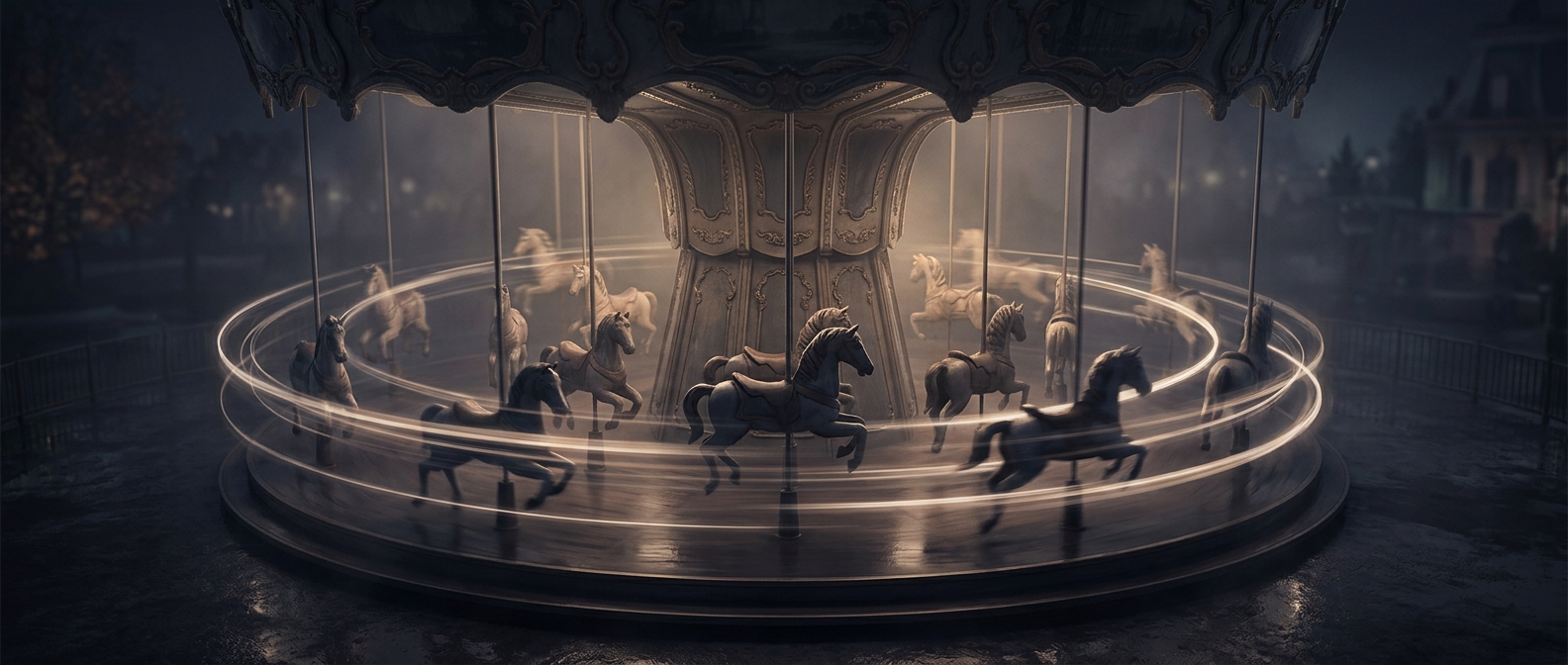
A carousel turns as a single rotating structure. In a given amount of time, every horse sweeps through the same angle and completes the same fraction of a turn. This shared rate of rotation is called angular speed.
But the horses sit at different distances from the carousel’s central pole. A horse farther out traces a larger circle: each full lap covers a circumference equal to the circle’s radius multiplied by about 6.28. So even though the horses take the same time to finish a lap, the outer horse travels farther—and has a higher speed along its path.
The radius sets the difference
The relationship is direct: tangential speed, the speed around the circle, equals angular speed multiplied by distance from the center. If one horse is twice as far from the pole as another, it moves around the circle twice as fast, assuming the carousel’s rotation stays steady.
That does not mean the outer horse completes more turns. It means it covers more ground during each turn. The distinction is why “same spin” and “same speed” are not interchangeable: one describes how quickly the carousel rotates; the other describes how quickly a particular point on it travels through space.
What riders can feel
The outer horse also needs a stronger inward acceleration to keep following its wider circular path at that higher speed. Riders may notice the outward pull more strongly farther from the center. The carousel is not giving the outside horse a head start; its position makes every lap longer, and the shared rotation carries it around that longer route.