How a Definition Becomes a Measurement
A universal constant cannot be placed on a laboratory bench like a metal bar. Instead, scientists define units by fixing a constant’s numerical value and building experiments that connect it to measurable events. The constant provides the anchor; instruments turn that anchor into a length or mass.
The Meter: Light and Time
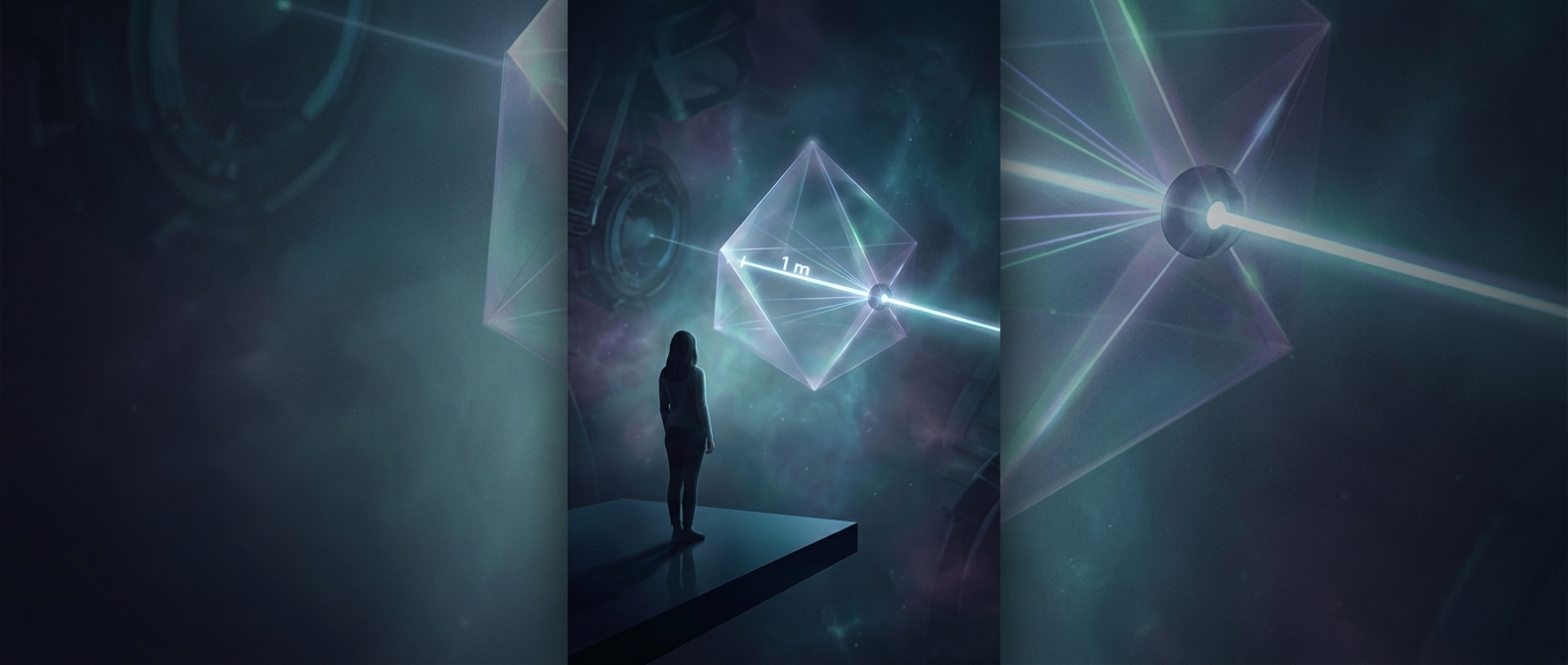
The meter is defined through the speed of light, whose value in meters per second is fixed exactly. A second, in turn, is defined using a particular transition in a cesium atom. Together, those definitions make the meter the distance light travels in vacuum during a specified fraction of a second.
In practice, a laboratory can measure time very precisely and use lasers and optical equipment to realize that distance. The definition does not require a single official meter stick to remain unchanged and serve as the standard for everyone else.
The Kilogram: Turning a Constant into Mass
The kilogram is tied to Planck’s constant, a fundamental quantity in quantum physics. Its fixed value connects mass to measurements of electrical power, time, and frequency. One common instrument for making that connection is a Kibble balance: it compares the mechanical power associated with a test mass against electrical power measured using quantum effects.
That apparatus is demanding, but the definition is not bound to one particular balance. With suitable equipment and careful procedures, specialized laboratories can reproduce the kilogram independently.
Why the Change Matters
A physical artifact can be damaged, contaminated, or subtly altered; if every calibration ultimately depends on it, those changes can ripple outward. Constant-based definitions instead let laboratories establish standards through reproducible experiments. The crucial shift is from guarding one object to preserving a precise recipe for measurement.