How a Maple Seed Turns a Fall Into a Spin
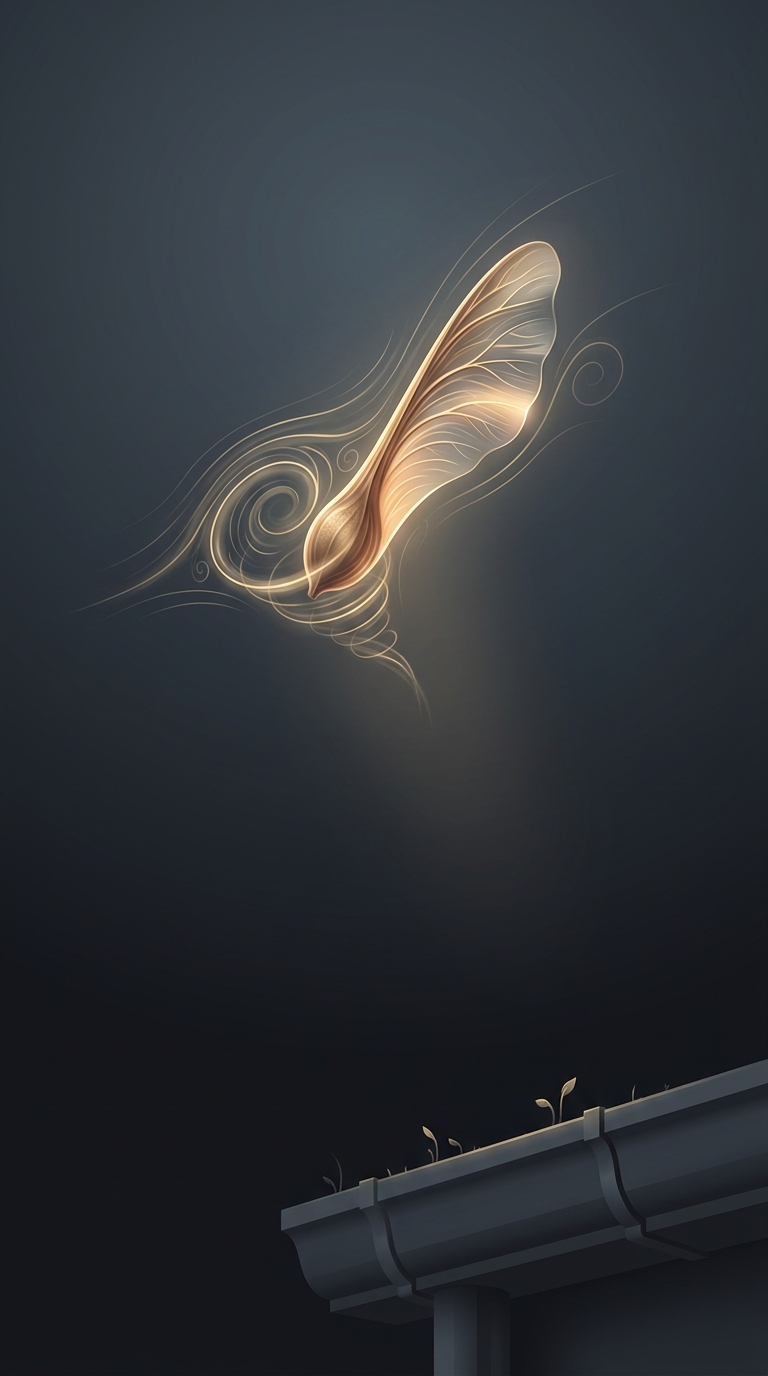
A maple samara—the familiar winged seed—does not flap or produce its own thrust. Its weight pulls it downward, and the shape of its wing makes that descent set the seed rotating. As air rushes past the tilted wing, it generates aerodynamic force that partly supports the seed and keeps the rotation going. This autorotation is a descent sustained by airflow, not powered flight.
A Vortex Helps Keep It Aloft
The spinning wing also creates a stable swirl of air along its leading edge, the edge that meets the oncoming airflow first. This leading-edge vortex is a small, organized region of rotating air, not a miniature tornado. It helps maintain pressure differences across the wing, adding lift and slowing the seed’s fall.
The effect depends on the seed’s geometry: its broad wing, its weight, and where that weight sits all influence how it spins. A plain seed would drop quickly; a samara trades a rapid fall for a slower, more controlled descent.
More Time for the Wind to Matter
The seed’s wing cannot steer it toward a destination, and it does not climb. But by staying airborne longer, it gives passing breezes more time to carry it away from the parent tree. How far it travels depends on conditions such as wind and the height from which it falls—not on a guaranteed journey of miles.
That modest extra hang time is the payoff. A seed that lands farther from its parent has a better chance of finding space to grow, while the same spinning wing can eventually deliver it straight into a gutter.