Why a scale reads zero in free fall
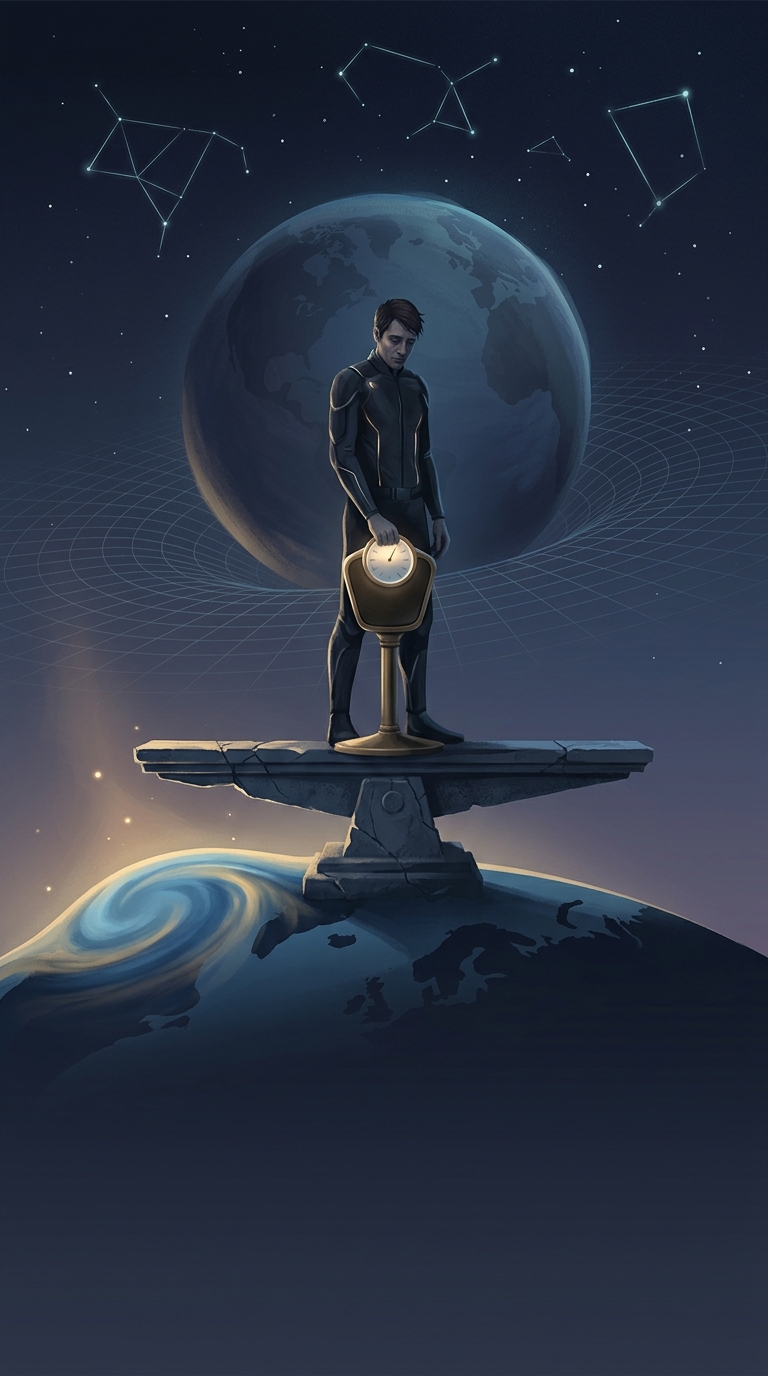
A scale does not directly measure gravity’s pull. It measures the force of its surface pushing back on you. Standing still, the floor supports your body against gravity, and the scale registers that support as your weight. In free fall, you and the scale accelerate downward together, so the scale no longer has to push up on you. Its reading drops to zero, and your body has no support pressure to feel.
That is apparent weightlessness, not an absence of gravity. Earth is still pulling on a falling person; the person simply moves with the same acceleration as nearby objects, leaving little pressure between them.
What the vacuum changes—and what it doesn’t
A vacuum contains no air to create drag. Without that resistance, objects released together fall at the same rate regardless of their shape or mass, assuming gravity is the only significant force acting on them. A feather and a hammer can therefore keep pace in a vacuum, unlike in air, where drag slows the feather much more.
The vacuum makes the fall cleaner; it does not switch gravity off. A person in a vacuum would still need protection from the environment, but the sensation of floating comes from sharing the fall, not from the lack of air.
Why orbiting astronauts float
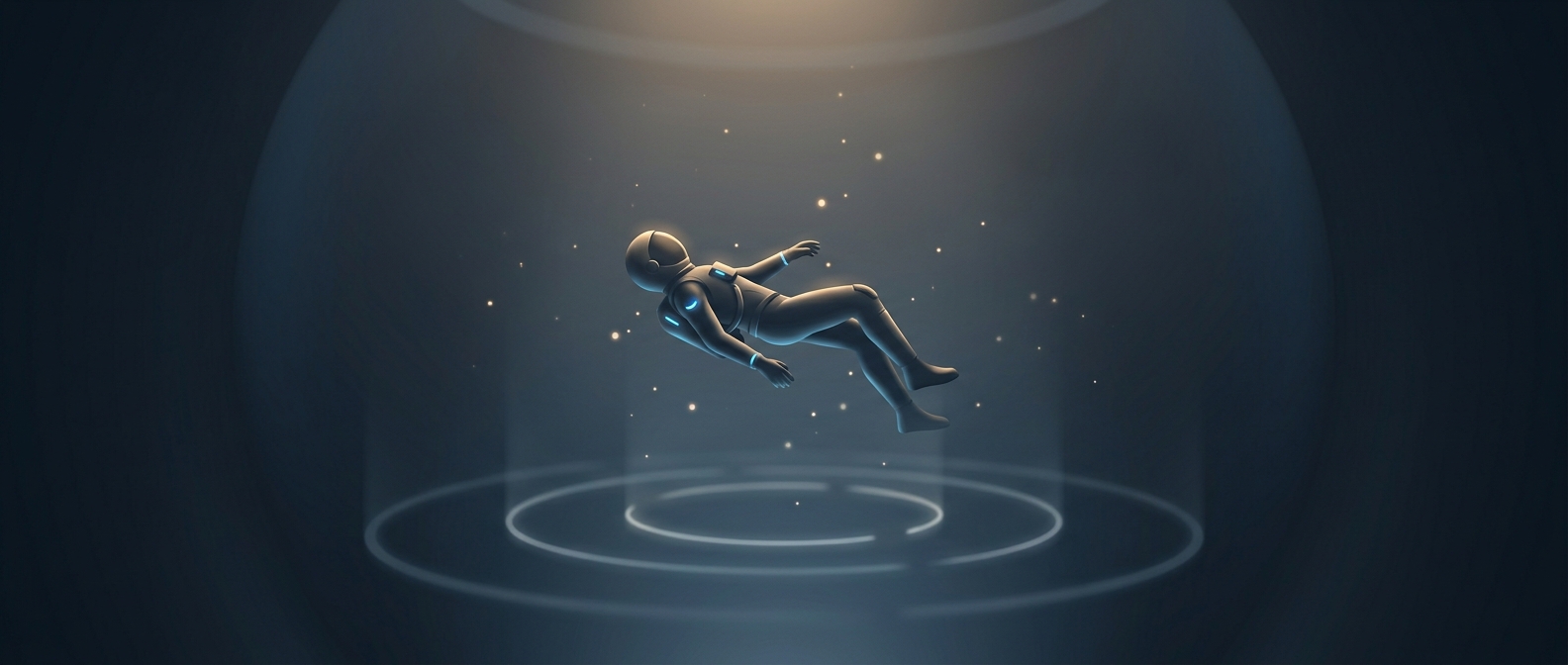
An orbiting spacecraft is falling toward Earth, but it is also moving sideways fast enough that Earth’s curved surface drops away beneath it. The spacecraft keeps missing the ground as it falls around the planet. Its occupants follow nearly the same path, so they do not press against the floor as they would while standing on Earth.
That is why a loose object can drift beside an astronaut: both are being pulled by gravity, but neither is being held up by a surface.