Why a Feather Falls Slowly on Earth
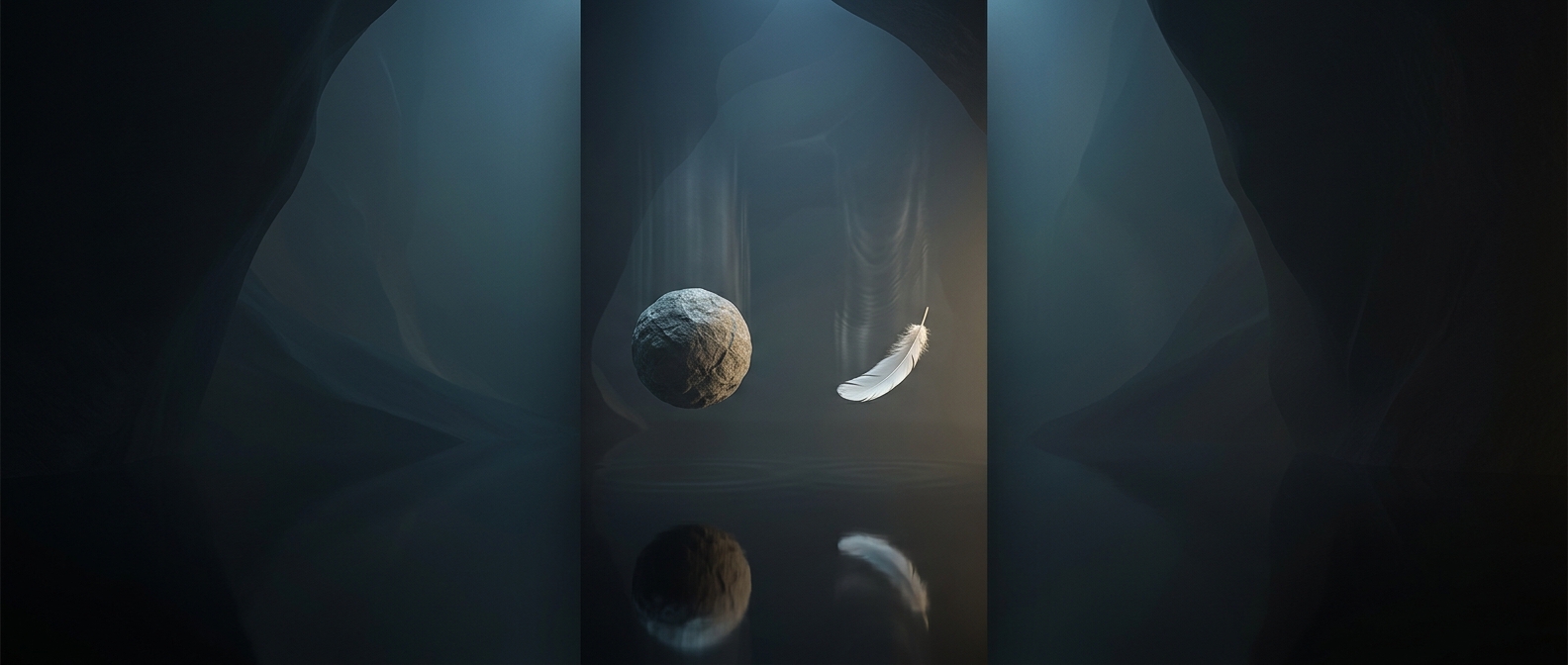
Gravity gives a feather and a hammer the same downward acceleration in a vacuum. The difference we notice in an ordinary room or outdoors comes from air, which pushes against a falling object and changes how quickly it gains speed.
Air Resistance Depends on Shape and Mass
As an object moves through air, it has to shove air molecules out of the way. Those molecules push back: this resisting force is called drag. A broad feather encounters substantial drag for its small mass, so that upward force can soon balance much of the downward pull of gravity. A hammer, with more mass relative to the air resistance it experiences, keeps speeding up more readily.
The balance can be described through terminal velocity: the steady falling speed reached when drag equals the object's weight. A feather’s terminal velocity is low; a hammer’s is much higher. So the feather is not being granted weaker gravity—it is reaching a slow, balanced fall in the surrounding air.
Remove the Air, Remove the Difference
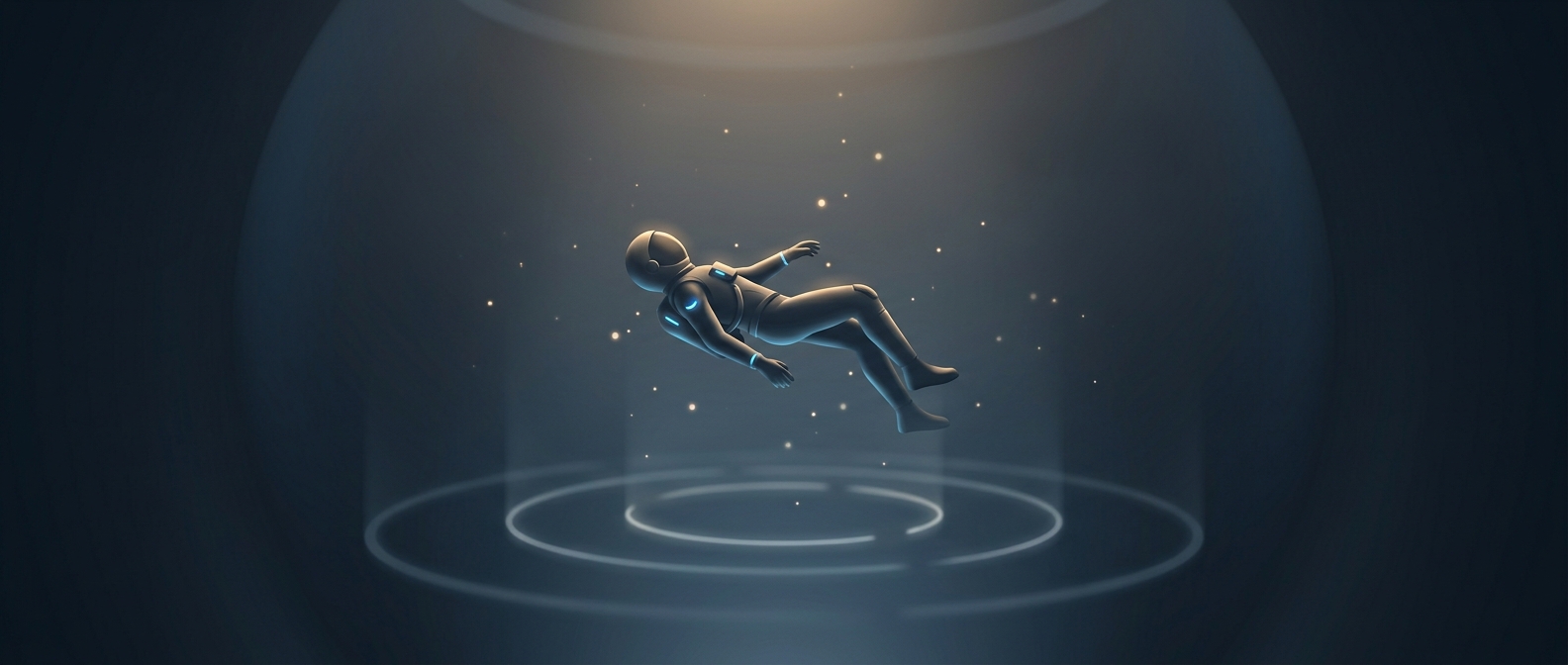
In a vacuum, there are no air molecules to provide drag. Gravity then accelerates both objects equally, regardless of their mass or shape. If released together from the same height, they fall side by side and reach the ground together.
That contrast is a useful reminder about everyday observation: what looks like gravity treating objects differently is often the atmosphere altering their motion. The feather’s slow descent is evidence of air’s push, not a special exception to gravity.