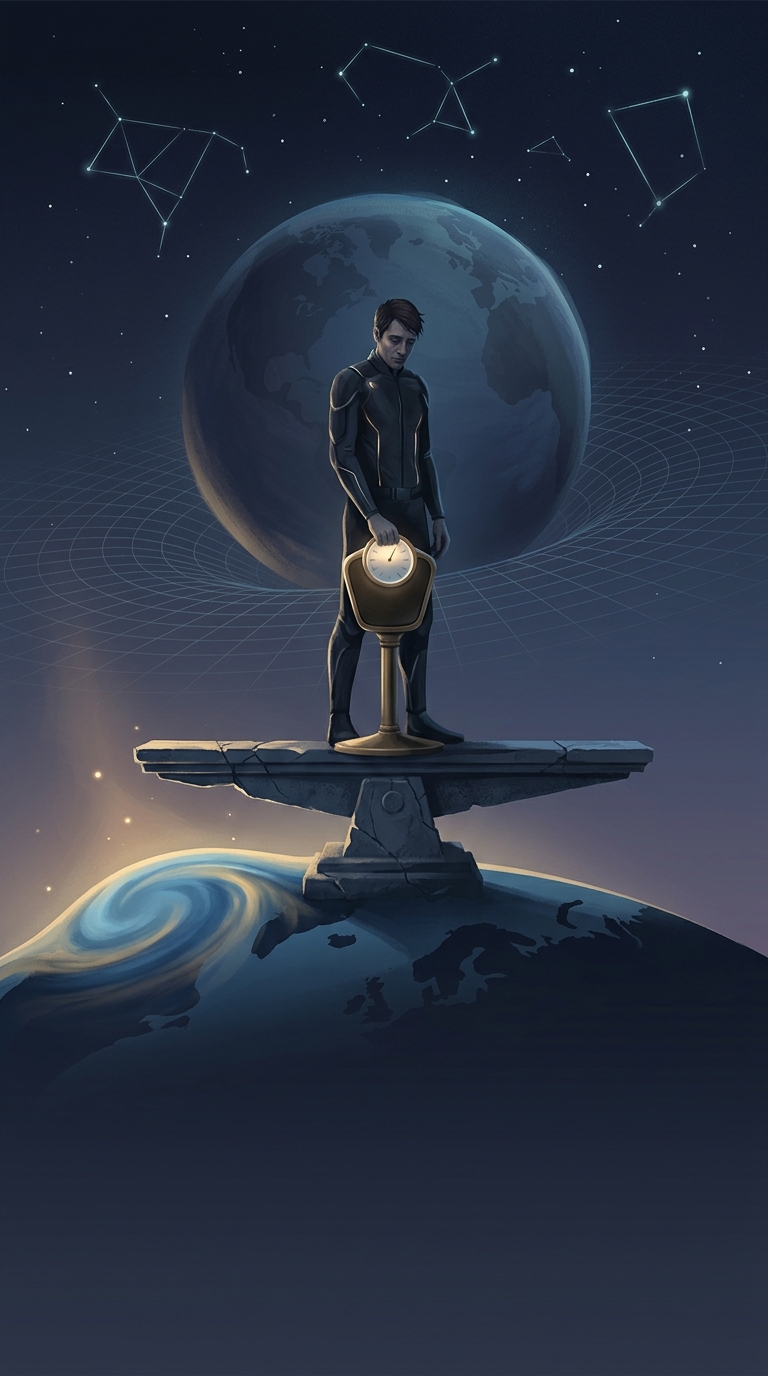
Why astronauts float while gravity still pulls
Gravity does not switch off in orbit. It continues to pull a spacecraft and everything inside it toward Earth. The crucial difference is that the spacecraft is moving sideways fast enough that, as it falls, Earth’s curved surface drops away beneath it. It keeps missing the ground and travels around the planet.
An astronaut inside follows the same falling path as the spacecraft. Because both are accelerating together, the cabin does not press upward on the astronaut the way a floor does on someone standing at home. With little contact force to register as weight, the astronaut and loose objects drift relative to the cabin.
Why the floor makes you feel heavy
On the ground, gravity pulls your body downward, but the floor prevents you from falling through it. The floor pushes upward on your feet and body. That support force—not gravity alone—is what you feel as weight. A scale measures the push between you and its surface.
In orbit, the spacecraft’s walls can still catch an astronaut who pushes against them, and straps can hold someone in place. But without that steady upward support, the familiar sensation of being pressed down disappears. The floating is not evidence that gravity is absent; it is the result of astronaut and spacecraft sharing the same continuous fall.