Burning turns fuel into new molecules
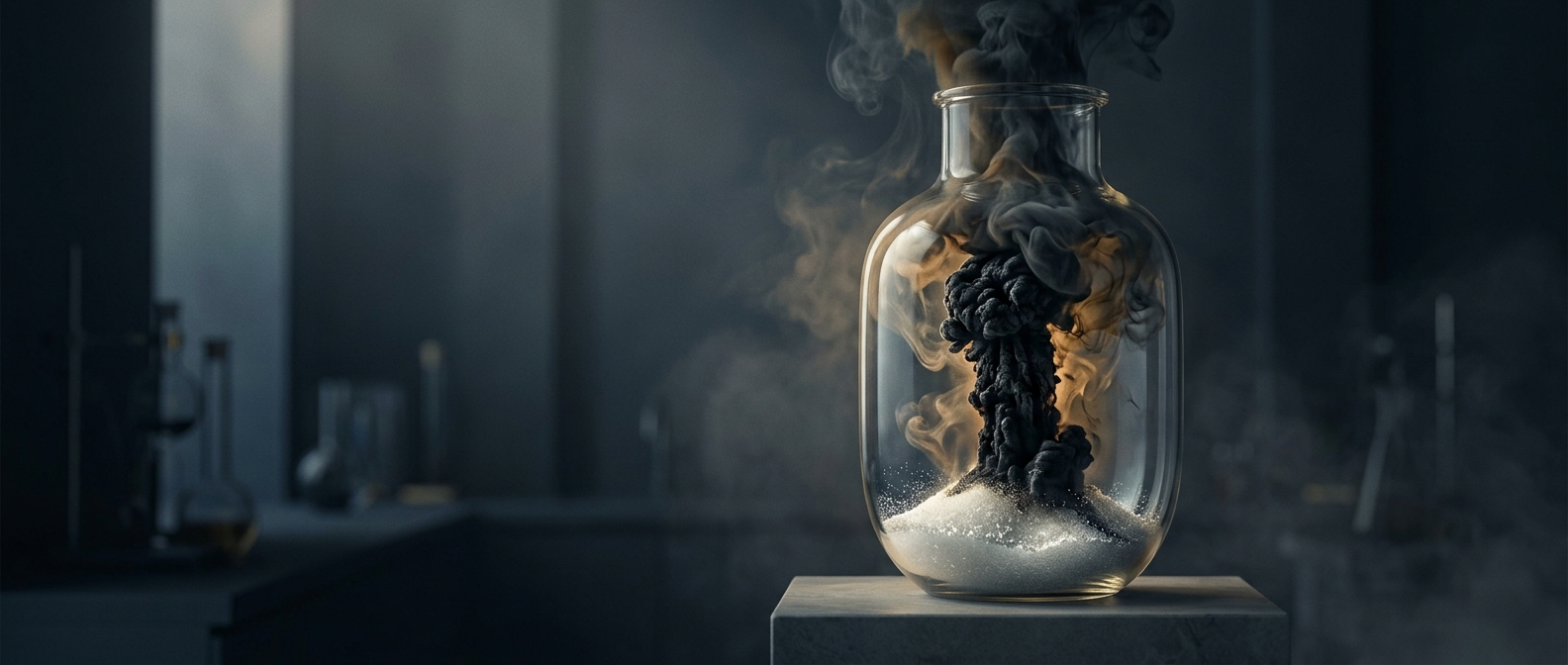
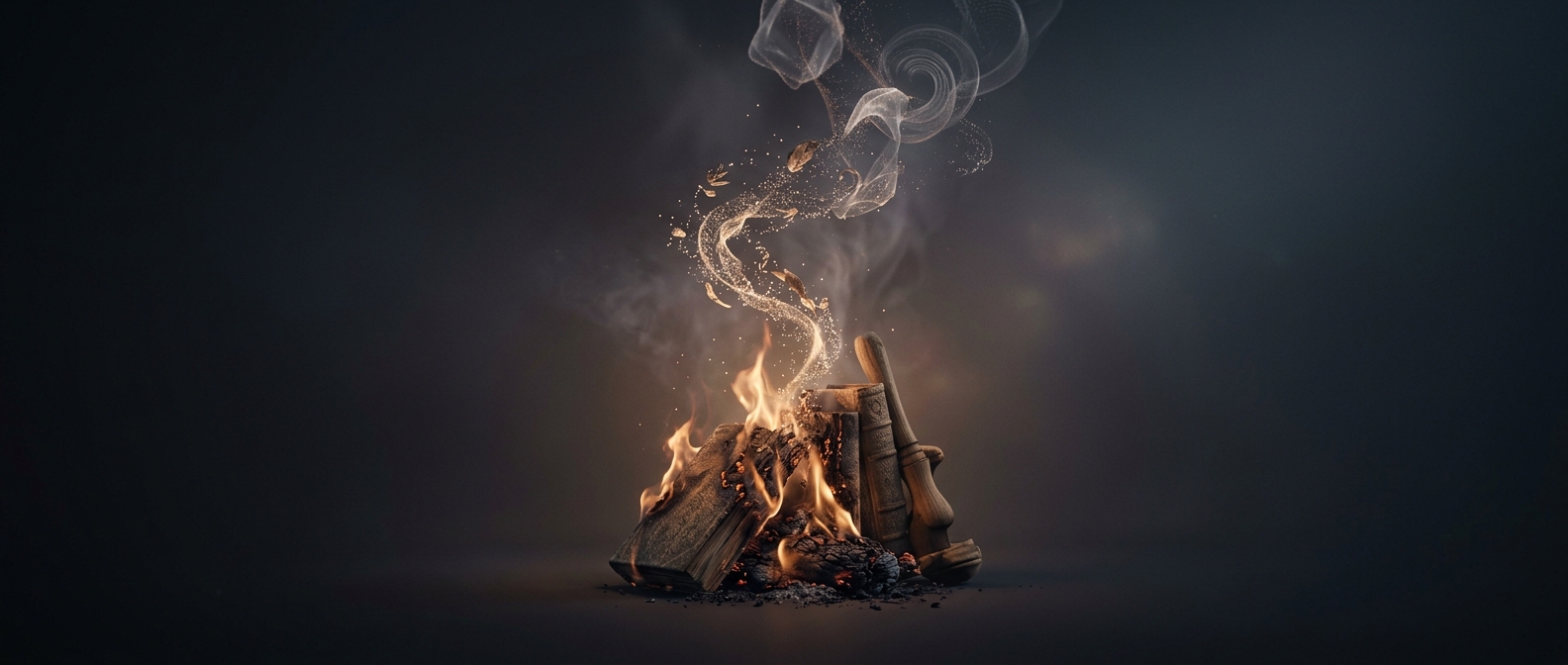
Wood does not vanish in a flame. Heat first breaks some of its complex molecules apart, releasing smaller fragments and vapors. Those fragments react with oxygen in the air, a process called combustion. The atoms are rearranged into different molecules rather than destroyed.
For wood that burns efficiently, much of its carbon ends up in carbon dioxide, while hydrogen combines with oxygen to form water vapor. The flame’s heat comes from these reactions: the products contain less chemical energy than the fuel and oxygen did, so the difference is released as heat and light.
Smoke and ash mark different paths
A fire is rarely perfectly efficient. Tiny particles and partly reacted compounds can escape as smoke; carbon monoxide can form when there is not enough oxygen for carbon to become carbon dioxide. These airborne products carry some of the fuel’s matter away from the fire, even when they are difficult to see.
Ash is the portion that does not readily become gas in the fire. It contains mineral substances that were already present in the wood, concentrated as the organic material burns away. Its amount and appearance depend on the fuel and how completely it burned.
The scale changes what “left behind” means
If you weigh only the fireplace remains, most of the original wood is missing. But that is not the same as saying its matter is gone: much of it has dispersed into the surrounding air, along with oxygen drawn into the reaction. Count the gases, particles, and ash together, and the fire has changed the matter’s form and location—not erased it.