What gravity normally does to a flame
A candle flame is not shaped like a teardrop because fire naturally points upward. Its shape comes from convection: burning heats nearby gas, making it less dense, so gravity pulls cooler, denser air down to replace it. The rising hot gas stretches the flame upward and continually brings fresh oxygen to its base and sides.
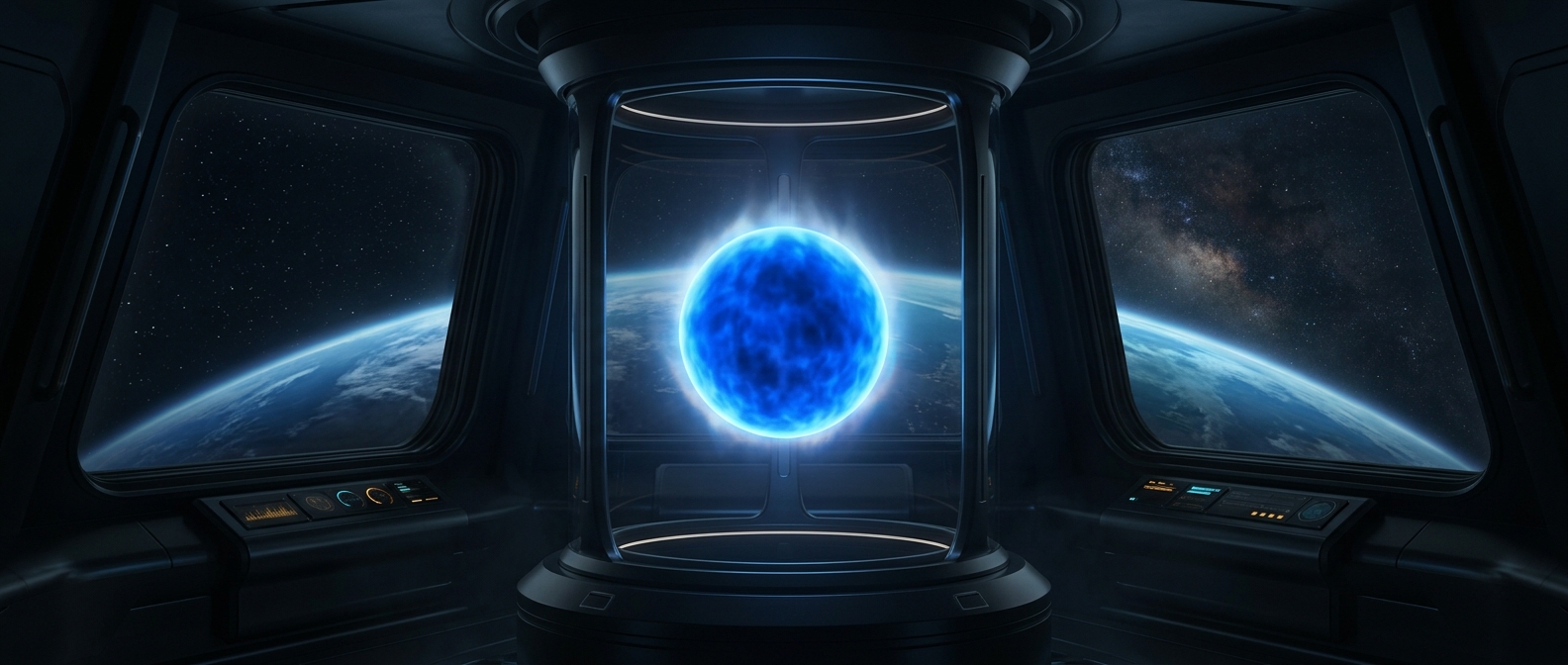
In microgravity, that buoyant flow largely disappears. The flame no longer has a strong upward draft to organize it. Oxygen and fuel instead move mainly by diffusion—the gradual spreading of molecules from places where they are more concentrated to places where they are less concentrated. The reaction can then spread around the fuel more evenly, producing a compact, roughly spherical flame.
Why the sphere looks blue
The blue color is a clue about how the fuel is burning. In a candle’s bright yellow region, tiny soot particles are heated until they glow, much like embers. With less vigorous, uneven mixing in microgravity, less soot may form. The flame can therefore appear dimmer and bluer, with more of its light coming directly from chemical reactions in the hot gas rather than glowing soot.
The shape does not mean combustion has stopped needing oxygen. It means oxygen arrives more slowly and from all directions instead of being swept upward by a rising plume. That slower supply can make a flame smaller and cooler, and under some conditions it can cause the flame to go out.
A different kind of fire hazard
On Earth, a flame’s rising plume is an obvious sign of where heat and combustion products are going. Without that plume, a flame can be faint and spread outward in a way that is less familiar. For spacecraft fire safety, understanding this altered flow matters: a fire may not behave like a candle flame, even though the same basic ingredients—fuel, oxygen, and heat—are still involved.