Why a Hanging Banana Curves Upward
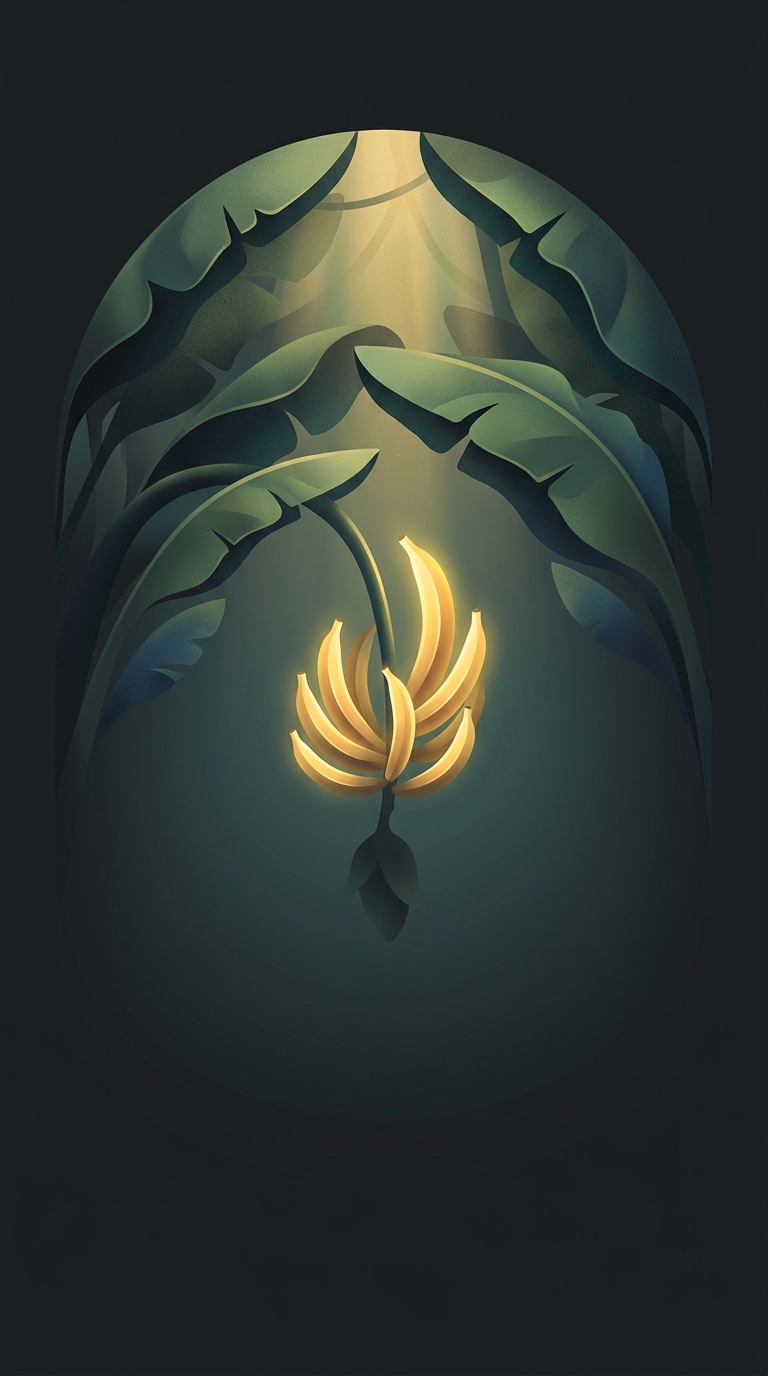
A banana bunch does not flip over as it grows. The central stalk hangs down from the plant, and the individual bananas—called fingers—begin by pointing roughly toward the ground. As they lengthen, each finger gradually bends upward, so the familiar bunch ends up with a curve that can look as if it has been turned around.
The main cue is gravity, not a banana deliberately reaching for sunlight. Plants can sense which way is down: specialized cells register gravity, and growth signals help one side of a growing organ lengthen differently from the other. That uneven growth makes the finger curve against gravity, a response known as negative gravitropism.
A Curve Made One Finger at a Time
The bending happens as the fruit grows, while it remains attached to the bunch. Because the fingers develop alongside one another, each makes its own gradual curve; the stalk and the whole cluster do not need to rotate. The final shape reflects many small changes in growth rather than a single dramatic movement.
This is also why a bunch can hang downward while its bananas point upward. The stalk’s position and the fingers’ direction are separate parts of the plant’s growth. What looks like an upside-down bunch is really a hanging structure whose fruits have curved as they matured.