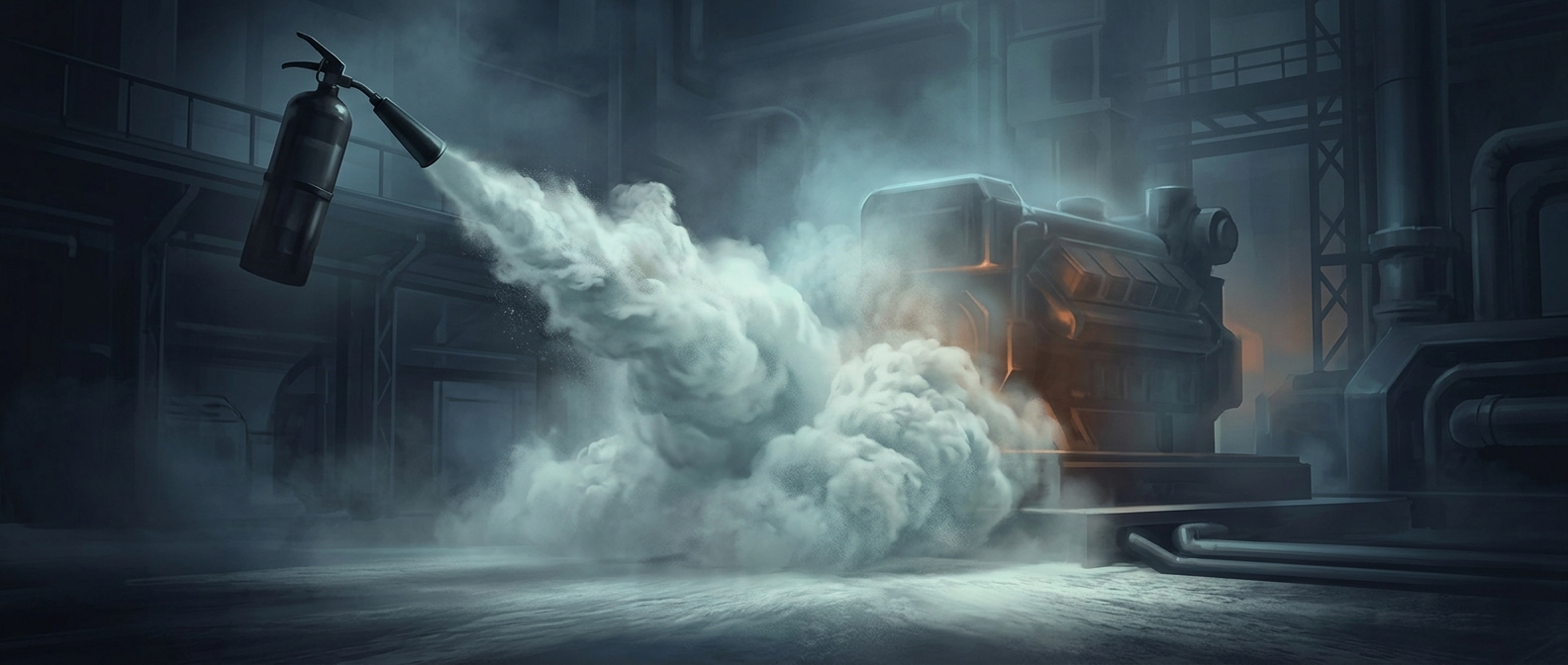
A cloud of powder disrupts the flame
A dry-chemical extinguisher works by turning a compact charge of solid agent into a fast-moving cloud. When the handle is squeezed, pressurized gas pushes the powder through a narrow hose and nozzle. The nozzle spreads it across the fire, where particles can reach more of the burning surface than a concentrated stream would.
That coating helps separate the flame from fuel and air, but the powder does more than form a barrier. Monoammonium phosphate can interfere with the chemical reactions that keep a flame going. Sodium bicarbonate acts differently: when heated, it breaks down and releases gases and water vapor that help disrupt combustion and cool the area.
Why the powder must cover the source
A flame persists because heat keeps fuel releasing flammable vapor, which reacts with oxygen. Powder particles absorb some heat and interfere with that cycle; spreading them over the burning material also makes it harder for fresh vapor and air to meet at the flame. The extinguisher is most effective when the discharge reaches the fuel, rather than merely passing through the visible flames.
The agent matters. Monoammonium phosphate is used in many multipurpose extinguishers, while sodium bicarbonate is common in units intended for certain flammable-liquid and electrical fires. The powder left behind can be difficult to clean and may damage sensitive equipment, so putting out the flame is only the first step: the residue—and the fire’s original fuel—still need attention.