How light makes the blue
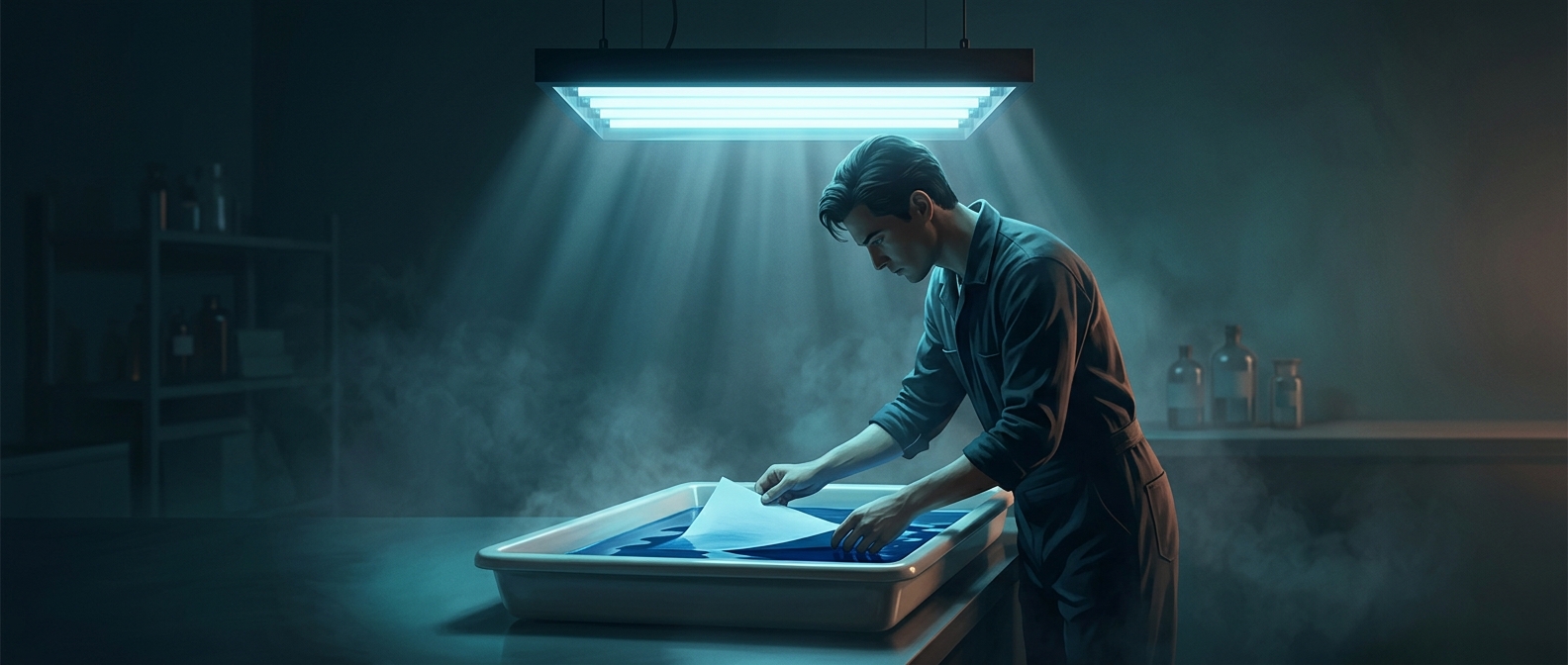
A cyanotype begins with two iron salts dissolved in water and brushed onto paper. One supplies iron in a form that changes when ultraviolet light hits it; the other helps turn that changed iron into Prussian blue, an insoluble pigment—the same kind of blue used in paints and inks.
Where light reaches the coating, the reaction produces blue pigment. An object laid on the paper acts as a mask: it blocks some of the ultraviolet rays, so the covered area stays much lighter. After exposure, rinsing the sheet washes away unreacted, water-soluble chemicals, while the blue pigment remains embedded in the paper. The contrast between the two areas becomes the image.
Why the image depends on the setup
The result records not only an object’s outline but also how much light passes through it. A solid leaf or key makes a crisp pale shape; a thin petal or translucent fabric lets some light through and can produce softer tones. Exposure time, the strength of the ultraviolet light, and the coating’s evenness all affect how dark the blue becomes.
Because the process needs light and a flat surface rather than a camera lens, it can make a direct impression of objects. That simplicity is also a constraint: anything that shifts during exposure blurs its outline, and the final image is a blue-toned positive, not a conventional color photograph. The paper itself becomes the record of what blocked the sun.