The Border Is Part of the Processing System
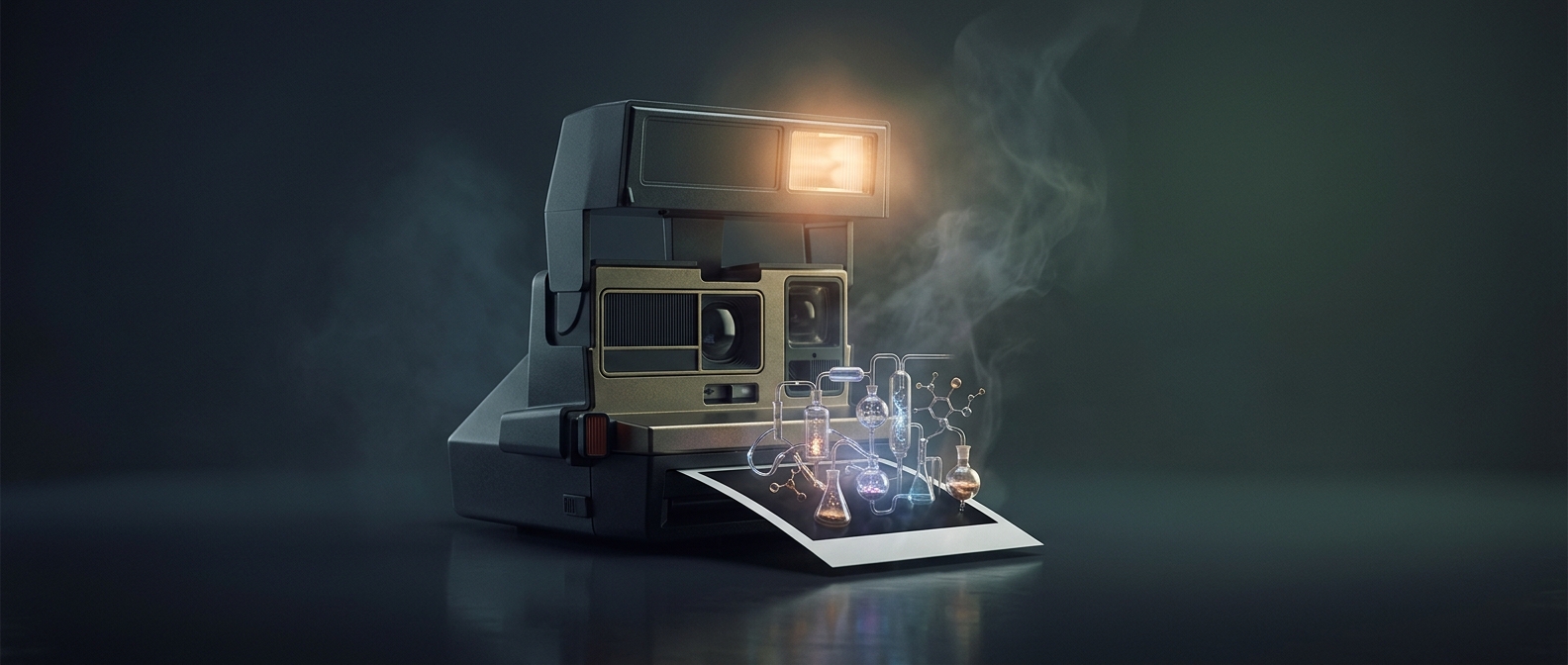
In common integral instant film, the picture develops inside a sealed stack of thin layers. The white frame surrounds that stack, but the chemistry that makes the image appear is stored in small, sealed pockets near one edge—not in the visible border itself.
When the camera ejects the photo, it pulls the sheet through a pair of rollers. Their pressure bursts the pockets and squeezes the developer paste into the narrow space between the film layers. The rollers also spread it across the image area in a thin, even coat. Too little pressure or an uneven spread can leave parts of the picture developing differently.
A Tiny Chemical Darkroom
Before ejection, the film has already been exposed to light inside the camera. That exposure creates a latent image: a chemical pattern that is present but not yet visible. The developer activates reactions in the film layers, turning that pattern into the finished picture. In color instant film, additional layers and dye-transfer chemistry build the colors; the exact arrangement depends on the film design.
The sealed layers keep the reactive paste where it belongs while the image forms. The border helps contain the sandwich and gives the rollers a consistent sheet to grip. What looks like a simple white margin is therefore part of a carefully controlled miniature processing machine: the picture is not merely printed and pushed out—it is chemically assembled as it travels through the camera.