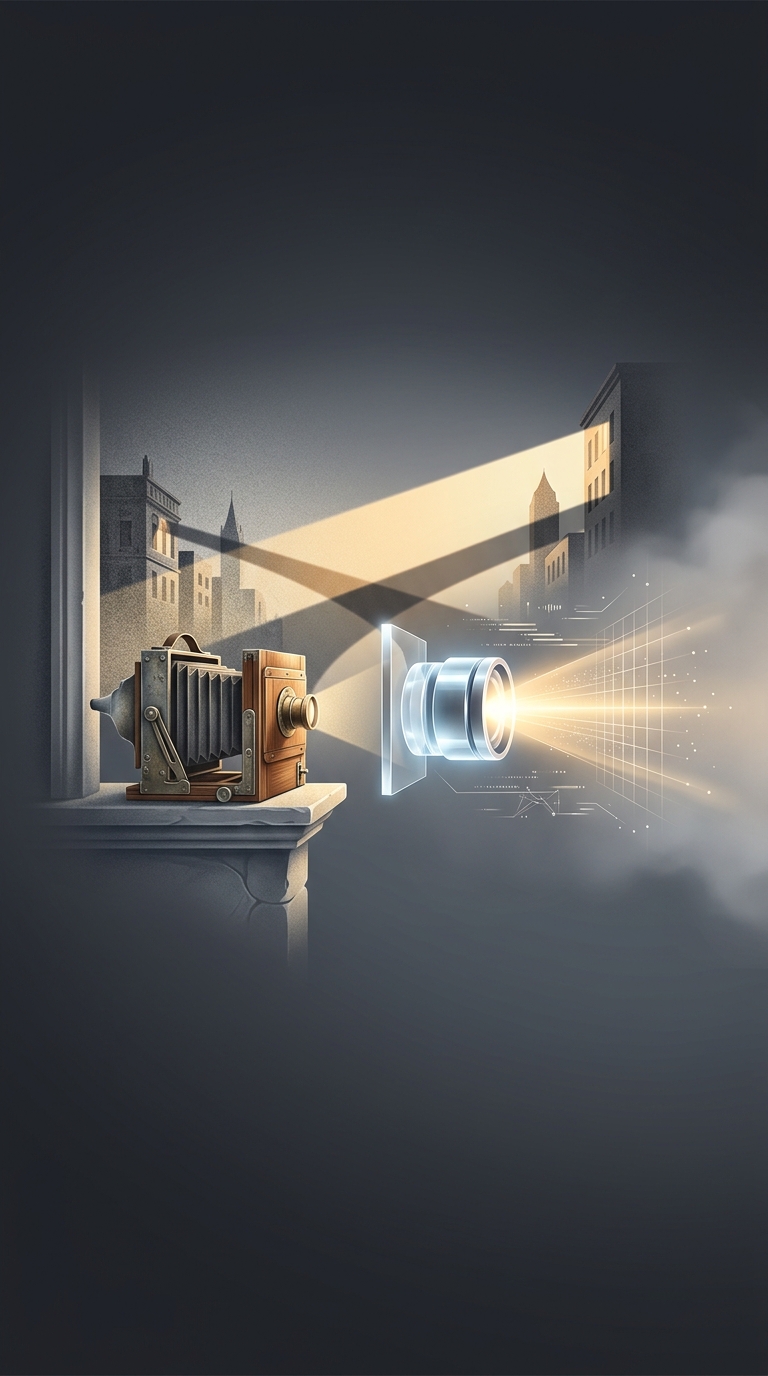
A child’s question pointed toward a new kind of camera
In 1943, while Edwin Land was taking vacation photographs of his young daughter, she asked why she could not see a picture right away. The question gave Land a vivid design challenge: make the camera produce a viewable photograph without sending the film away to be developed.
That moment helped set Land thinking, but it did not instantly solve the problem. Ordinary photography separated taking a picture from making it visible. Light recorded an image on film, and chemical processing later turned that hidden record into a photograph. To bring those steps together, Land had to find a way for the camera itself to carry out the processing.
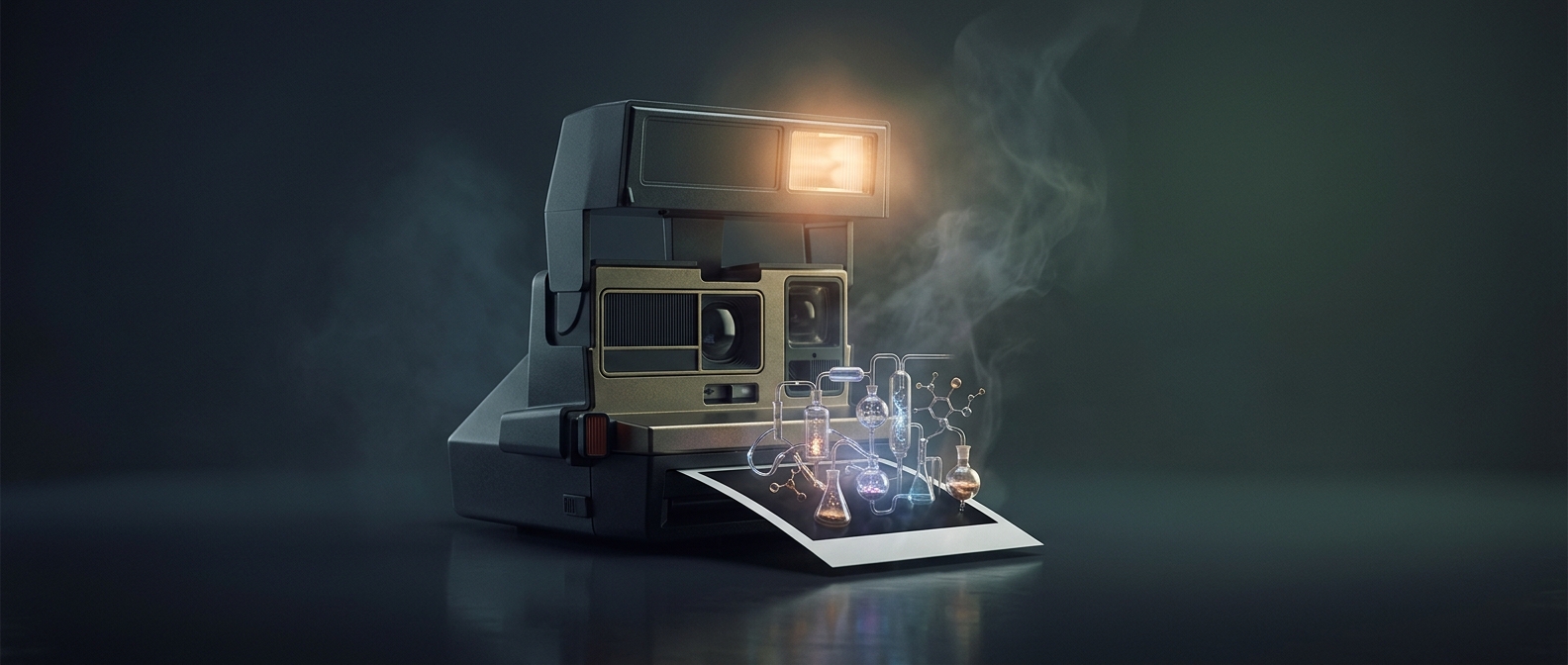
Turning a camera into a tiny darkroom
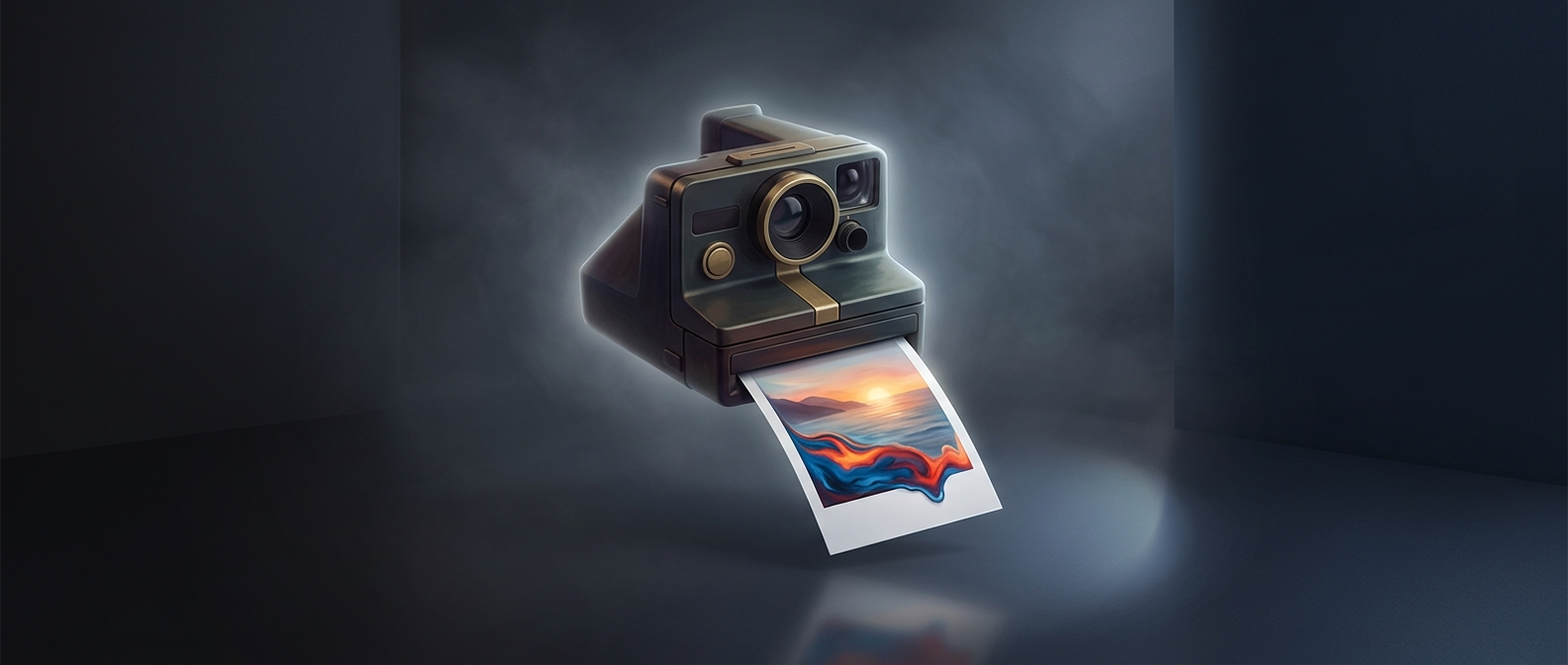
The key was to put the materials for image-making inside the film pack. After a photograph was taken, rollers in the camera pressed the film layers together and spread processing chemicals across them. Those chemicals helped transfer the developing image to a receiving layer. After a short wait, the picture could be separated and viewed.
This was not simply film that developed faster. It was a new arrangement of film, chemicals, and mechanical parts, all designed to work together in a compact device. The camera had to expose the image, start the chemical process, and deliver a finished print while keeping the light-sensitive materials protected until the right moment.
Land publicly demonstrated the system in 1947. The first Polaroid Land Camera went on sale the following year, bringing the darkroom-like process into the hands of the photographer. The daughter’s question supplied the memorable prompt; years of engineering turned it into a camera that could make the wait for a photograph part of the picture-taking experience, rather than a trip to a processing lab.