A photograph made by light, not a quick exposure
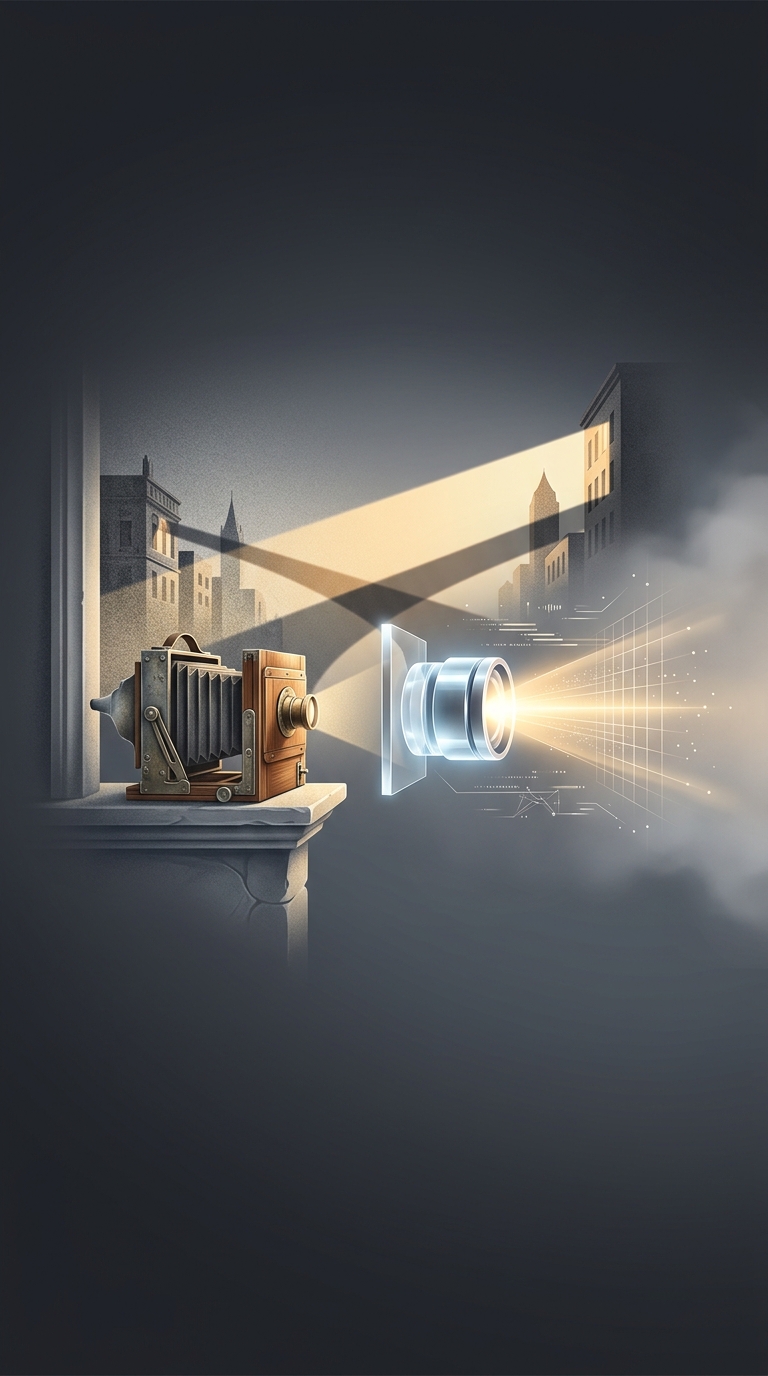
Niépce’s process, which he called heliography, turned sunlight into a lasting change in a coated metal surface. He spread bitumen—a tar-like substance—over a pewter plate. The camera obscura, a darkened box with a small opening that projects an outside scene onto a surface, focused the view from his window onto that plate.
Light gradually altered the bitumen, making the more strongly exposed areas harder to dissolve. After the exposure, Niépce used a solvent to wash away material that had not hardened as much. The remaining coating preserved a crude image on the plate. Unlike later photographic processes, this one needed no instant reaction: its sluggish chemistry demanded hours of light.
The sun became part of the image
During such a long exposure, the camera recorded not one frozen moment but the accumulated effects of changing sunlight. As the sun crossed the sky, it lit different sides of buildings at different times. Details that would normally be in shadow together could therefore leave marks on the same plate, making the scene’s illumination seem impossible.
That oddity reveals the tradeoff built into the earliest photography. A long exposure could preserve a view without a painter copying it, but it also blended hours of changing conditions into a single image. The result is less like a snapshot than a record of sunlight moving across a place.