The projector has to move film without showing it move
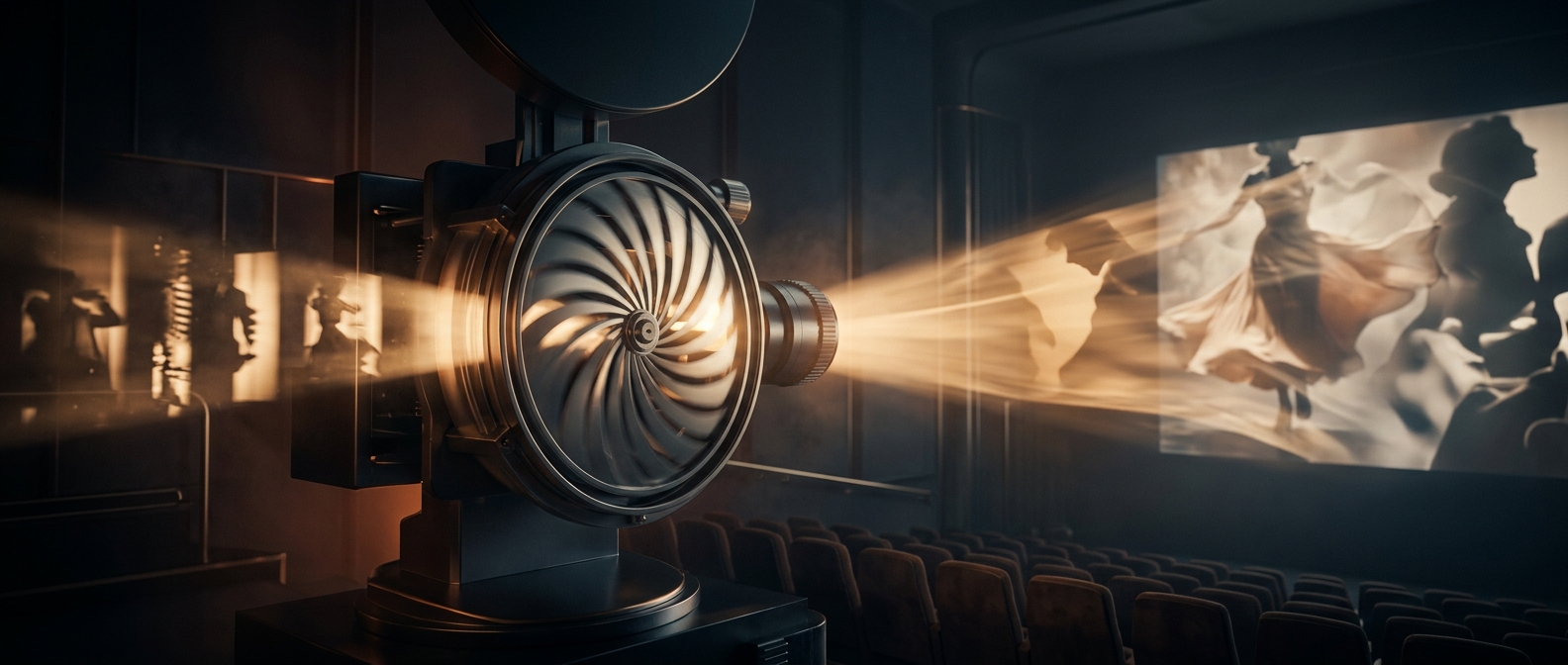
A film projector does not pull the strip smoothly past the lens. It advances the film one frame at a time, then holds each frame still long enough to project it. If the lamp illuminated the film during the advance, the moving image would smear across the screen.
A rotating shutter solves that problem. Its opaque blades briefly cut off the beam as the film shifts to the next frame, then uncover the frame when it is steady. The dark interval is essential: it hides the mechanical reset that makes the next still picture available.
Why one flash per frame can look unsteady
At the familiar film rate of 24 frames per second, showing each frame just once would make the screen go dark 24 times a second. That rapid pulsing can be visible as flicker, especially in bright areas or when you move your eyes.
Many projectors therefore use a shutter that opens more than once during each frame’s stay in the gate. A two-blade shutter, for example, produces 48 light pulses per second while the film still advances only 24 times per second. The repeated flashes do not create extra motion; they make the sequence of pictures appear steadier.
A compromise between smoothness and brightness
Every shutter interruption removes some light, so adding flashes does not make the picture brighter. It trades a little projection time for less noticeable flicker. Meanwhile, the film’s frame rate determines how often the image itself changes—and how smoothly movement appears.
The result is a carefully timed alternation: hold the picture still and show it, hide it while the film moves, then show the next one. The projector’s blackouts are not a flaw in the image; they are what keep a strip of moving film from becoming a streak on the screen.