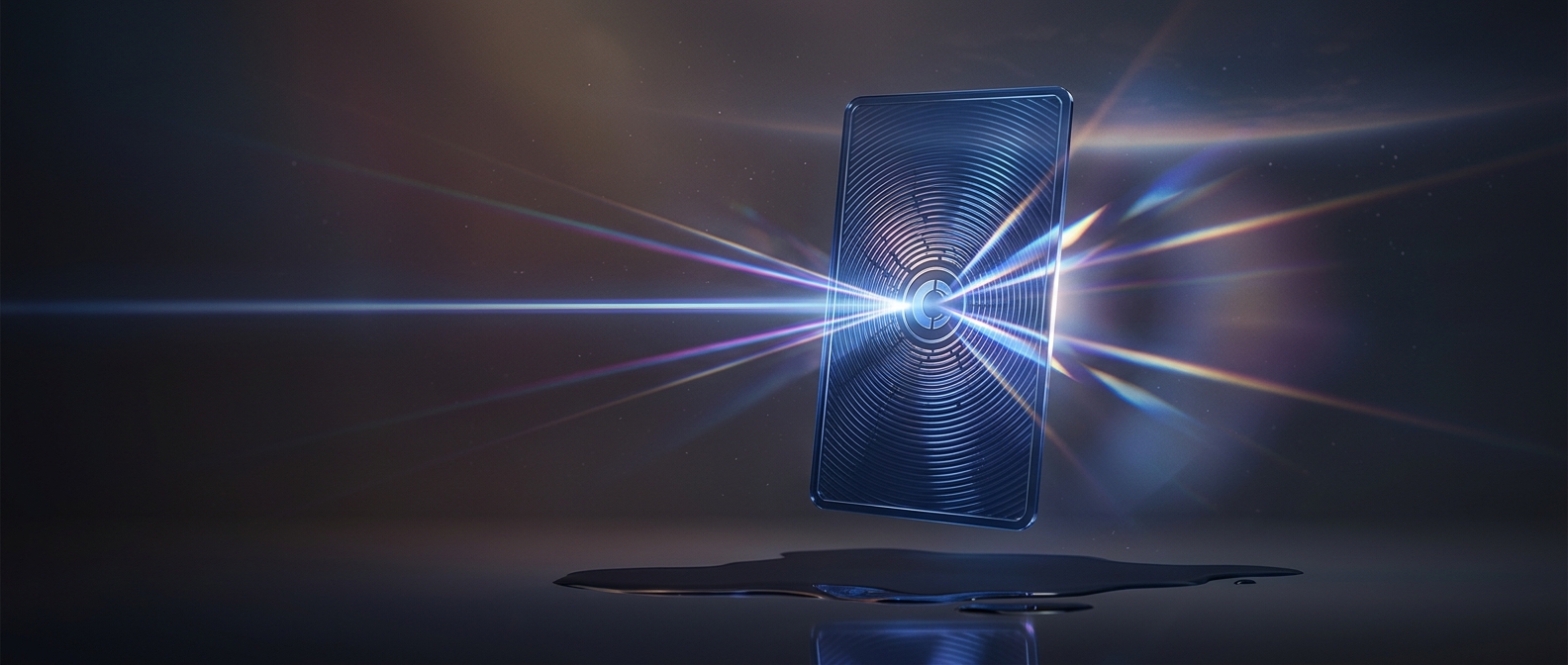
How a hologram becomes a pattern of tiny grooves
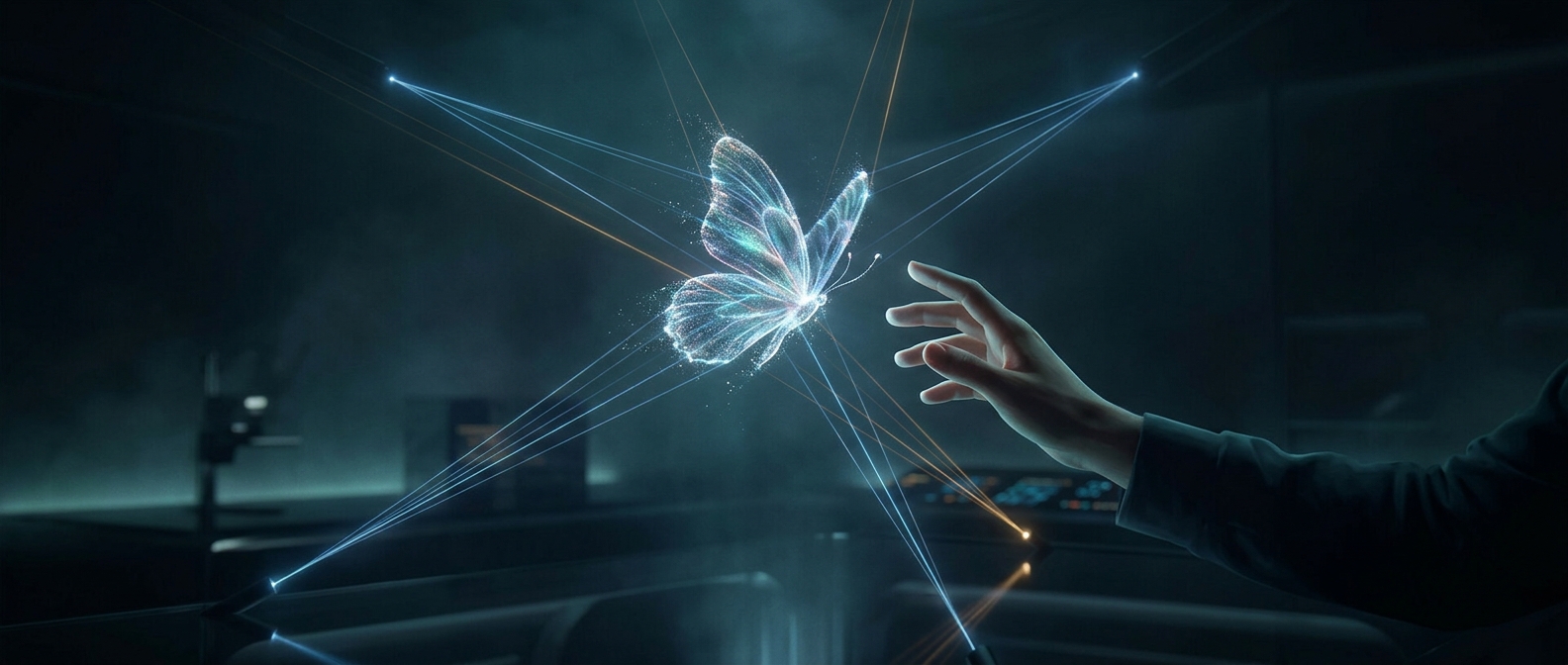
A hologram begins as a record of light, not as a drawing of an object. In a common production method, laser light is split into two beams: one illuminates the subject, while the other travels directly to a light-sensitive recording surface. Where the beams meet, their light waves reinforce or cancel one another, forming a fine pattern of bright and dark fringes. That pattern encodes information about how light from the subject arrived, including its direction—not just its color and brightness.
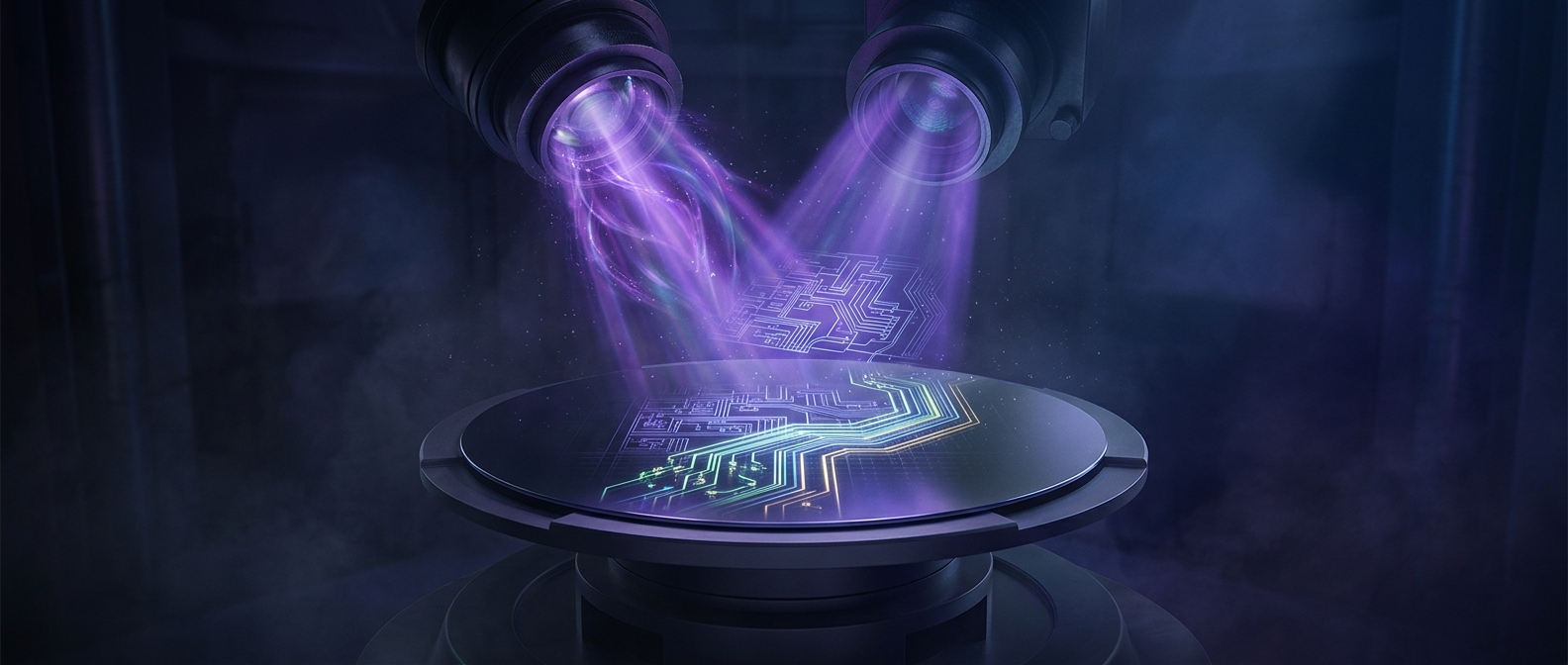
To put the pattern on a card, manufacturers make a durable metal master from the recording and use it like a microscopic die. The die presses the pattern into a thin layer on foil. The resulting ridges are far too small to see individually, but they guide reflected light in specific directions. A reflective coating makes the effect visible.
Why the image seems to move
As you tilt the card, the grooves send different portions of the reflected light toward your eyes. Your viewpoint changes, so the light reaching you changes too; the image can appear to shift, deepen, or show different colors. This is diffraction—the bending and spreading of light as it encounters structures comparable in size to its wavelength. The apparent depth comes from the pattern recreating some of the light directions associated with the original scene, rather than from the foil having raised, picture-sized shapes.
Why put one on a card?
The pattern is difficult to reproduce convincingly with ordinary printing, so it can help make a card harder to counterfeit. It is not an unbreakable guarantee: counterfeiters may copy or imitate visible effects, and security depends on the feature being difficult to make and easy to check. But a printed dove can be duplicated with ink; an embossed hologram requires reproducing a precise microscopic structure. The shifting image is the visible clue that the surface is doing more than carrying a picture.