A Window Can Move With the Sound
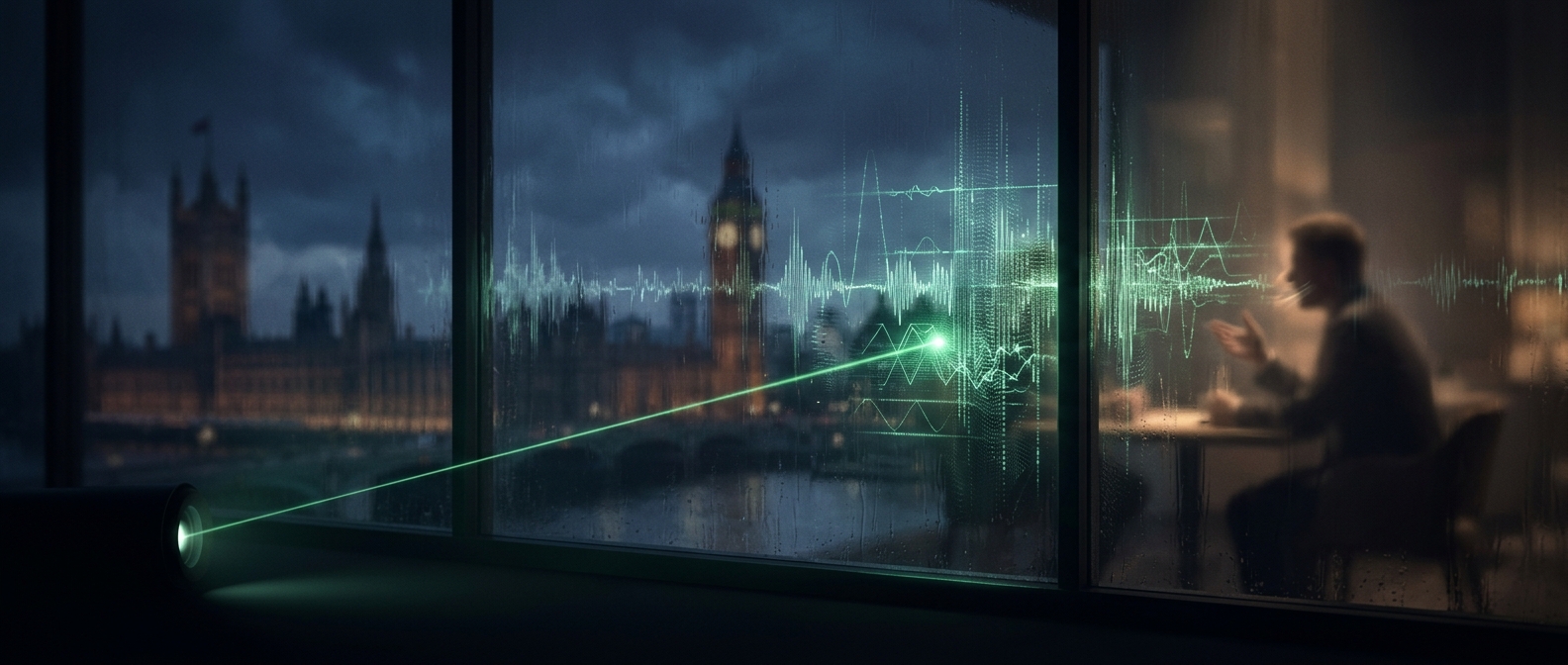
A conversation makes nearby air pressure rise and fall. Those pressure changes push lightly on a pane of glass, flexing it by an extremely small amount. The window is not a useful microphone in the ordinary sense: it does not turn sound into an electrical signal. Instead, it becomes a surface whose motion carries a faint imprint of the sound inside.
Reading Motion in Reflected Light
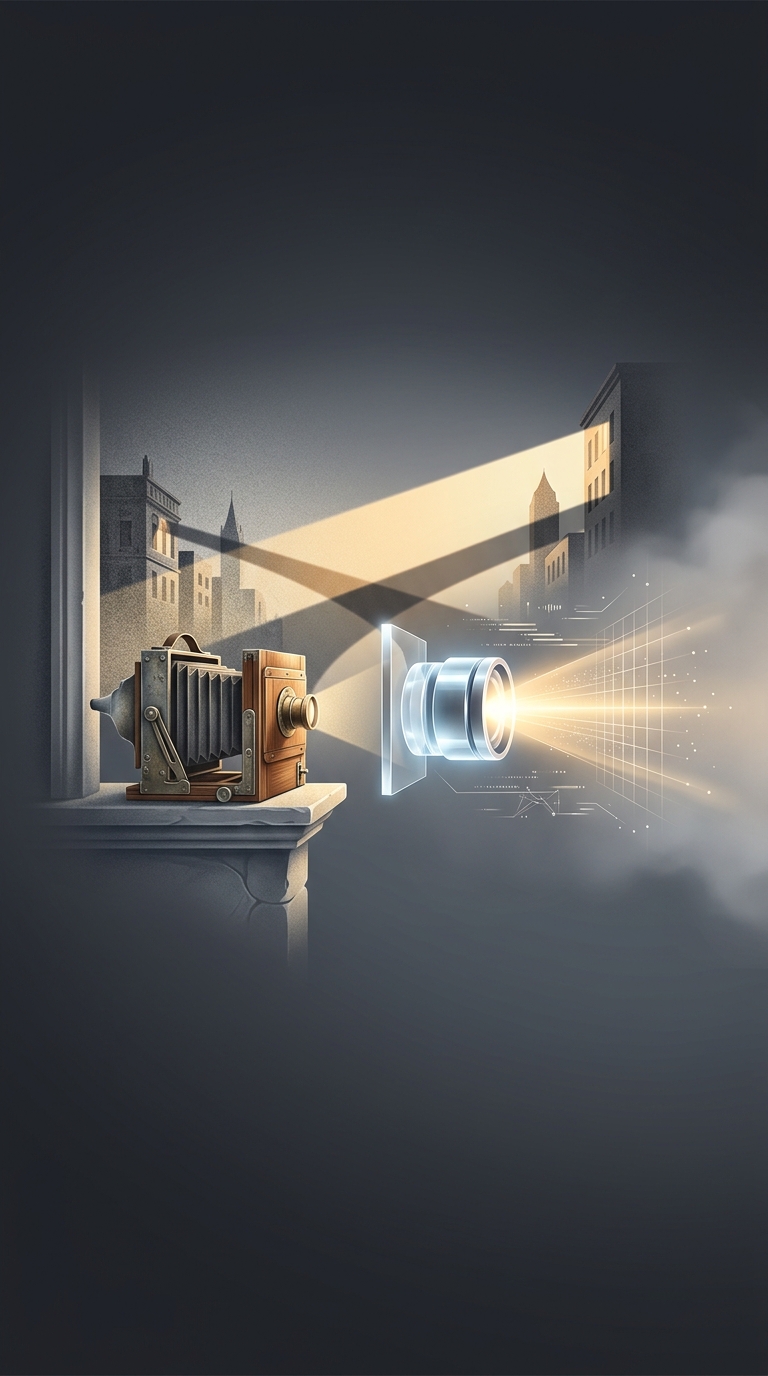
An infrared laser sends light onto the pane and collects some of the reflection. As the glass shifts, the returning light changes slightly in phase—the alignment of its light waves—and sometimes in strength. A detector can track those changes and convert them into an electrical signal.
The signal is not yet a clean recording. It contains the window’s motion mixed with other movement, such as vibration from the building or airflow. Processing is needed to isolate the fast, small fluctuations associated with speech and turn them into audio. In effect, the beam measures how the reflected light changes over time rather than capturing sound pressure directly.
Why the Window Matters
The method depends on the pane responding to sound strongly enough for the optical system to detect its motion. Different parts of a window can vibrate differently, and the beam’s position affects what motion it senses. Distance, reflections, and environmental noise can also make the signal harder to recover.
That is why this technique is best understood as remote vibration sensing, not as a laser somehow hearing through glass. The surprising link is mechanical: a conversation can leave a readable pattern in the movement of an ordinary pane.