Why the surface loses its shape
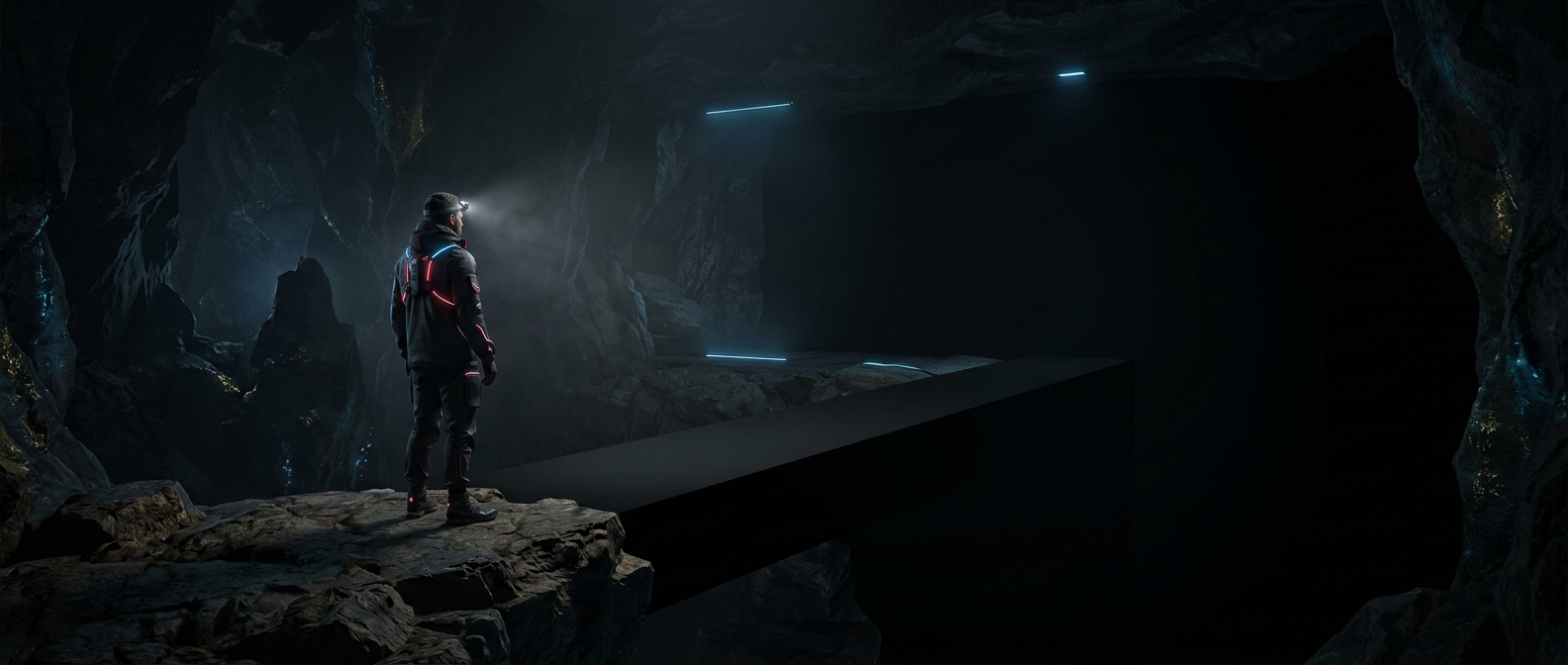
A very dark paint normally still reflects enough light for your eyes to pick out highlights, edges, and texture. This coating reflects so little visible light that those familiar clues nearly disappear. A curved object can therefore look less like a solid thing and more like a flat, featureless patch of black.
The trick is not simply using a black pigment. The material is made from a dense forest of carbon nanotubes—tiny, tube-shaped structures. Light that reaches the surface slips into the gaps between them instead of bouncing straight back toward the viewer.
Light goes in, but little comes back
Once inside, light ricochets among the nanotubes. Each bounce gives the material another chance to absorb some of the light’s energy, converting it mostly into heat. Because so little visible light escapes, the eye receives almost no reflected information about the surface beneath the coating.
That missing information is what makes the effect startling. On an ordinary black object, a highlight tells you where a surface turns toward a lamp. Here, the highlight is nearly absent, so even a three-dimensional form can seem to have no depth. The object has not lost its shape; its usual visual signals have been swallowed.
A striking effect with practical limits
Such a coating is not just a darker version of everyday paint. Its unusual surface structure is delicate and can be difficult to apply to objects that must be handled or exposed to wear. Where it can be used, suppressing stray reflections can help keep unwanted light from interfering with optical equipment.
For the eye, though, the most memorable consequence is simpler: when nearly every reflected highlight disappears, depth itself becomes hard to see.