Steering by changing the wave pattern
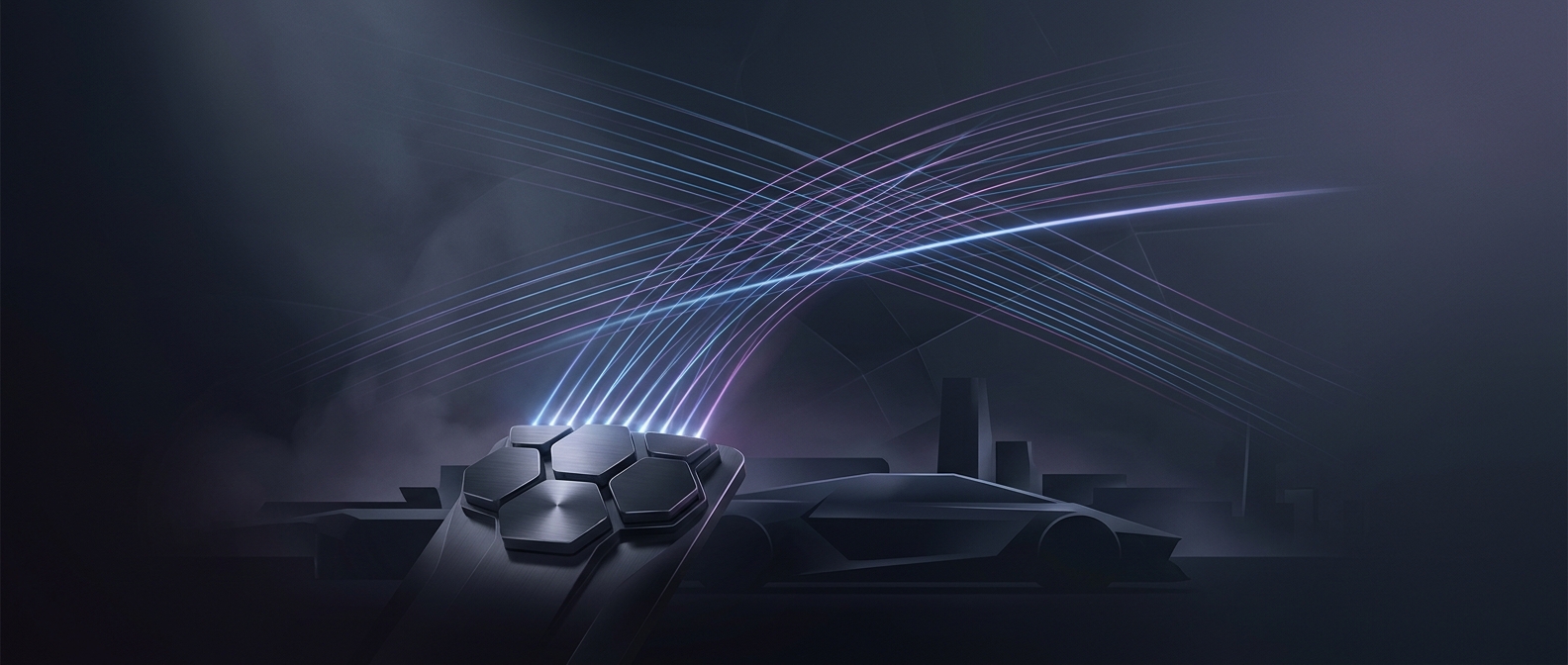
A conventional scanning lidar often redirects its laser with a rotating mirror: turn the mirror, and the beam points somewhere else. An optical phased array replaces that mechanical sweep with many tiny light-emitting elements arranged across a chip. Each element sends out a wave, and electronics adjust when that wave is released relative to its neighbors. This timing offset is called phase.
The waves overlap in front of the chip. In some directions, their peaks line up and reinforce one another; in others, peaks meet troughs and largely cancel. By changing the phase pattern across the array, the device shifts the direction where the waves reinforce most strongly. The beam can therefore be redirected by changing electrical signals rather than turning a component.
From a narrow beam to a lidar view
To build a picture of the road, lidar must send light in different directions and detect how much returns from objects. A phased array can sweep its beam electronically, measuring one direction after another. Because the steering elements have no mirror to spin, the steering mechanism itself can be compact and is less exposed to shaking or wear from repeated motion—useful qualities in a vehicle that experiences constant vibration.
The chip does not make the rest of the lidar disappear: the system still needs a laser source, detectors, control electronics, and a way to interpret returning light. Nor is steering automatically perfect. The spacing and number of emitters affect the directions and quality of the beam, so designing a useful scan pattern is part of the engineering challenge.
The key change is where motion happens: instead of physically swinging a beam across the scene, the array reshapes the light wave so the beam’s strongest direction moves. That makes solid-state steering possible without a motorized scanner.