The glass is built to keep light on course
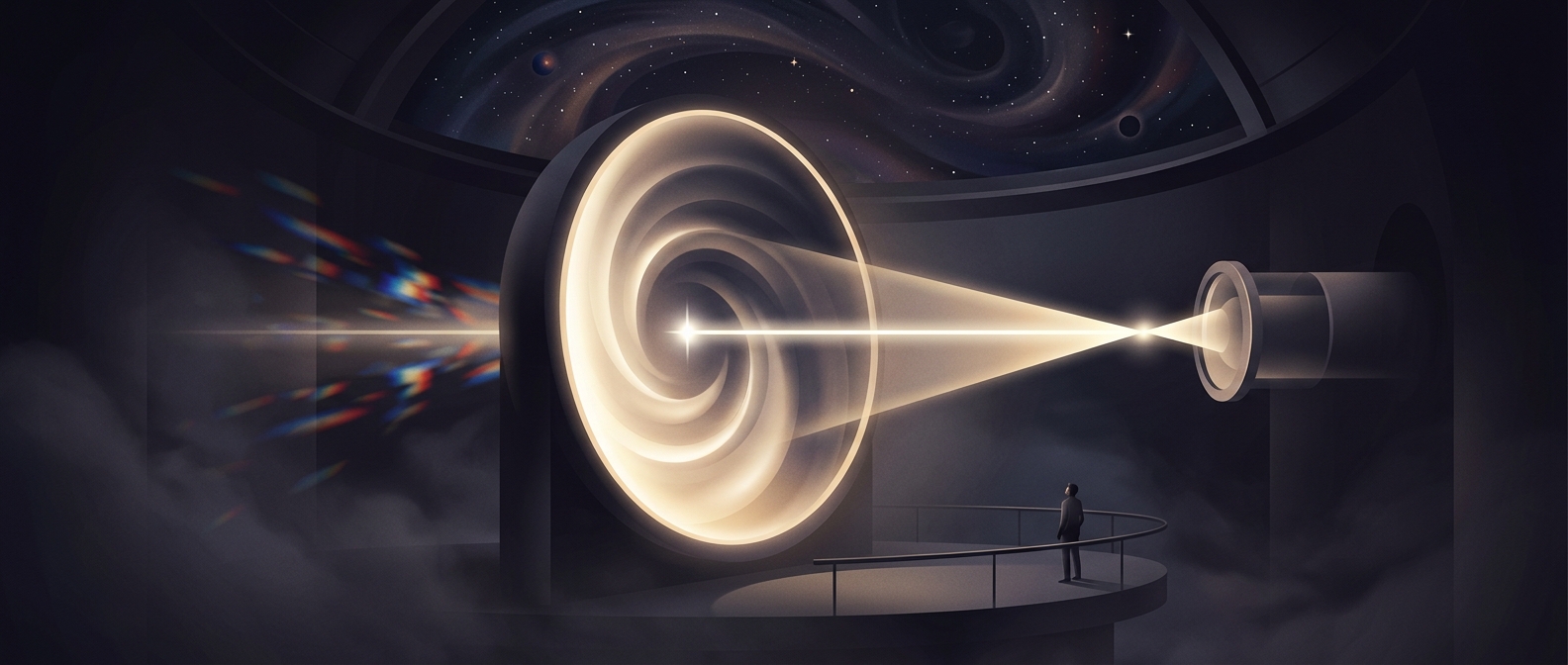
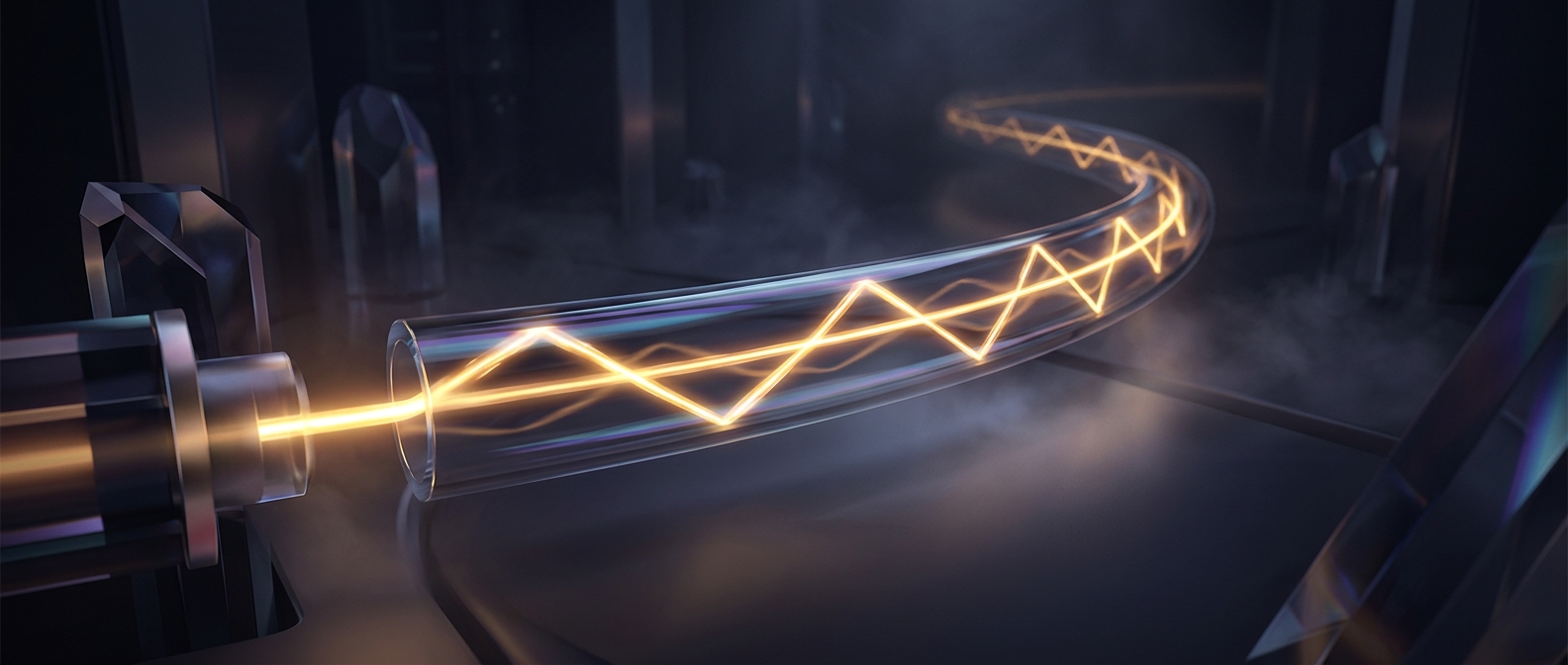
A fiber-optic cable is not simply a glass strand with light trapped inside. Its center, called the core, is surrounded by a thin layer of glass called the cladding. The core bends light more strongly than the cladding does—a property described by its refractive index. That difference makes light traveling at a sufficiently shallow angle reflect back into the core at the boundary instead of passing out through it. This is total internal reflection.
How a pulse makes the journey
A transmitter converts information into rapid flashes of light and sends them into the core. Each pulse follows the fiber as reflections redirect it along the cable, including around gentle curves. At the receiving end, a detector reads the arriving flashes and converts them back into an electrical signal.
The boundary does not act like a perfect mirror under every condition. Light can escape if it strikes at the wrong angle, and tight bends, imperfections, or absorption in the glass can weaken the signal. Fiber design and installation therefore aim to guide light efficiently over long distances; repeaters or optical amplifiers can restore a signal when needed.
Why use light instead of electricity?
Because the signal travels as light rather than electrical current, fiber can carry information at high rates and is less affected by electromagnetic interference from nearby equipment. The same careful glass structure that keeps a tiny beam on course is what lets a cable deliver data across a room, a city, or much farther before the signal needs help.