How a Fisheye Fits More Into the Frame
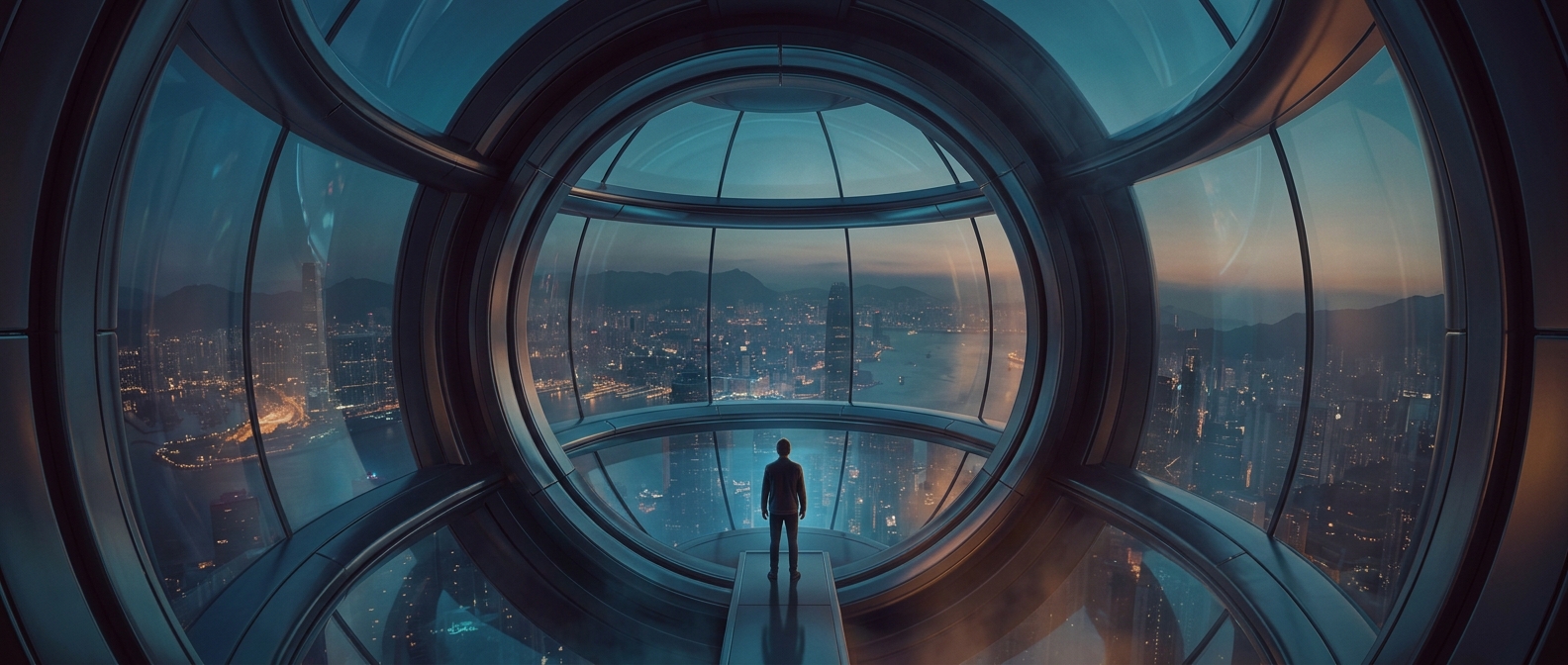
A fisheye lens is built to gather light from an unusually broad angle—sometimes enough to include nearly everything in front of the camera. The challenge is that a flat image sensor cannot preserve every direction and every straight line from such a wide scene in the same way a narrower lens can. The lens’s optical design compresses parts of the view onto the sensor, with distant directions taking up less image space than they would in a conventional wide-angle photograph.
That mapping is why a fisheye can show a room’s floor, walls, and ceiling at once, or capture a broad sweep of sky from one spot. It is not simply a normal lens with a larger view: the way it lays that view onto the image is intentionally different.
Why Straight Lines Curve
In a fisheye image, lines that pass through the center often remain straight, while lines farther from the center bow outward or inward. The effect is strongest near the edges, where the lens has to fit extreme off-center directions into the limited area of the sensor. This pronounced curvature is commonly called barrel distortion.
The result is not a faithful architectural record, but it can be useful when the goal is to show the whole environment. A sports photographer can put the camera close to an athlete and make the scene feel expansive; an action camera can record more of the surroundings without a bulky rig. The same distortion can make a hallway appear to swell or a nearby object look dramatically larger than what lies behind it.
The Tradeoff Is Also the Look
Software can straighten some lines, but correction reshapes and crops the image, sacrificing part of the very wide view the lens was chosen to capture. Fisheye photography therefore makes a clear bargain: more of the scene fits in the frame, but its geometry changes. Move a subject toward the edge, and the lens can turn a practical wide view into an unmistakably warped one.