The camera’s distance changes facial perspective
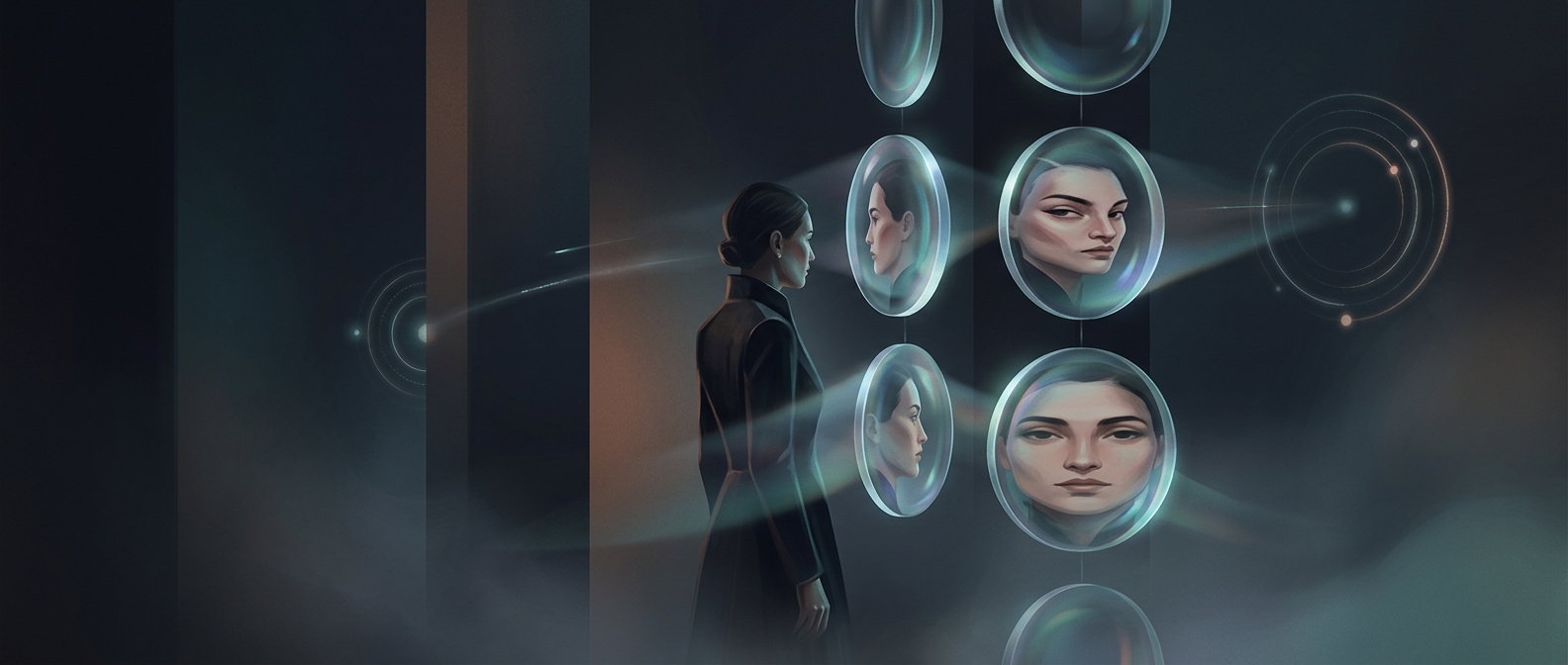
A lens does not independently enlarge a nose or shrink ears. The main cause is perspective: nearby parts of a face appear larger than parts farther away. When a camera is close, the nose is noticeably nearer to it than the ears, so that distance difference has a strong effect on their apparent size.
A wide-angle lens captures a broad view. To make a face fill the frame with one, a photographer often moves closer. That close viewpoint exaggerates the difference between near and far features, making the nose seem prominent and the ears recede.
Why a longer lens can look flatter
A telephoto lens has a narrower field of view, so the photographer usually stands farther away to frame the same face. From farther back, the nose and ears are more nearly the same distance from the camera. Their relative sizes therefore look more alike, and the face appears less deep—what people describe as “flattened.”
The focal length matters because it affects framing, but distance is the key to the perspective change. If two photos are taken from the same spot and then cropped or enlarged to match, their facial perspective will be essentially the same, though their framing and image quality may differ.
A practical portrait tradeoff
Close wide-angle shots can feel immersive, but they may exaggerate whatever is nearest the camera. For a more familiar portrait, photographers often step back and use a longer focal length. The face has not changed; the viewpoint has.**