How a Macro Lens Enlarges a Tiny Subject on Film
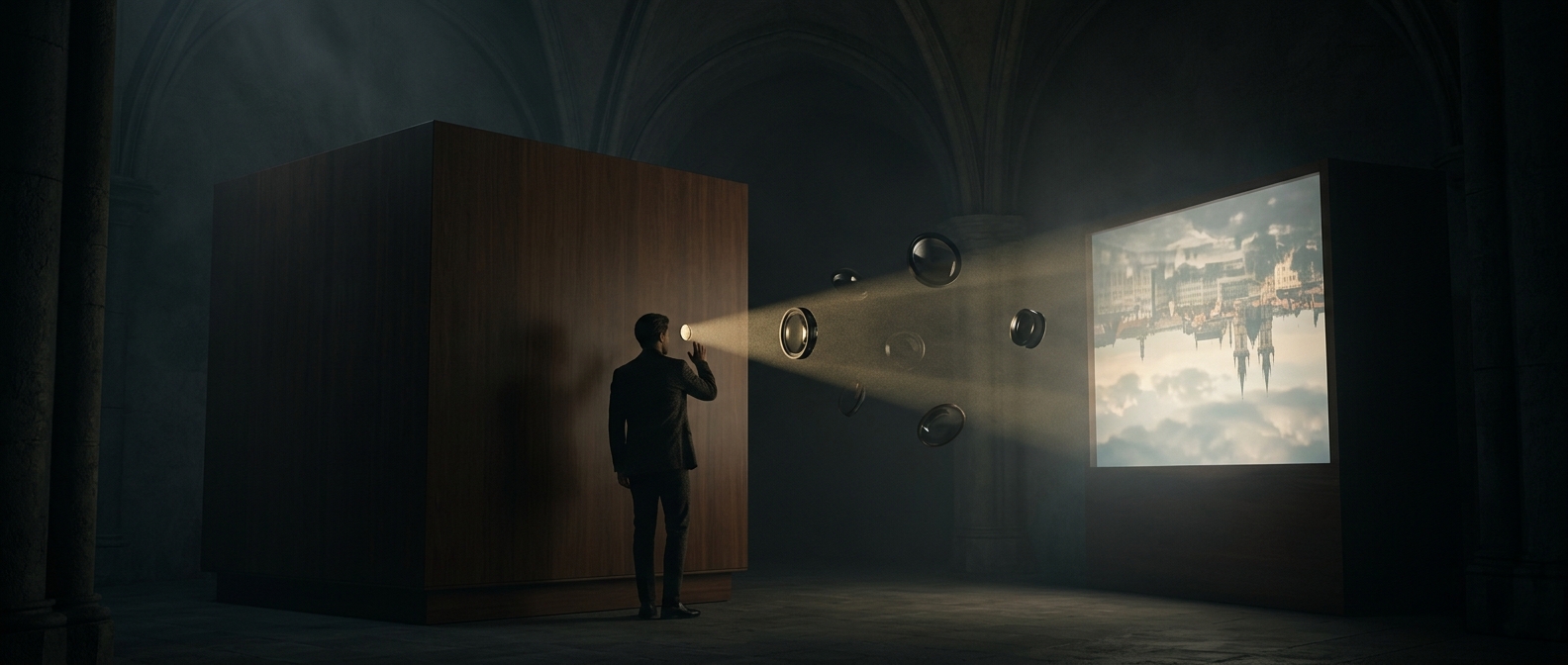
A camera lens does not simply “bring” a small object closer. It bends light from the subject so that the rays meet again at the film plane, where they form an image. When the subject is near the lens, the lens must be positioned farther from the film to focus it. That added distance lets a small subject occupy a larger portion of the frame.
Photographers describe this size relationship as magnification, or reproduction ratio. At 1:1 magnification, a subject one centimeter wide forms an image one centimeter wide on the film. At lower ratios, its image is smaller; at higher ratios, it is larger. A macro lens is built to focus at these close distances, where an ordinary lens may no longer focus sharply.
Why Close-Up Photography Is Demanding
As magnification rises, the range of distances that appear sharp—the depth of field—shrinks. A slight shift of the camera or subject can therefore move important details out of focus. The lens also needs enough light: extending the lens for close focus spreads the incoming light over a larger area of the image, reducing the light reaching the film.
These constraints shape the photograph. A photographer may use a tripod to prevent movement, stop the lens down to increase the sharp zone, or add light to compensate. The result is not just a bigger view of a tiny object; it is a carefully managed optical image in which focus, distance, and illumination become unusually sensitive.